






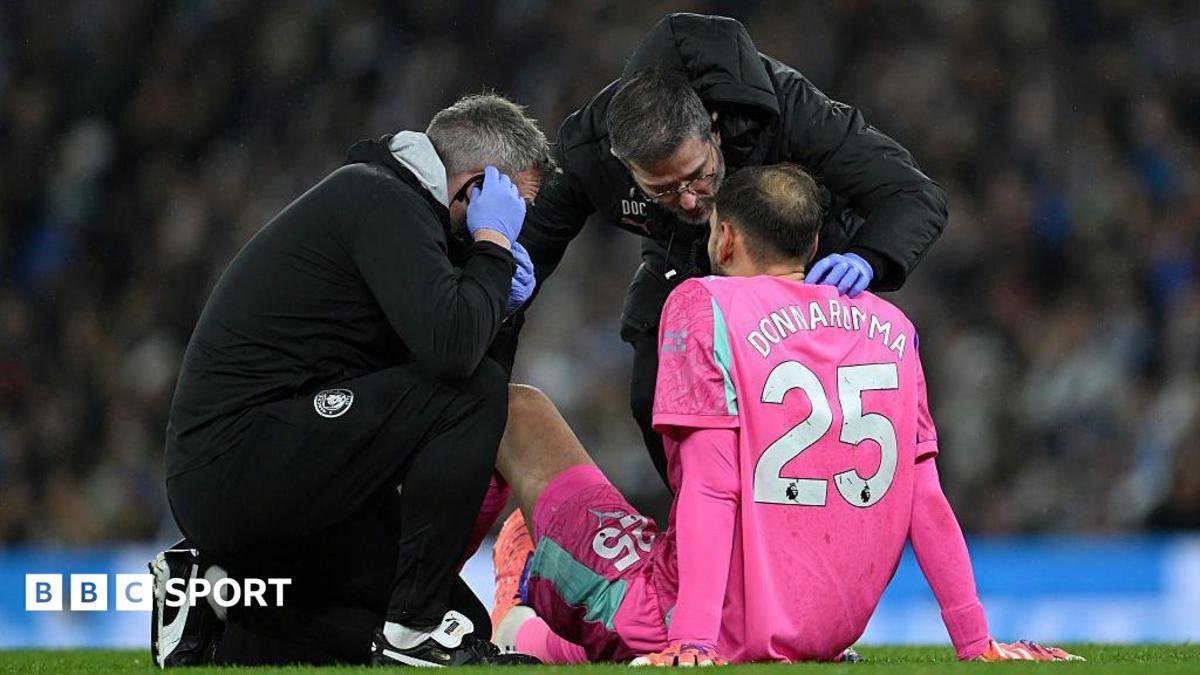
English football will implement a trial to try to eradicate the goalkeeper tactical timeout this season.
The Football Association, Premier League, English Football League, National League and Women’s Super League have agreed on the measure, with permission granted by the International Football Association Board (Ifab).
Pro Ref, led by chief refereeing officer Howard Webb, had been in discussions with the leagues to determine how to tackle the issue. It settled on a team having to remove an outfield player from the pitch.
If a referee signals that the physio can come on to treat a goalkeeper, that team’s coach will have 10 seconds to nominate another player to leave the pitch for one minute after play has restarted, telling the fourth official of their choice.
If no player has been selected within 10 seconds, the captain must leave the field.
The first game to feature the trial will be the Carabao Cup preliminary round tie between Tranmere and Rochdale on Saturday.
BBC Sport understands that the Australian A-League will trial a variation with the captain always having to leave the field.
The tactic of gaining a timeout as the keeper is treated has become increasingly common and controversial in recent seasons.
It has not been uncommon for the goalkeeper to sit on the turf and signal for the physio, with all the other players rushing to the technical area for a team talk. As soon as the coach has delivered their instructions, the keeper gets up to play on.
Goalkeeper treatment has also been used to disrupt the opposition’s momentum when they are on top.
In November, Leeds United boss Daniel Farke accused Manchester City goalkeeper Gianluigi Donnarumma of feigning injury to “bend the rules” and break up play.
Ifab, meanwhile, has issued a clarification to the mistaken identity rule after Fifa used it to book two players for simulation at the World Cup.
Paraguay’s Miguel Almiron and Breel Embolo of Switzerland both received bookings. Embolo was already on a caution meaning he was sent off in the quarter-final defeat by Argentina.
Ifab says that while it was well received and will be included in the detailed review of the VAR protocol, it “may not be used as such until that review is concluded”.


