



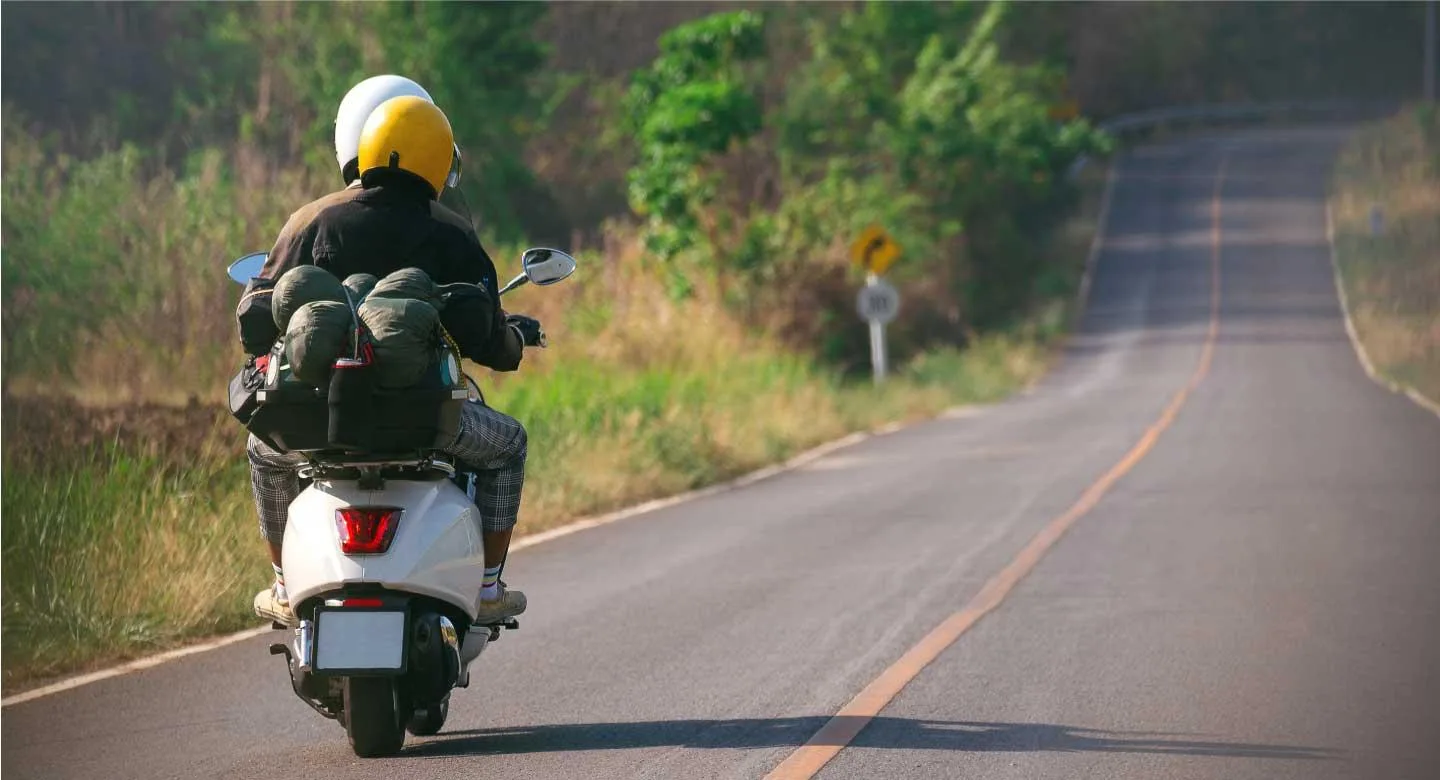
The picturesque landscape of Jammu & Kashmir, characterized by its winding mountain passes and bustling urban centers like Srinagar and Anantnag, is currently overshadowed by a silent, motorized epidemic. In recent years, the Valley has witnessed a disturbing and dangerous surge: underage drivers—some as young as 14—operating high-speed two-wheelers and family cars on public roads. What was once a rare sight has become a common, daily occurrence, fuelled by a toxic cocktail of lax parental oversight, misplaced “tough love,” peer influence, and historically inadequate enforcement.
As a mobility expert who has voluntarily worked with multiple prestigious organizations, including FICCI, SIAM,AITD, ITS India Forum, AIMTC, Secure Path & SACPPE, I have dedicated years to navigating these complexities. Through my work as a road safety activist, I have strove to create an impactful atmosphere across the Kashmir division, advocating for the sanctity of life over the thrill of the throttle. This treatise serves as both a warning and a blueprint for a future where no child’s life is cut short by the very pavement meant to connect us.
The Statistical Crisis: A Reality Check
The numbers emerging from the heart of the Union Territory are not merely digits; they are families torn apart. Official data presented to the Parliament in late 2024 reveals a harrowing trend: Jammu & Kashmir recorded over 28,500 road accidents between 2020 and 2024. These incidents resulted in more than 4,000 fatalities.
While 2023 saw a peak of 893 deaths, 2024’s slight dip to 831 offers little comfort. A staggering 95% of these accidents are attributed to over-speeding—the signature behavior of the inexperienced, thrill-seeking teenage driver. In Kashmir, the “bypass culture” has turned public highways into unofficial drag strips for minors, where the lack of cognitive maturity meets high-horsepower machinery.
The Global and National Mirror
This local crisis reflects a grim global reality. According to the World Health Organization (WHO), road traffic injuries are the leading killer of people aged 5 to 29. Globally, 500 children die every single day in road collisions. In India, the 2022 MoRTH report indicated that 9,528 minors were killed in crashes—a 28% increase from the previous year. This suggests that as our vehicles become faster, our protective mechanisms for the youth are failing to keep pace.
The Neuroscience of Risk: Why Teens Drive Differently
To solve the problem of underage driving, we must understand the biological “software” of the adolescent. It is a common misconception that teenagers drive recklessly simply out of defiance.
The reality is rooted in Neurobiology.
The Prefrontal Cortex Gap: The human brain does not finish developing until the mid-20s. The prefrontal cortex, responsible for executive functions like impulse control, risk assessment, and long-term planning, is the last to mature. Meanwhile, the limbic system, which seeks rewards and social validation, is in high gear. This creates a “perfect storm”: a body capable of operating a machine, but a brain incapable of fully processing the consequences of a 100 km/h impact.
The Optimistic Bias: Adolescents are prone to “optimistic bias”—the innate belief that they are uniquely immune to disaster. This is why a 15-year-old believes they can weave through Srinagar’s traffic without incident, despite having no formal training.
The Peer Effect: Research shows that the presence of even one teenage passenger increases the risk of a fatal crash by 44%. When a group of friends is in a car, the “reward” of showing off outweighs the “risk” of an accident. In Kashmir, where social bonding is central to youth culture, this peer effect is a lethal catalyst.
The Legislative Shield: Section 199A and Beyond
Legislation is the foundation of safety, but it remains a “paper tiger” without rigid enforcement. The Motor Vehicles Act, specifically Section 199A, is one of the most potent tools we have to curb this menace.
Holding the Guardians Accountable
Under this law, if a minor commits an offense, the guardian or the owner of the vehicle is held legally responsible.
The penalties are designed to be a deterrent:
Imprisonment: Up to 3 years for the parent/guardian.
Fines: A steep penalty of INR 25,000.
Registration: Cancellation of the vehicle’s registration for 12 months.
Future Impact: The juvenile becomes ineligible for a driving license until they reach the age of 25.
In my advocacy work across the Kashmir division, I have emphasized that handing a child the keys to a Scooty or a car isn’t an “errand”—it is a potential criminal act. We must move toward a Zero Tolerance policy where the administration publicizes these arrests to shatter the sense of impunity currently felt by many households.
Infrastructure as a Lifesaver: The “Safe System” Approach
Kashmir’s geography—narrow lanes, steep gradients, and icy winters—requires a Sustainable Safety model. We must design roads that “forgive” human error rather than punish it with death.
The “Complete Streets” Concept
Urban planning in Srinagar and major towns must pivot away from vehicle dominance.
We need:
Segregated Bike Lanes: Providing safe paths for legal-age cyclists.
Traffic Calming: Implementing “raised intersections” and advanced technological speed humps near schools.
Blackspot Identification: Using data to fix the specific corners and stretches where accidents repeatedly occur.
School Zones as Sanctuaries
Every school zone in the Valley should undergo a safety audit.
This includes:
30 km/h Speed Limits: Lowering speeds in areas with high child footfall.
Visual Cues: Using high-visibility, color-coded pavement markings to alert drivers.
Rumble Strips: Physically forcing a reduction in speed through tactile feedback.
Cultivating a Culture of Responsibility
Education is the long-term cure. My work with Secure Path & SACPPE has shown that when you engage with the community directly, the “impactful atmosphere” we seek begins to take shape.
The Parental “Graduated Licensing” Model
While India lacks a formal Graduated Driver Licensing (GDL) system, parents can implement their own.
Even after a child turns 18, their introduction to driving should be phased:
Phase 1: Supervised daytime driving only.
Phase 2: Independent daytime driving (no passengers).
Phase 3: Night driving and highway driving.
The Role of Religious and Community Leaders
In Kashmir, the pulpit and the community elder hold immense sway. We must partner with religious leaders to frame road safety as a moral and “pro-life” issue. Reckless driving isn’t just a traffic violation; it is a violation of the sanctity of human life.
The Governance Mechanism: A Data-Driven Future
To move from sporadic workshops to systemic change, we need a District Road Safety Committee (DRSC) that functions with clinical precision.
Road Safety Nodal Officers: Every school must have a designated officer to ensure no student arrives on a motorized vehicle.
Unified Accident Database: We need to link police reports with hospital ER data to understand not just deaths, but the “hidden” epidemic of lifelong disabilities caused by road trauma.
Collaboration: Working with NGOs and youth coalitions to make “safety” a trend rather than a chore.
Conclusion: The Cost of Inaction
The data is clear: 95% of accidents are preventable. They are not “acts of God”; they are failures of the system and the family. As a mobility expert and activist, I have seen the devastating aftermath of these failures first-hand. Through my voluntary contributions to organizations like Secure Path (SACPPE), I have witnessed how targeted intervention can shift the needle, but one person or one organization cannot do it alone.
Every speed hump, every fine issued under Section 199A, and every conversation a parent has with their child is an investment in a safer Kashmir. We are at a crossroads. We can either continue to mourn our youth or we can build the “Safe System” they deserve. The cost of prevention is a fraction of the cost of a lost life. Let us choose the path of sustainability and protection.
(The author is a renowned social reformer and a passionate road safety activist with over two decades of experience. For feedback email: [email protected])


