



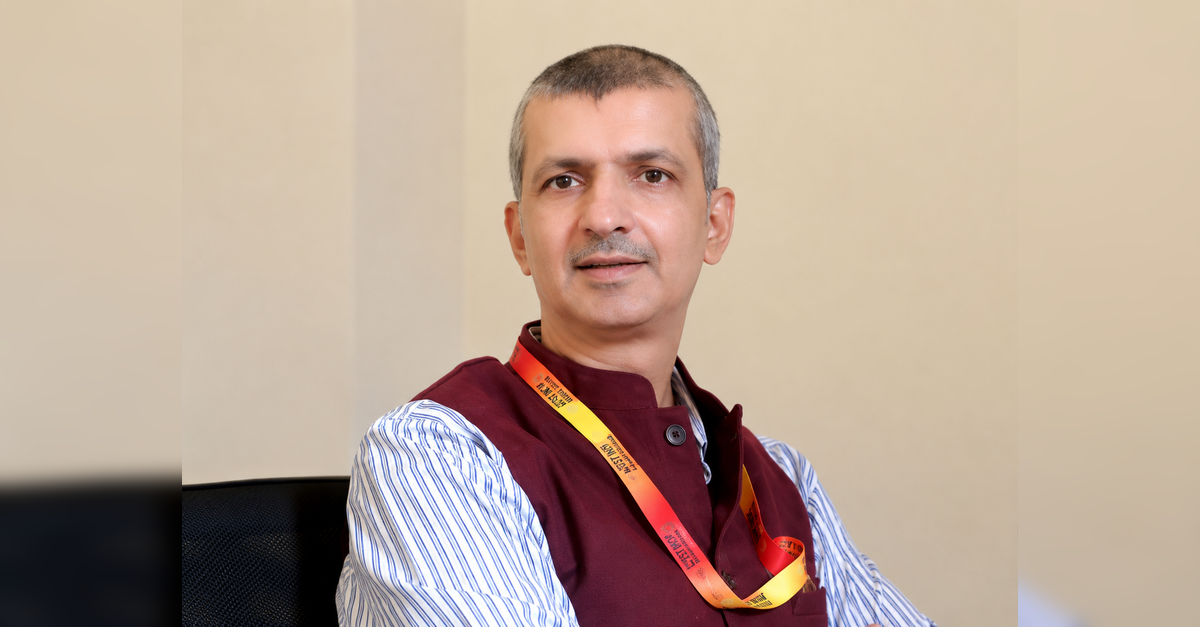
By Dr Sanjay Fuloria & Dr Vishal Mishra
Achieving socio-economic inclusion in a vast country like India is only possible through inclusivity in education. This means ensuring access and affordability for Socio Economically Disadvantaged Groups (SEDGs). This was the primary objective with which the first Open and Distance Learning (ODL) courses were launched by Delhi University in 1962. Another objective was to provide continuous education for working and non-working citizens. Subsequently, the establishment of Indira Gandhi National Open University (IGNOU) through an act of parliament in 1985, underscored the importance of such courses. With advancement in technology, both the objectives viz. Access and affordability for SEDGs and continued education (for both professionals and non-professionals), got a boost in the form of online education.
The current landscape of ODL and Online education is governed by the New Education Policy (NEP), 2020, by the Government of India and two regulators University Grants Commission (UGC) and All India Council for Technical Education (AICTE). They have provided specific guidelines emphasizing the enhancement and regulation of these alternative learning modes. Understanding these guidelines, critically analyzing their practical implications, and assessing the necessity and practicality of maintaining commonality across traditional full-time education, ODL, and Online Education remain critical for policymakers, educators, and learners alike. We now turn our attention to some of these guidelines which focus on the quality aspects.According to NEP 2020 “Institutions will have the option to run Open Distance Learning (ODL) and online programmes, provided they are accredited to do so, in order to enhance their offerings, improve access, increase GER, and provide opportunities for lifelong learning (SDG 4). All ODL programmes and their components leading to any diploma or degree will be of standards and quality equivalent to the highest quality programmes run by the HEIs on their campuses.”
As per UGC’s 2020 regulations for ODL and Online Learning “The entry level qualifications, curriculum, teaching-learning scheme, pattern of question papers for end semester examination or term end examination, pass or fail criteria in Dual Mode University are the same for conventional programme and the proposed Open and Distance Learning programme or Online programme, as applicable, and in case of Open University, these parameters are same for Open and Distance Learning programme and proposed Online programme; “ AICTE also follows UGC guidelines.
The most important aspect of all the three guidelines is the quality equivalence between ODL and Online and campus based education. However, significant debate persists on whether strict adherence to identical academic structures across all education modes is fair, practical, or indeed beneficial. Traditional full-time and online or ODL programs serve notably diverse student populations characterized by distinct demographic attributes, professional commitments, socio-economic backgrounds, and, fundamentally, diverse educational objectives. Typically, ODL and online education attracts SEDGs, working professionals, mature students, or geographically constrained learners who aim to further their education without compromising existing responsibilities. Contrastingly, full-time students are primarily younger, typically dedicated solely to their educational pursuits. Therefore, before we talk about parity between full time and ODL and Online programs, we need to understand what does this parity entail? Broadly, parity can be broken down into parity of entry qualifications, content, delivery, and assessments.
We argue that parity of entry qualifications is not feasible as these programs are primarily meant for the underserved and disadvantaged population and thus applying the same standards as applicable to the privileged group would be unfair. Similarly parity of content is impractical because the target audience for such programs are predominantly the disadvantaged who could not pursue the regular full time programs. This puts them on a back foot in terms of their academic readiness. Parity of delivery is impractical, especially for private institutions, because it requires investment in high quality resources, both human and technology, which the low fee structure of such programs does not support.
It follows that parity of assessments will not work as the intended target group will not be prepared for the same. Consequently, expecting identical academic structures—such as entry qualifications, content, delivery, and assessments—may inadvertently impose impractical burdens on non-traditional students, undermining the accessibility objective NEP intends to achieve.
Given these realities of the target population of these Online and ODL programs, there is a need for a mechanism to bridge the gap between the two groups; those graduating through Online and ODL programs and full time programs. We suggest that instead of trying to bring parity at the program level, we should provide opportunity and support to deserving and interested graduates of the ODL and Online programs. Allowing academically competent students from ODL and online programs to participate in short term specialized certificate courses, electives or workshops at elite institutions would foster greater acceptance and recognition within professional spheres. Such affiliations can substantially enhance students’ resumes and address skepticism toward online-acquired credentials.
Further, the students who prove to be on par with the regular students of such institutions should also be given an opportunity to participate in the campus recruitment. For this purpose, policy makers should facilitate strategic partnerships with prestigious public and private institutions, such as the Indian Institutes of Management (IIMs), Indian Institutes of Technology (IIT), and National Institutes of Technology (NITs). This can significantly enhance the perceived quality and marketability of graduates of Online and ODL programs.
Such initiatives will organically achieve parity between Online and ODL programs and full time programs. This will enhance the uptake of such programs and also help policy makers in achieving their objectives.
Sanjay Fuloria is Director Center for Distance and Online Education, ICFAI Foundation for Higher Education. Vishal Mishra is a Professor at ICFAI Business School, ICFAI Foundation for Higher Education (IFHE), Hyderabad.
DISCLAIMER: The views expressed are solely of the author and ETEDUCATION does not necessarily subscribe to it. ETEDUCATION will not be responsible for any damage caused to any person or organisation directly or indirectly.


