


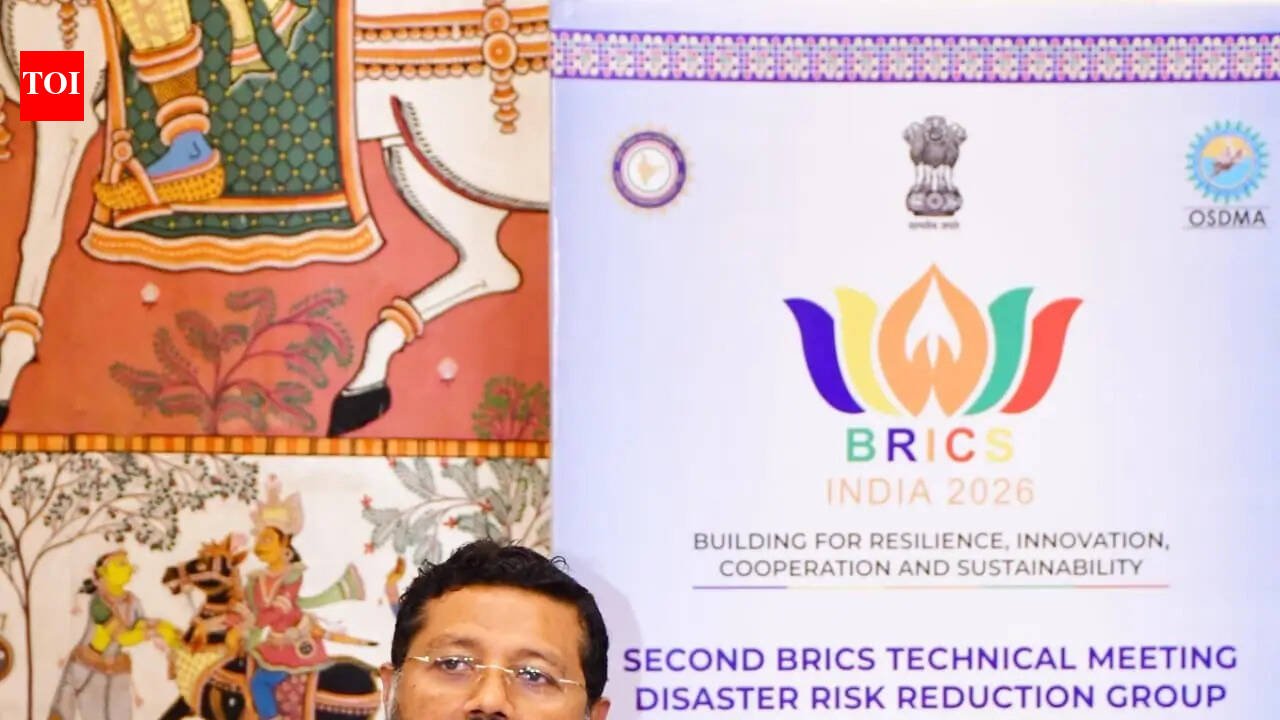
Bhubaneswar: Krishna S. Vatsa, member of the National Disaster Management Authority (NMA), said here on Saturday that while El Niño may influence weather patterns this year, its impact remains uncertain as it will largely depend on the behaviour of the Indian Ocean Dipole (IOD), which can moderate or even reduce El Niño effects.“When it comes to the impact of El Niño, there is one more thing involved – the IOD. The IOD reduces the impact of El Niño. So, the impact of El Niño will largely depend on the IOD. Therefore, it cannot be said with full certainty that El Niño will definitely have an impact – that impact may occur, and its impact may also decrease,” Vatsa told media persons.Vatsa and Odisha revenue and disaster management minister Suresh Pujari were speaking to media persons a day after the three-day BRICS Disaster Risk Reduction (DRR) technical meeting concluded on Friday.While El Niño drives warming in the Pacific, the IOD is confined to the Indian Ocean; the interplay of the two often shapes rainfall patterns and, in turn, influences agricultural outcomes.As reported earlier, the India Meteorological Department (IMD) has predicted a strong probability of El Niño conditions during June–Sept. It is expected to begin weak and strengthen to moderate levels, possibly intensifying further by Sept. El Niño can influence rainfall patterns, which IMD has factored into its monsoon forecast. For 2026, rainfall is projected to be below normal at around 90% of the long-period average.On the BRICS DRR meet, Vatsa said the forum assumes significance as member countries have vast exposure to disasters, along with considerable experience, resources and institutional capacities to manage them. “All BRICS nations have invested substantially in disaster risk reduction. Platforms like these help us exchange experiences, share concerns and work on solutions and innovations to strengthen disaster management systems,” he said.He added that India, too, has made notable progress over the past decade, with major investments in early warning systems, mitigation, recovery and reconstruction. “Drawing from our experiences, we have identified key thematic areas for cooperation. There is broad consensus among BRICS nations on these priorities, including financing mechanisms for disaster risk reduction,” he said.Pujari said hosting the BRICS DRR technical meeting gave Odisha an opportunity to showcase its globally recognised disaster management model. Delegates appreciated the state’s success in protecting lives during disasters and acknowledged its sustained efforts towards achieving near-zero casualty outcomes during major cyclones, he said.He said the outcomes align with Odisha’s broader vision of building resilient infrastructure while maintaining its focus on minimising loss of life during extreme weather events.
