


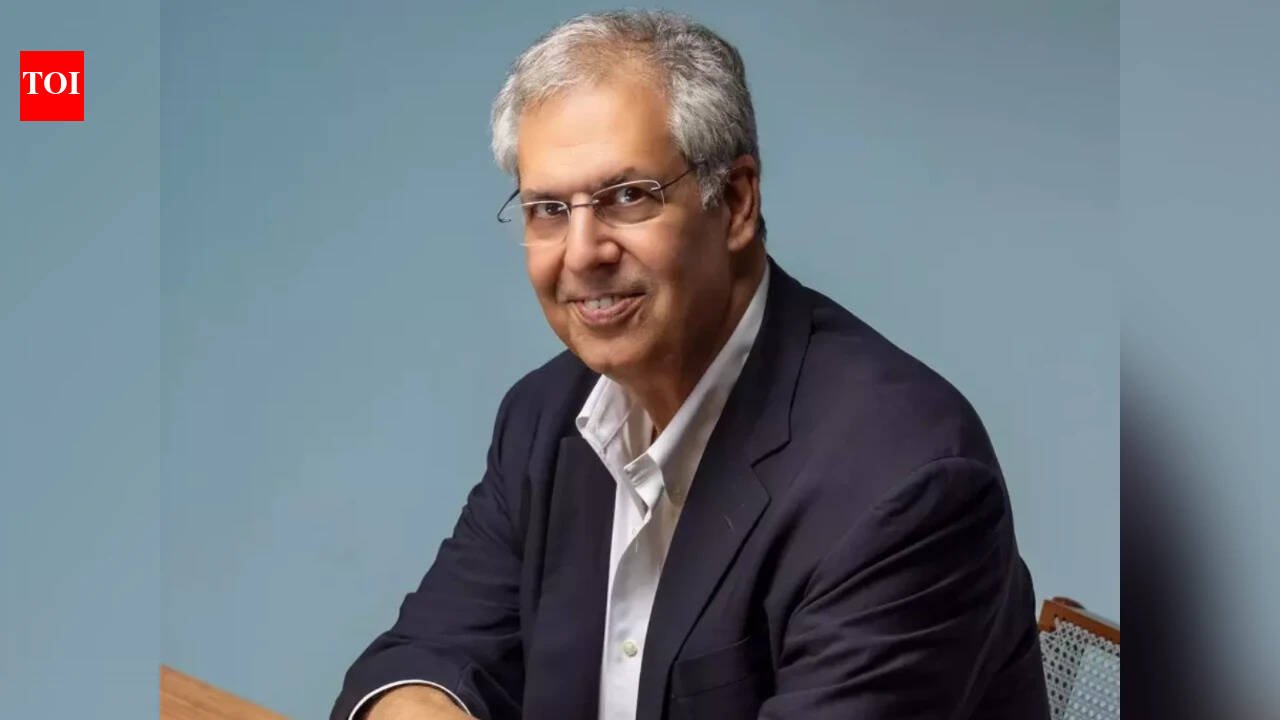
BENGALURU: Tata Trusts chairman Noel Tata on Sunday questioned restrictions on for-profit education, saying they discouraged investment in a sector where India needs far more quality colleges and universities.Speaking at IIMBue, an IIM Bangalore alumni meet in Bengaluru, Tata said only a small fraction of students secure admission to the country’s top institutions, forcing many high-performing students to pursue higher education overseas.“We spend an atrocious amount of money every year sending kids to the US and Europe,” he said.Tata said India should create enough world-class institutions so students do not have to leave the country for quality education and career opportunities.“I believe the courts have said that you can’t. An educational institution cannot be for profit, which is sad,” he said. “I think it’s preventing a lot of money from coming into education, into building the education system.”His remarks come as Tata Trusts partners with IIM Bangalore to establish its School of Undergraduate Studies. Tata said education would be a key focus area for the Trusts, which wants to return to building institutions as it did with the Indian Institute of Science, Tata Institute of Fundamental Research and Tata Memorial Hospital.“I’d like to start spending some more of our money on building new institutions,” he said.Healthcare is another priority. Tata said the Trusts plans to build 40-50 general hospitals across India.“We’re now looking to see if we can build 40 or 50 general-purpose hospitals across India,” he said. “We’ve identified three locations. We’re going to start that.”
The hospitals will operate on a not -profit basis and aim to work within the funding available under govt health insurance schemes.The Trusts is also considering a cross-subsidy model under which 20-30% of rooms would be charged at commercial rates, helping subsidise treatment for the remaining patients.Tata said all patients would receive the same doctors, medicines and operating theatres. Those paying more would primarily get private rooms and additional facilities for their families.He also called for more rigorous ways to measure the impact of philanthropy, questioning broad claims that projects had “touched” thousands of lives without demonstrating what had actually changed. “We need to be clear about what we mean when we say ‘touch the lives of somebody’,” he said.
