





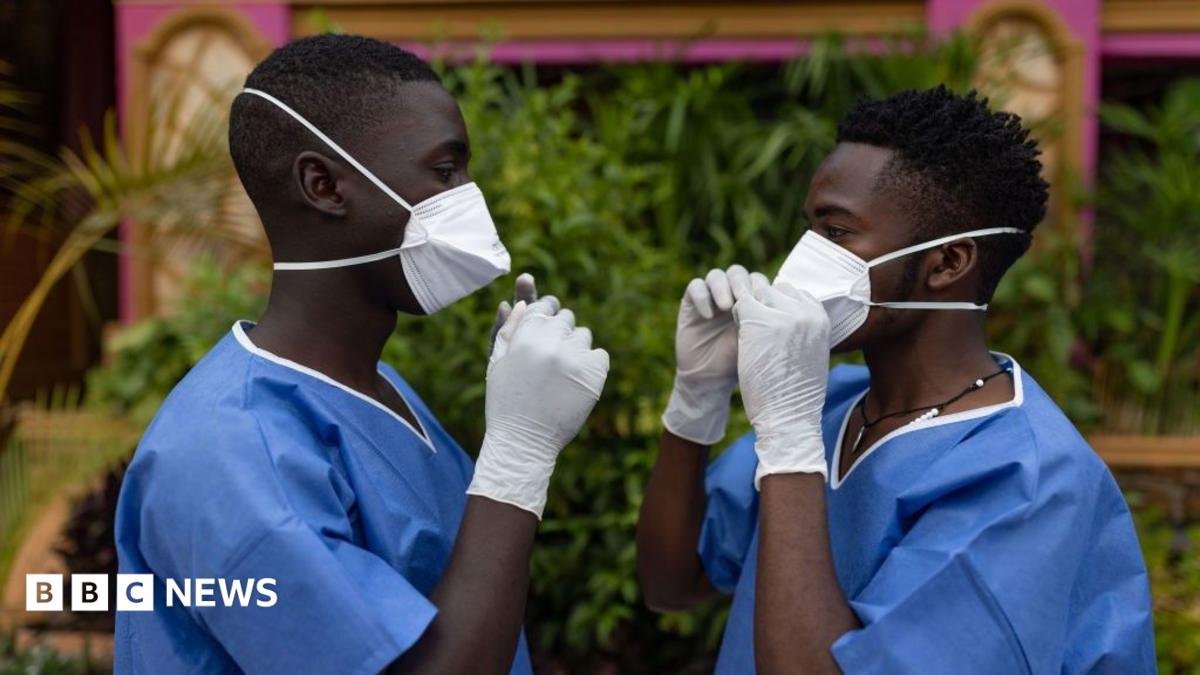
The Ebola outbreak in the east of the Democratic Republic of Congo has become the second-worst on record, with the official death toll passing a grim milestone of 1,500.
Experts believe the true number of fatalities during this outbreak, which was declared in May, is much higher. And in another alarming update, authorities in DR Congo confirmed on Thursday that the virus was spreading much faster than in previous outbreaks.
Next door in Uganda, a country that also reported infections in May, the picture is entirely different.
The country’s health minister described a “moment of joy” as the last Ebola patient was released from hospital two weeks ago.
Uganda only ever recorded 20 cases and two deaths from the virus.
According to Dr Kasonde Mwinga, the World Health Organization’s Uganda chief, the relatively low number of casualties was not “by luck or chance”.
“It’s because people invested in preparedness,” she told the BBC.
This outbreak is the 17th to have emerged in DR Congo since Ebola was discovered 50 years ago. By comparison Uganda has had nine since 2000, with officials there saying lessons learnt from past tragedies have allowed them to stop the disease ripping through the country on various occasions.
One example is the case of a 12-year-old girl who arrived at a hospital in the central district of Luwero in 2011.
Her symptoms sparked caution: she was isolated, medics wore personal protective equipment when treating her and when she died three hours later her body was carefully sealed in a coffin. These precautions were able to halt the spread of what a blood sample later confirmed to be Ebola.
“We know Ebola. It’s been here a few times, we know how to deal with it,” government spokesperson Alan Kasujja told the BBC’s Newsday programme.
Uganda’s first known case this time was a man from DR Congo who crossed the border for treatment.
Once health authorities confirmed multiple cases had been imported from DR Congo, they activated a specialist Ebola treatment centre at Mulago hospital, in the capital city, Kampala.
The facility, which was used during an outbreak of Ebola last year, held leftover medical supplies and had an “emergency medical team” on standby, Dr David Kaggwa, head of the facility, said.
“It was a matter of sorting and ordering a few more supplies, and then actually in one day we were ready to receive the patients. So, it is easy, it’s not that we’re starting from scratch,” he said.


