



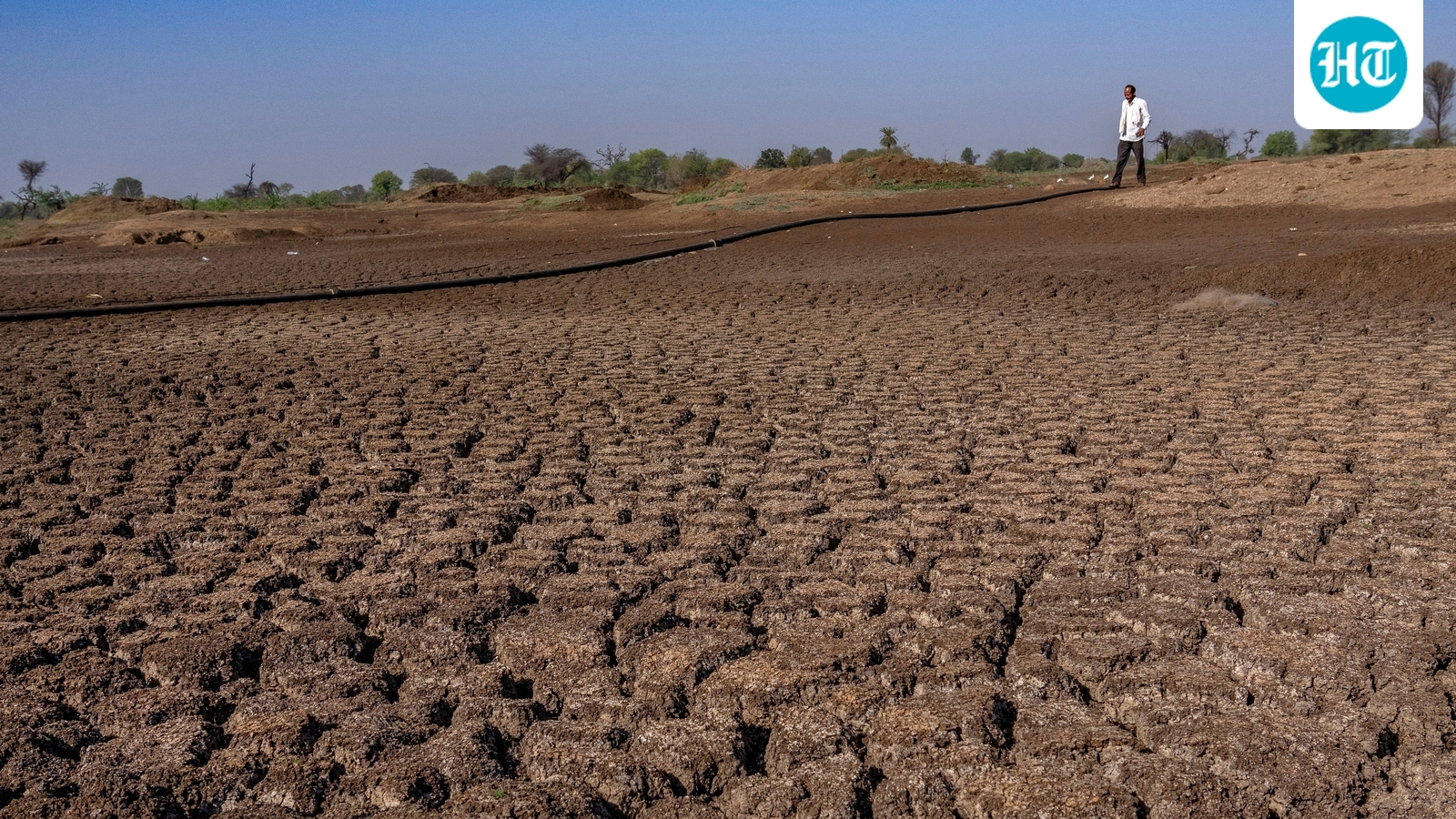
When the monsoon is below par as this year’s southwest monsoon has been, the immediate concern is its effect on foodgrain production and the loss of income for farmers. The focus on these issues, though absolutely justified, often obscures another critical aspect of a poor monsoon—that of its effect on diverse and nutritious food, particularly in the context of women and children. This year, 17 of India’s 36 meteorological subdivisions, covering 42% of the country’s area, recorded deficient rainfall. Drought has been formally declared across large parts of three states. Karnataka has declared 217 of its 240 taluks drought-hit, after recording a 35% rainfall deficit, its worst southwest monsoon in 55 years. Maharashtra declared drought in 265 talukas in September and expanded this to 305 of its 358 talukas on October 14. Marathwada ended the season about 40% below normal. Andhra Pradesh declared 388 mandals across 21 of its 28 districts drought-affected on October 2, after a 53% rainfall deficit between June and August. Telangana (17% below normal) and Rajasthan (22% below normal) are conducting field assessments.
A drought that cuts incomes and raises food prices can worsen diets that were already short on diverse foods, iron and protein. In effect, a drought must be seen as more than an agricultural emergency, for families that depend on rain-fed farming, it affects income, food prices and what ends up on the plate, at the same time.
The link between drought and nutrition is evident from several studies. In rural India, unborn children exposed to drought or as infants are more likely to be underweight. In drought years, when food runs low, and incomes dip, women and children are at the bottom of the heap in household coping strategies. The figures are worrying. Drought threatens to stall or reverse the progress made on stunting among children. Between NFHS-5 and NFHS-6, stunting among children under five fell from 35.5% to 29.3%. Several drought-hit states improved faster than average: Karnataka from 35.4 to 26.5%, Andhra Pradesh from 31.2 to 24.6%, Telangana from 33.1 to 27% and Maharashtra from 35.2 to 29.5%. Rajasthan improved only marginally, from 31.8 to 29.6%. Despite this, diet quality is still the weakest link as far as child development in the early stages is concerned.
Nationally, more than four in five children aged 6-23 months do not receive a minimally adequate diet. The availability of food apart, drought conditions trigger food inflation pricing food out of the reach of the needy in rural areas. Food inflation rose to 7.74% in September 2026, from 5.97% in August, with rural food inflation higher than urban. For farming households in drought districts, this is a double shock: They get lower incomes from failed crops and have to pay higher prices to buy food.
At the heart of both unseasonal rains, droughts and heatwaves is the climate crisis which is inextricably interlinked with these. And the interlinkages between climate, agriculture and nutrition must be tackled on an ongoing basis. The climate crisis is already affecting harvests leading to significant lowering of crop output in many districts affected. The climate crisis also affects the quality of food. A national study that matched an index of agricultural vulnerability to the climate crisis with NFHS-4 data found that children in the most climate-vulnerable districts had 32% higher odds of stunting, 42% higher odds of wasting, 45% higher odds of being underweight and 63% higher odds of anaemia than children in the least vulnerable districts.
This makes it clear that we need to address how farming systems can be designed to protect nutrition in drought-prone areas. Rengalakshmi Raj executive director, R&D and Policy at the MS Swaminathan Research Foundation (MSSRF) says, “In drought-prone areas, farming systems need to go beyond protecting crop yields to ensuring the production of diverse, nutritious foods. MSSRF’s farming system for nutrition (FSN) approach combines drought-tolerant millets and pulses, mixed cropping, livestock, vegetable cultivation and on-farm water conservation. Supported by community seed banks, local input services and better market linkages, these measures can help farming households maintain dietary diversity and strengthen nutrition security during dry spells.”
India has spent 15 years building the science to make sure that farming can withstand climate shocks. The National Innovations in Climate Resilient Agriculture (NICRA) programme, run by the Indian Council of Agricultural Research (ICAR), has mapped climate risk across 651 districts, prepared contingency plans for each of them and promoted drought-tolerant varieties and practices in hundreds of villages.
Through Krishi Vigyan Kendras, NICRA has demonstrated climate-resilient technologies in 448 climate resilient villages across 151 vulnerable districts, including drought- and flood-tolerant varieties of rice, wheat, soybean and mustard, alongside village seed and fodder banks and climate risk management committees.
At NICRA’s 15-year review in January 2026, ICAR launched the Atlas of Climate Adaptation in Indian Agriculture (ACASA-India), a digital platform for location-specific adaptation planning developed with the Borlaug Institute for South Asia. Recommendations from a September 2026 stakeholder meeting will now shape the next phase of NICRA’s technology demonstration work.
Agricultural resilience is usually measured in tonnes and incomes, not in nutrients. The question for this season, and for the next phase of NICRA, is whether climate-resilient agriculture can also protect what families eat. Drought-tolerant, nutrient-dense foods such as millets, pulses and biofortified varieties offer an opportunity to bring climate resilience and nutrition outcomes together.
India needs to integrate nutrition into climate adaptation policies and programmes. Dr Anjali Ganpule-Rao, director, Nutrition and Research, ICMR-CAR, MSSRF says, “India needs to bring agriculture and nutrition closer together in its climate adaptation efforts. Alongside crop yields and farm incomes, we must consider whether these efforts help families access diverse, nutritious foods, particularly during droughts and other climate shocks. Approaches such as MSSRF’s FSN, supported by research through the ICMR-CAR project, can inform this work. Integrating nutrition into government programmes, translating state and district plans into village-level action, and linking drought-proofing measures with climate finance are important steps towards strengthening nutrition security, particularly for women and children.”
Dr Satyapriya, head and principal scientist, Division of Agricultural Extension, ICAR-Indian Agricultural Research Institute (IARI), says, “Climate-resilient agriculture is essential not only for sustaining agricultural productivity and farmers’ livelihoods but also for safeguarding household nutrition against increasing drought and climate variability. Diversification towards locally adapted, drought-tolerant and nutrient-rich crops, particularly millets, pulses and biofortified varieties, can reduce production risks while improving the availability of protein, iron, zinc and other essential nutrients. A randomised trial conducted in India involving 246 schoolchildren demonstrated that consumption of iron-biofortified pearl millet significantly improved iron status, highlighting the potential of nutrition-sensitive crop improvement. Integrating crop diversification with improved seed systems, climate-smart agronomic practices, nutrition education and market linkages can strengthen both climate resilience and access to nutritious diets, particularly among vulnerable rural households.”
The crops that cope best with water stress are often also the most nutritious. A study in Science Advances found that replacing rice with the least water-intensive alternative cereal in each district (maize, finger millet, pearl millet or sorghum) could cut irrigation water demand by 33% while increasing the supply of iron by 27% and zinc by 13%, with only a modest reduction in calories. This means crop choice in drought-prone districts is also nutrition policy. Pulses and less water-intensive crops now being promoted for the rabi season. Millets suited to dryland farming and the biofortified varieties in ICAR’s pipeline can all support both resilience and better diets. Dr Satyapriya adds, “ICAR’s NICRA programme has established a strong scientific and institutional foundation for climate adaptation through district-level vulnerability assessments, agricultural contingency plans and location-specific demonstrations of climate-resilient technologies. Climate-risk assessments covering 651 agricultural districts have identified 310 vulnerable districts, while climate-resilient technologies have been demonstrated in 448 model villages across 151 climatically vulnerable districts. Building on these achievements, the next phase of NICRA could explicitly integrate nutrition-sensitive adaptation by promoting locally suitable millets, pulses and biofortified crops, alongside diversified farming systems, nutrition education and stronger research–extension–farmer linkages. Incorporating scientifically validated indicators such as household and women’s dietary diversity, consumption of nutrient-rich foods, seasonal food insecurity and farm income stability, supported by baseline and follow-up assessments, would help generate evidence on whether climate-resilient interventions also improve household nutrition security.”
Between 2014 and 2024, ICAR institutes and agricultural universities developed 2,900 improved field crop varieties. Of these, 2,661 tolerate one or more biotic or abiotic stresses such as drought, heat or salinity, and 537 were bred specifically for extreme climate conditions. Over the same decade, 152 biofortified varieties were released, including 53 of wheat, 26 of millets, 24 of maize and 14 of rice.
The pace has continued. In 2025-26 alone, ICAR developed 386 improved varieties across 44 crops, 94% of them climate-resilient and 29 biofortified. Millets are back on the policy agenda though nowhere near the quantity needed in the food basket when there are drought conditions. Millets need roughly 350 mm of water to grow, compared with about 1,250 mm for paddy, and are rich in iron, zinc, calcium and fibre. Yet, in 2023, they made up only 5-6% of India’s national food basket.
The FSN approach builds nutritional criteria into the choice of crops, farm animals and, where feasible, fish, on the principle that a more diverse farm can diversify what farm families eat. A 2021 study shows the FSN model combined more nutrient-dense cereals and pulses, nutrition gardens, access to animal foods and nutrition awareness could turn production diversity into dietary diversity.
In August 2026, Odisha signed an agreement with MSSRF for a three-year FSN project for 3,000 small and marginal farmers in Nayagarh, combining biofortified crops, pulses, vegetables, backyard poultry and aquaculture with seed banks, nutrition gardens and community processing units.
Odisha’s Shree Anna Abhiyan, launched in 2017 as the Odisha Millet Mission, aims to revive millets “in farms and plates,” both to promote climate-resilient farming and to address micronutrient deficiency. The area under millets in the state grew from about 1.62 lakh hectares in 2018-19 to nearly 2.64 lakh hectares in 2023-24. However, the programme’s 2026-27 outlay was cut from ₹600 crore to ₹415 crore despite 93% fund utilisation the previous year, shrinking the millet demonstration area from 150,000 to 100,000 hectares.
The International Crops Research Institute for the Semi-Arid Tropics (ICRISAT) and Mahatma Phule Krishi Vidyapeeth developed Dhanashakti, a high-iron pearl millet released in Maharashtra in 2012 and nationally in 2013, the first mineral-biofortified crop variety released in India. A follow-on hybrid yields 30% more grain with the same iron and zinc levels, and in a study of children aged 12-16 in Maharashtra, iron-biofortified pearl millet increased the chances of recovering adequate iron levels by almost 1.6 times. ICRISAT also signed agreements with Odisha in August 2026 to strengthen seed systems for pulses and oilseeds and to speed up breeding of climate-resilient varieties.
Climate resilience and nutrition cannot be planned in isolation. Success for climate-resilient agriculture could be measured not only by how much farms produce in a bad year, but by whether families in those districts can still afford and access diverse, nutritious diets. With proper planning now, drought related nutrition deficiencies could well become a thing of the past.
(The views expressed are personal)
This article is authored by Lalita Panicker.
