



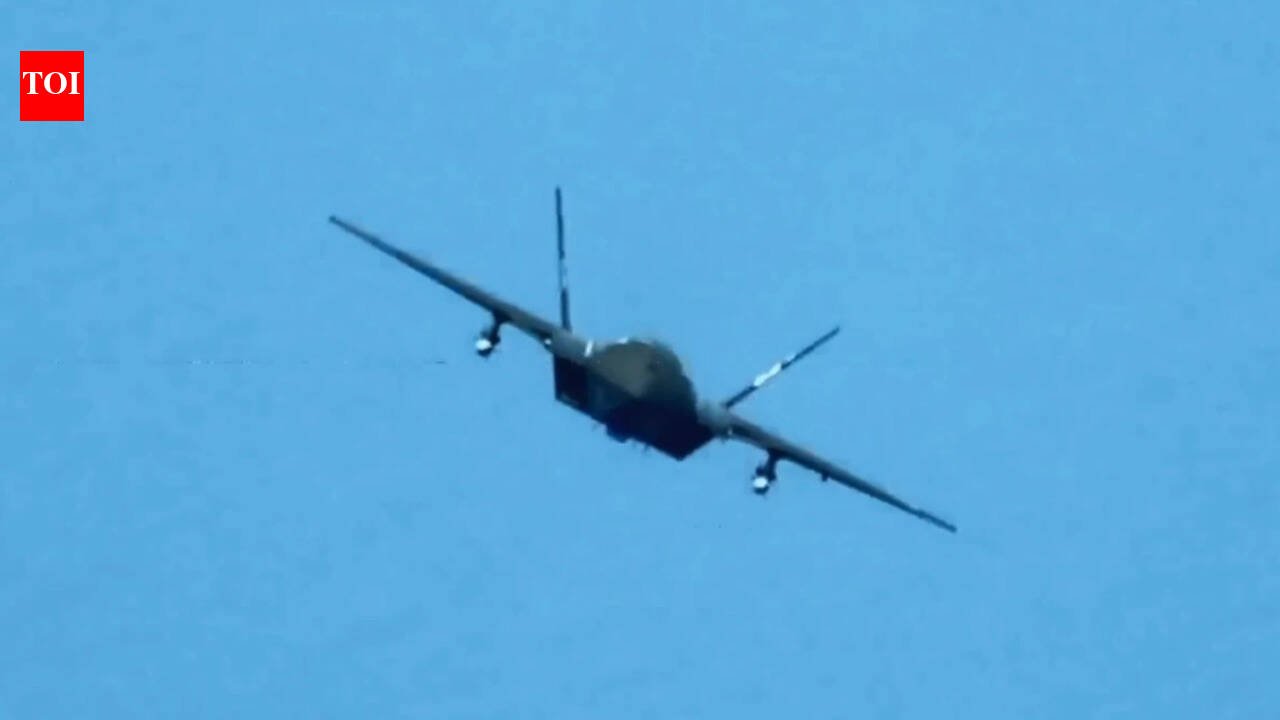
As automation and autonomy advance, the implements of war are reshaping modern warfare. This week alone saw four developments with the potential to change how autonomous systems are viewed.Turkey’s Baykar Kızılelma—an unmanned, stealth-shaped aircraft—fired a ballistic missile and struck a target at 120 km. Its small size and stealthy shaping make it difficult to detect on radar.Russia has integrated the S-8000 Banderol air-launched cruise missile onto its Orion drone, a platform comparable to the American MQ-1 Reaper. That gives a relatively small drone the ability to strike targets at ranges exceeding 500 km. Deploying long-range stand-off weapons from small drones expands the number of platforms that can hit deep targets.India is advancing too with the Ghatak stealth drone programme.Designed as an unmanned combat aerial vehicle with a flying-wing layout, Ghatak is expected to use a dry variant of the indigenously developed Kaveri engine. Intended to carry precision-guided munitions and operate in contested airspace, it represents a domestically produced option for deep strikes without risking pilots.Led by the Defence Research and Development Organisation, the project marks a significant step in India’s push for self-reliance in advanced unmanned systems.The United States has also broadened the use of unmanned platforms in combat. For the first time, three Corsair unmanned surface vessels were used offensively to strike Iran’s Bandar Abbas port, targeting naval ship and submarine repair facilities. The attack underscored how USVs are now being deployed in combat roles—ironically similar to Iran’s use of small boats and drones.On the same day, Ukraine staged a complex autonomous operation: an unmanned watercraft delivered an unmanned ground vehicle to shore, guided by an aerial drone.Once ashore, the ground vehicle—armed with a machine gun—attacked Russian positions. This layered use of sea, air and land unmanned systems illustrates the expanding tactical possibilities.Taken together, these developments show drones and autonomous platforms are moving beyond supplementary roles. They are increasingly central to precision strikes, multi-domain coordination and reducing risk to human crews.


