



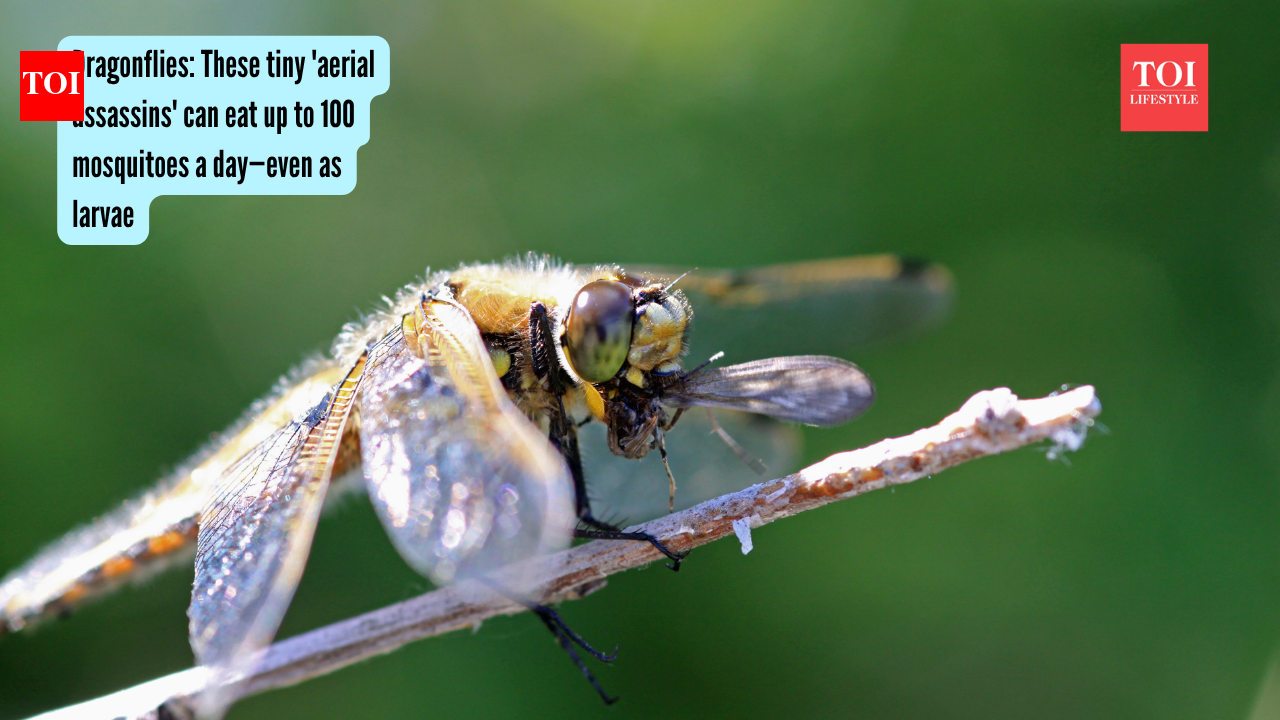
Nature carries miracles in its embrace and has its own way of keeping things balanced, even through creatures we barely notice. While we spend our summers wading off buzzing pests and reaching for repellents, there’s actually an entire ecosystem doing that job for usIt is surprising to know that some of the most efficient hunters on the planet aren’t lions or hawks, but insects small enough to rest on a fingertip. They dart, hover, and strike with a precision that puts most predators to shame.And that is why dragonflies have the image of nature’s most underrated assassins!
Representative Image
Meet nature’s assassins: Dragonflies, the mosquito hawks
Dragonflies have got their intimidating nickname “mosquito hawks” for good reason. According to the National Park Service, cited by Smithsonian Magazine, a single adult dragonfly can eat around 30 to 100 mosquitoes a day.
Even as larvae, they’re already hunting
Long before they take flight, dragonflies are already skilled predators. According to Smithsonian Magazine, in their aquatic larval stage, dragonfly nymphs “feast on mosquitoes,” eating almost anything they can catch underwater during that phase, which lasts from a few weeks to several years, depending on the species.A 2023 meta-analysis published in the Journal of Animal Ecology analysed 485 effect sizes across 31 studies covering 47 dragonfly and damselfly species preying on nine mosquito species from the Aedes, Anopheles and Culex genera, spanning 14 countries. It found that a single naiad eats an average of 40 mosquito larvae per day, cutting local mosquito larval populations by 45% daily.
How are dragonflies important for disease control?
The mosquito species studied are known vectors for diseases including dengue, malaria, Zika, yellow fever, and West Nile fever, per the same study. The researchers noted that predation success didn’t vary significantly across mosquito species or larval stages, suggesting dragonflies could be a genuinely effective, low-cost, environmentally friendly tool in reducing mosquito-borne disease risk.
Dragonflies are powerful fliers built for hunting
Dragonflies aren’t just efficient; they’re also mechanically extraordinary. As reported by Smithsonian Magazine, a 2018 study using high-speed cameras revealed that dragonflies angle their bodies at a 90-degree tilt to fly backward, while independently twisting each of their four wings for precise control that has even inspired engineers designing flying robots.


