



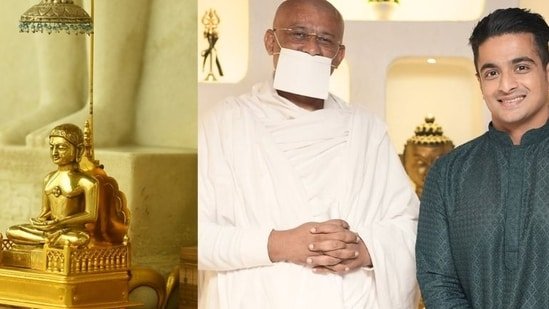
In the world driven by speed and convenience, the life of a Jain monk begins with renunciation. In a conversation with Ranveer Allahbadia, Dr Muni Adarsh, Spiritual Scientist shares his journey of becoming a Jain monk. On the podcast, he tried to throw light on Jainism. However, Jain philosophy deserves not one but many more conversations. He also emphasised on how simple lifestyle changes has led to detachment from dependence and embrace a slower and mindful existence.
Giving up comfort
For many people, the idea of giving up everyday luxuries like vehicles or even the ease of modern living seems unimaginable. Yet, these are among the first steps that set Jain monks apart, as they choose to walk everywhere, embracing simplicity in its truest form. Dr Muni Adarsh highlighted that as a Jain monk he doesn’t use vehicles and prefers walking. He mentioned that sometimes small lifestyle choices become defining principles in one’s life. While talking about his journey as a Jain monk, he shared about one of the difficult rituals that teaches a lot of pain.
Kesh Lochan ritual
Among the most intense practices in Jain monastic life is Kesh Lochan, a ritual where hair is plucked out by hand in small bunches. Unlike a routine haircut, this act is deliberate and symbolic, often causing bleeding. It signifies letting go of vanity and physical attachment, reinforcing the idea that the body is temporary.
Dr Adarsh mentioned that for those who undergo it, the pain can be extreme—described as comparable to a sudden, overwhelming physical shock. Yet, instead of fainting or retreating, practitioners experience something unexpected. The mind shifts, and rather than being consumed by pain, they rise above it.
A gateway to spiritual elevation
According to Dr Adarsh, in that moment of intensity, pain transforms into a tool for spiritual growth. He highlighted that practitioners often describe entering a higher state of awareness, where physical suffering loses its power. It becomes a realization that the human body can endure far more than the mind allows.
He highlighted that for most people, pain is something to avoid at all costs. But the Jain monk’s journey challenges this instinct. It suggests that beyond discomfort lies strength, and beyond fear lies freedom. By confronting pain head-on, one may discover not just endurance, but a deeper sense of inner peace and liberation.
For Jain monks, such practices are not about self-torture but about liberation — freeing oneself from the fear of discomfort and the limitations of the body. In doing so, they challenge a fundamental question for the rest of us: how much of our lives are shaped by the fear of pain, and what might lie beyond it?


