



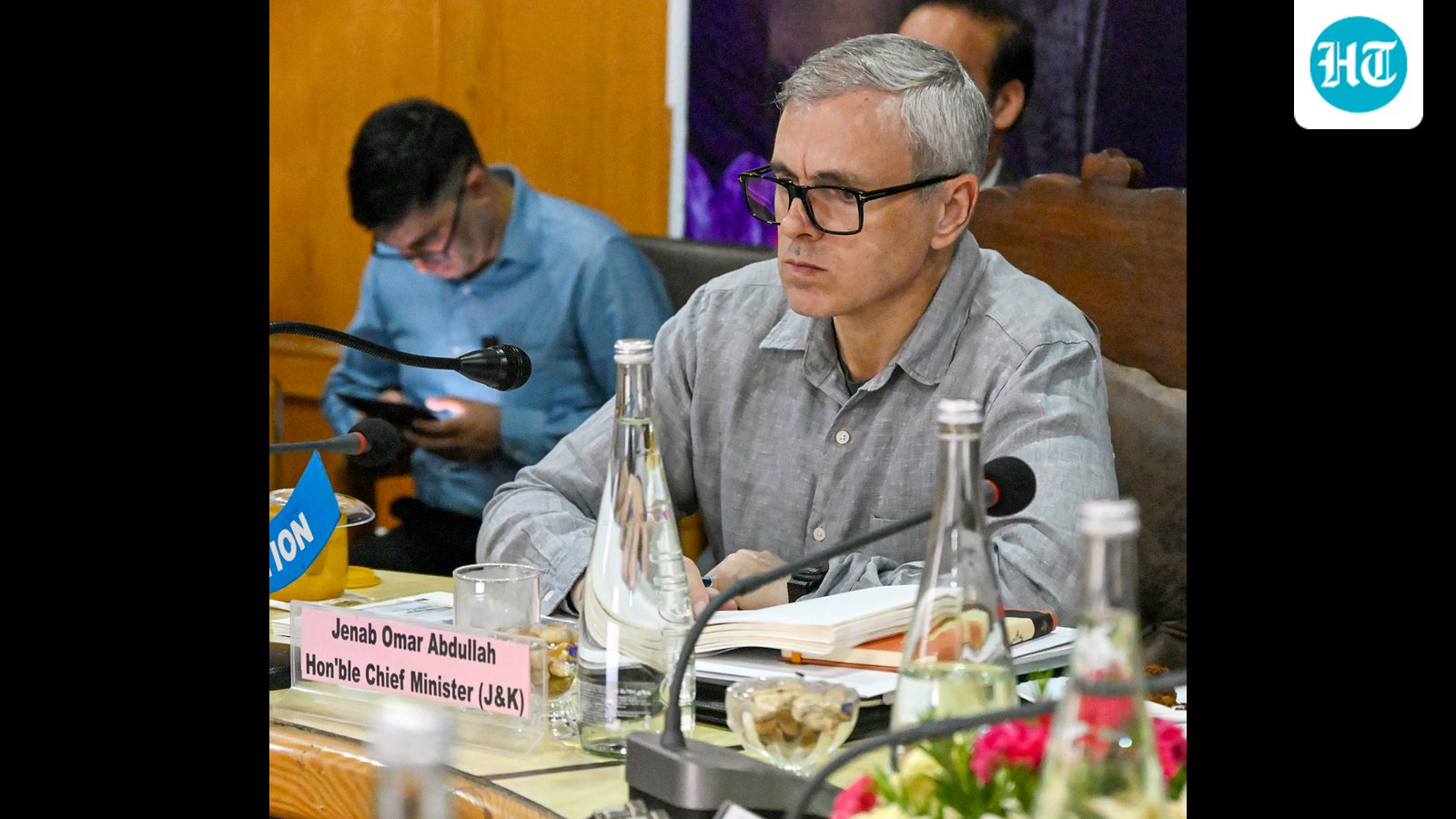
Jammu and Kashmir chief minister Omar Abdullah on Wednesday advised the leadership of Ladakh not to rely on the Centre’s verbal assurances regarding their struggle for constitutional safeguards with regard to land and jobs.
His remarks come days after the latest round of talks in New Delhi this month between leaders of the Ladakh Apex Body (LAB) and Kargil Democratic Alliance (KDA) failed to yield a concrete outcome.
“Ladakh has its own problems. Our problems are different. But I can only give advice to the leaders of Ladakh, as a friend and an elder brother. Please do not believe any promise of the central government until and unless they sign it and give it to you,” Omar said, adding that Jammu and Kashmir has been a victim of the Bharatiya Janata Party-led Centre’s verbal assurances.
The chief minister asked the Ladakh leaders to seek an affidavit.
“We too were given verbal assurances that statehood would be restored immediately after the (assembly) election. Almost two years have passed since, and that promise has not materialised. Therefore, with folded hands, my humble request to the leaders of Ladakh and Kargil is not to trust verbal commitments from the Centre until they receive something in writing, perhaps in the form of a formal affidavit,” Omar said in Pulwama while inaugurating 100 projects worth ₹86 crore.
When asked about a series of protests by doctors, daily wage employees and NRHM employees in J&K, the chief minister said in a democracy you cannot say holding a protest is wrong.
“There are other ways to convey your message to the government. I would request these people to please take the path of dialogue. Because, in the end, dialogue will be the way out. We will not be able to talk to you while protesting. Because when you try to get something from us while protesting, the result will be that everyone else will come to protest. So, as long as you are protesting, we will not be able to talk to you,” he said.
He said that only after trainee doctors ended their protest did talks begin with them.
“Those who are either protesting or thinking of protesting can protest; no one will stop them. But we will not be able to talk to them while protesting. When the protest is over, then we will be ready to talk to them about their legitimate demands,” he said.
