



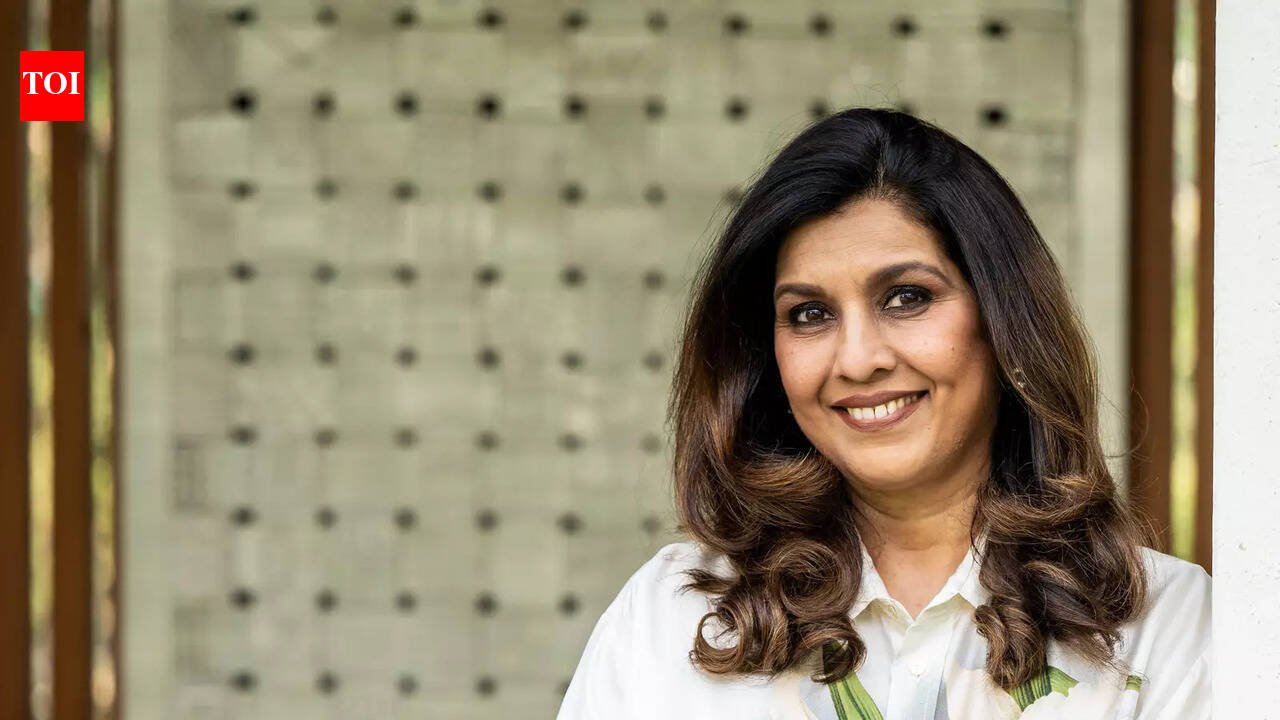
For Geetanjali Vikram Kirloskar, leadership was not inherited — it was built, brick by brick, alongside her hus band, Vikram Kirloskar. From her early days in advertising and television to co-architecting joint ventures alongside her husband, and eventually stepping into leadership after his unexpected loss, she speaks about transforming grief into resolve while carrying forward a shared legacy. This Women’s Day, she tells us why women in leadership must ‘speak better, not louder’ and focus on creating measurable impact. Excerpts:Advertising, media, public engagement, and now industrial and corporate leadership… How has this multidimensional career shaped the way you see power and influence today? I come from an advertising and marketing background. About 12–13 years ago, I came back to work with my husband at Kirloskar Systems. Vikram always led — he was brilliant. The hardcore setting up was all his; he founded the empire. The business was growing, and I wanted to apply my professional experience to support him. We worked together on several joint ventures, and it became both a personal and professional journey. I understood finance, budgeting, business models, and revenue expansion. My background, perhaps, helped me bring in the marketing, communication, consumer, and HR perspectives. I looked at markets analytically, from the consumer’s point of view. I contributed through understanding, deciphering and interpreting markets. It was a dialogue between him and me. We were co-architects of what later became an automobile conglomerate. It was truly a partnership — continuous dialogue, mutual respect. Later, our daughter Manasi joined us, so the three of us were working together. In hindsight, perhaps that phase prepared me for what was to come.You had to suddenly step into leadership after Vikram’s passing. How challenging was that?It was overwhelming. When a loss is sudden, there is no preparedness. If someone has a long illness, you internalize and plan. Here, there was no defence. The grief was deep and irreparable. I felt an immense load of responsibility — but also accountability. We built those businesses ourselves. They weren’t inherited. So, there was responsibility toward employees, Japanese partners, dealers, suppliers, industry bodies — everyone. I reached out to all our partners and took on the responsibility. I became Chairperson and Managing Director. Manasi was nominated on all joint venture boards. I stepped onto national councils and boards Vikram had been part of. The journey continued. So, within days, I had to gather myself. You don’t know how strong you are until you’re hit by a storm. You either collapse or you emerge stronger. I chose to emerge stronger.You’ve often made the point that the bigger challenge wasn’t simply being a woman in leadership but being a wife stepping into a family legacy. Has the perspective around it changed over time?Society is more comfortable with linear succession — from parent to child. A spouse stepping in disrupts that narrative; it feels less “natural” to many. In the early days, I could sense hesitation — sometimes subtle, sometimes well-intentioned — about whether I should, or even could, carry the mantle forward.But I’ve never believed in asserting authority by being louder. I believe in earning it by being better — better prepared, better informed, better aligned to the business. I worked three times as hard to build source credibility and demonstrate measurable value. This wasn’t a soft portfolio; we were dealing with automobile joint ventures and real estate — serious, performance-driven sectors.Interestingly, our Japanese partners were instantly supportive. They had seen me work for a decade; I wasn’t an outsider stepping in. That validation mattered. On other platforms, acceptance took time. There were comparisons, of course — the idea that I couldn’t be Vikram, and perhaps shouldn’t try. But the truth is, the culture we built was rooted in Vikram’s values. And that is what is what we carried forward, as Vikram’s way was our way. So my perspective has evolved from proving I belong to simply delivering impact. I worked triply hard, building source credibility. Once results speak, acceptance follows — not out of obligation, but out of respect.In leadership and boardroom roles, do you think having a woman at the table is mainly about intuition and creativity, or is it something more?A lot has been said about the importance of diversity and inclusion in organisations — on the shop floor, in top management, in decision-making and board roles. Often, the focus is on women bringing intuition, empathy and creativity to the table. While those are certainly strengths, I think that narrative is incomplete.Women are also deeply logical, analytical and passionate when they choose to be. They are fully capable of taking hard, even uncomfortable decisions — sometimes as effectively as, if not better than, their male counterparts. It’s not just about the softer, nurturing aspects; it’s equally about the tougher, more hard-nosed side of leadership.Women can apply both emotional intelligence and rational thinking. They can be creative and compassionate, but also firm, strategic and decisive — depending on what the moment and the role demand.Yes, men and women are biologically different, and that naturally brings different strengths and weaknesses. But women are often able to straddle both dimensions — empathy and assertiveness, intuition and logic — with equal ease. That balance is what truly makes their presence invaluable in leadership.As a leader operating within internal workspaces, what advice would you offer women in leadership roles?Don’t get overly preoccupied with the gender divide. If it exists, it exists — but your focus must be on consistently adding value. Work hard, build competence, and aim to create measurable impact.Today’s businesses simply cannot afford to ignore strong contributors. In a competitive and volatile environment, delivery matters more than anything else. If you are confident, skilled, and producing tangible results, it becomes very difficult for any organisation to sideline you purely on the basis of gender.Increasingly, leaders look at the strength of ideas, the viability of business models, and the ability to execute — not at whether the person presenting them is a man or a woman. Merit and measurable contribution carry weight.There’s very little room for mediocrity today — and that, in many ways, is a positive shift. Excellence stands out. Turning grief into something productive requires immense inner strength. Did you find yourself compartmentalising your emotions?Very much so. The only way I could cope with my grief was to channel it into something constructive. It wasn’t a conscious decision at the time — it was subconscious. Looking back, I realise it was a coping mechanism. Alongside the grief came an overwhelming sense of accountability and responsibility. Perhaps that too was a defence mechanism.In that sense, I transformed my grief into resolve. I found a new purpose — to carry forward our shared legacy, to integrate Manasi into it, and to build it further in partnership with her. I made purpose my anchor, not a person. That, perhaps, was my way of coping.There is no handbook for grief. There is no right or wrong way to experience it. It doesn’t diminish with time. It stays with you. What changes is your ability to navigate through it.Yes, compartmentalisation does happen. You can’t always afford to show vulnerability when you’re standing alone and leading from the front. Even today, I deal with anxiety, fear, insecurity, and moments of self-doubt. There are days of crisis — of confidence, even of memory. I fumble. I question myself.But you shield that from the world. You learn to keep it within. In many ways, you become two people. One part of you faces the world — leading large businesses, engaging stakeholders with confidence, clarity and conviction. The other part quietly struggles, grieves, and breaks down.


