



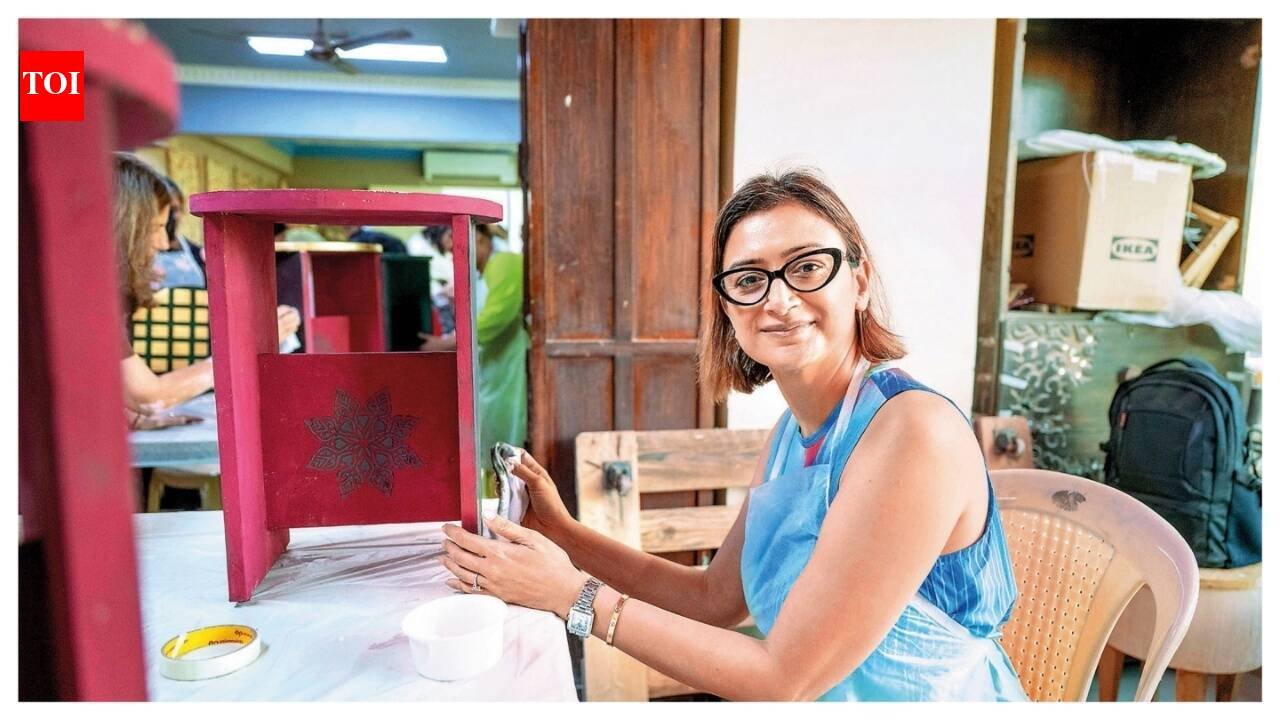
In a city that never stops moving, where the new perpetually elbows out the old, an unlikely counter-current is gathering momentum. From Tardeo to Thane, from Ghatkopar to Goregaon, Mumbaikars are pausing, to look more carefully at the furniture they already own, at the pieces gathering dust in corners or teetering on the edge of being discarded. And increasingly, they are choosing to revive them.Furniture upcycling, refurbishing, and recycling, once the domain of hobbyists and the thrifty, has gone decidedly mainstream in Mumbai. Day-long workshops are filling up weeks in advance. Instructors report waiting lists. And the participants are not who you might expect: they are lawyers, biotech researchers, finance professionals, actors, and designers, busy, urban, aspirational Mumbaikars who are making a deliberate choice to slow down and reimagine what they already have.
MORE THAN A TREND: THE EMOTIONAL PULL OF OLD WOODAsk anyone who has attended a furniture upcycling workshop why they came, and you will almost always get an answer that goes beyond aesthetics or economics. Somewhere in the story is a piece of furniture with a history – a grandmother’s trunk, a grandfather’s writing desk, a mother-in-law’s steel almirah – and a reluctance to let it go.Mayushri Dalal, who works with a finance company in Lower Parel and commutes from Thane, puts it plainly. “I have a very old cupboard that has been passed on for generations. My grandmother’s grandmother owned it. And I want to hold on to this piece; the quality of wood is really great, despite it being more than 100 years old. I wanted to upcycle it, recreate a new look with it. I wanted to pass it on to my next generation.” For Mayushri, workshops are not just about learning a craft. They are about gaining the confidence and the knowledge to be a responsible custodian of something irreplaceable. “At workshops like these, you get to know the process, the step-by-step details of how to go about it,” she says.This emotional dimension is something that furniture makeover artist and educator, Aashna Monga, encounters regularly. Aashana, who holds a PhD in biotechnology and is one of the city’s advocates for furniture revival says, “I have people who come in with requests to restore older furniture that they have an emotional connection to, and breathe new life into old cupboards, chairs, trunks and vintage wooden pieces instead of discarding them.” Aashna herself has lived that experience. “My mother-in-law had a 53-year-old almirah, the common steel ones that were part of every home in those days. I refurbished that almirah and gave her a surprise. She loved it.” Aashna’s passion for sustainability deepened while working on her doctoral research. “People today are eco-conscious and, in their own way, want to do something about it. The fact is that there is an increasing number of residents who are turning to furniture revival. I have seen an increase in demand for such workshops.”
THE WORKSHOP BOOM: LEARNING, BONDING, DESTRESSINGThe combination of skill-building, creativity, and community of these workshops is what keeps drawing people to these workshops in growing numbers. Ananya Gada from Ghatkopar is unequivocal about what they offer. “I love this form of painting. This is a passion that I have had for long. I feel DIY repainting sessions where you meet other people doing similar art works, feels very destressing and reassuring.”For Nanita Pant from Goregaon, it took a leap of faith just to walk through the door. “I don’t have an artistic bone in my body, so I assumed that a workshop about painting would not work for me,” she admits. “But after I came here, I realised this was going well. The instructors here are really helpful and encouraging.” That experience of discovering an unexpected capability, is part of what instructors like Mukesh Mandal work to create. “The easy-to-follow instructions bring out the creativity of participants,” he says. “The best thing about painting furniture is that mistakes are not prominent at all, and it always looks great when done.”NOT JUST RESTORATION: THE ART OF PERSONALISATIONWhile the romance of heritage furniture draws many to upcycling, not everyone arrives with a century-old heirloom in tow. For a growing segment of participants, the goal is something different: making the new feel uniquely theirs.Riya Kamwani from Mahim, who makes creative gift hampers and has a background in interior design, represents a refreshing perspective. “I am not someone who only wants to upcycle. In fact, I am someone who loves to buy new furniture and then personalise it and make it my own. Whatever furniture you buy from stores is usually common, but by painting it using various techniques that I have learnt at this workshop, I can make it unique. I want to revamp new furniture.” Kamwani’s approach speaks to a broader truth about why this movement has found such fertile ground in Mumbai: it is not about deprivation or making do with less. It is about self-expression, not just buying something, but transforming it into a reflection of who you are.Trisha Parikh, a freelance fashion designer from Tardeo, echoes this spirit. “This is my passion. While I don’t want to pursue it as a career, I am just doing it for my own home. I have upcycled many pieces and have converted stuff into usable furniture and home decor items.” And then there is Preeti Bhalerao, a lawyer from Wadala, who brings the same purposeful energy to the workshop that she brings to the courtroom. “I love art,” she says, “and I am looking forward to recreating my dining table using different techniques to upcycle furniture.“WHEN CELEBRITIES PULL UP A CHAIRPerhaps one of the most telling signs that furniture upcycling has arrived culturally is who else is turning up at these workshops. Gauri Pradhan Tejwani, the well-known television actress, recently spent a full day at a furniture painting workshop, and says she has no regrets. “I have never really had the time to do this. Today I finally took time off from work, especially for this day-long workshop to learn about furniture painting. I just couldn’t resist.” For Gauri, the workshop was also a natural extension of a long creative life. “For the last two decades I have been painting on porcelain and I always look for workshops like these. I will try to use all the techniques that I learnt at this workshop.”


