



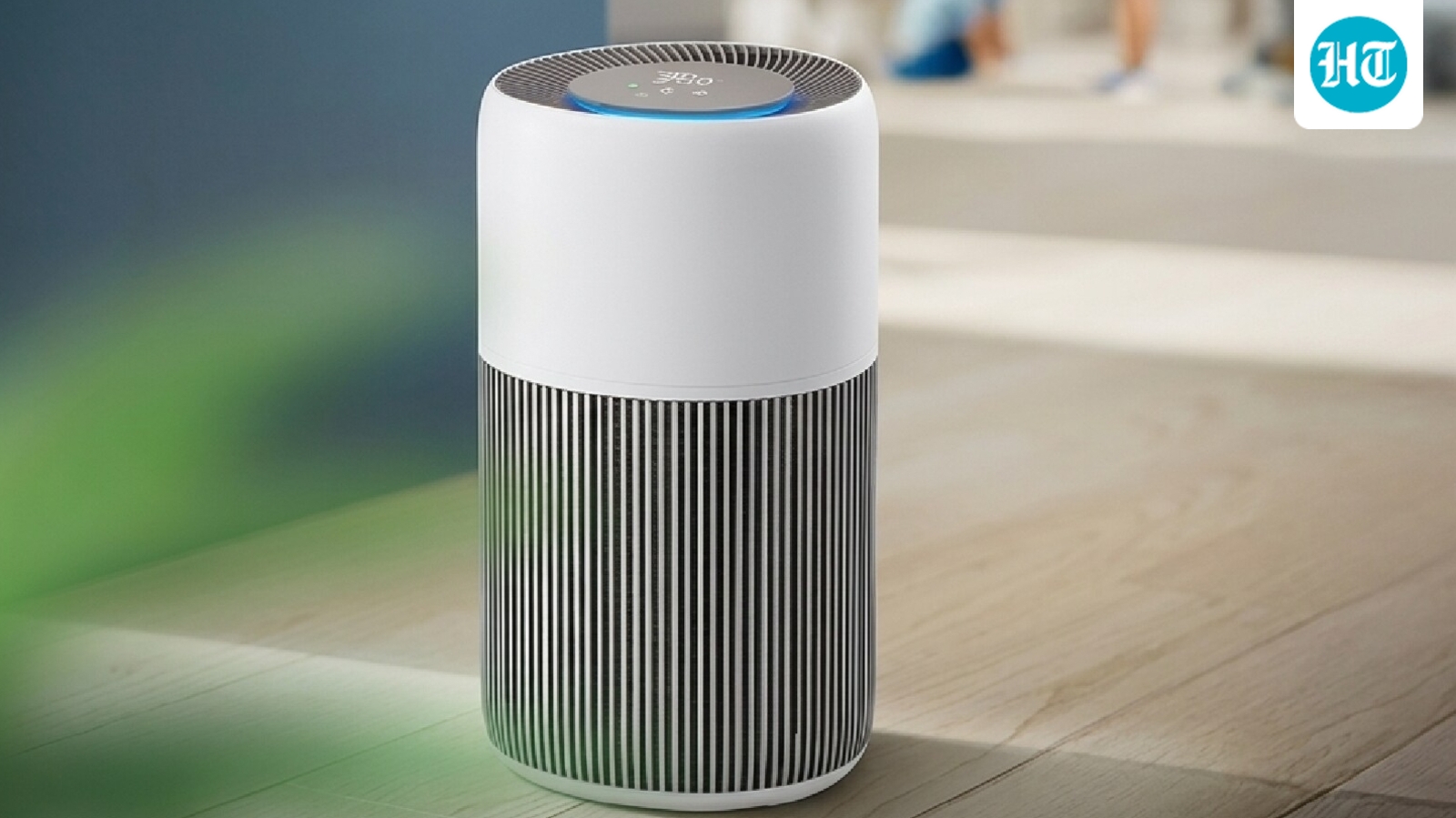
Air quality in the Northern part of the country has started reducing. This means it’s time to clean the dust off those old air purifiers and get them serviced ahead of the season or upgrade them if they are beyond repair now. That said, buying an air purifier isn’t a simple task. Before finalising on a model, you don’t only need to check the area that it covers or if it has good air quality sensors but you also need to compare CADR and HEPA filters and other filters that can take off the cleaning load from you.
In India, where indoor air can be affected by dust, traffic pollution, smoke and seasonal spikes in particulate matter, choosing a purifier based only on price or brand name can leave you with a device that is either underpowered or unnecessarily expensive. This is why it helps to understand a few key terms and specifications such as CADR, AQI, HEPA, ACH and more.
In this guide, we will break down the terminology you should know before buying an air purifier and highlight five common mistakes buyers should avoid.
Terms you should know before buying an air purifier
– CADR: It measures the volume of clean air a purifier can deliver. A higher CADR generally means faster cleaning.
– HEPA filter: It is a high-efficiency filter that designed to capture very fine airborne particles, including PM2.5.
– PM2.5: It is the fine particulate matter measuring 2.5 micrometres or smaller. It’s a key pollutant targeted by air purifiers.
– ACH: It refers to Air Changes per Hour and it indicates how many times a purifier can theoretically filter the air in a room within an hour.
– Activated carbon: It’s a time of filter used in air purifiers that helps reduce certain odours and gaseous pollutants that particle filters cannot remove.
– Pre-filter: It captures larger particles such as dust, hair and lint before they reach the finer filters.
– Room coverage: The room size a manufacturer says the purifier is designed to handle. Compare this with your actual room size rather than assuming bigger coverage is always better.
– AQI: It stands for Air Quality Index and it provides an overall indication of outdoor air pollution levels.
– Filter replacement: Most filters have a limited service life. Check replacement availability and cost before buying.
Air purifier room size chart
| Room size | Approx. area | Suggested purifier CADR | Suitable for |
| Small | Up to 150 sq ft | 150–200 m³/h | Bedroom, study, small nursery |
| Medium | 150–250 sq ft | 200–300 m³/h | Bedroom, home office, kids’ room |
| Large | 250–400 sq ft | 300–450 m³/h | Living room, large bedroom |
| Extra large | 400–600 sq ft | 450–600+ m³/h | Large living room, open-plan space |
| 600+ sq ft | 600+ sq ft | 600+ m³/h | Large/open areas; consider multiple units |
Factors to consider while buying an air purifier
1. CADR: A higher CADR is generally better for larger rooms or spaces where you want faster cleaning.
2. HEPA filter: Look for a purifier with a genuine HEPA filter, particularly if your priority is reducing fine particulate matter such as PM2.5. Also check how easily the filter can be replaced and its expected replacement interval.
3. Activated carbon filter: A HEPA filter primarily targets particles, while an activated carbon filter can help reduce certain odours and gaseous pollutants. It is particularly useful if your home is exposed to cooking smells, smoke or other odours.
4. Room size: An air purifier designed for a small bedroom may struggle to clean a large living room efficiently. Measure the room before buying and choose a model with adequate CADR rather than simply selecting the model with the largest advertised coverage.
5. Filter replacement cost: The initial price isn’t the complete cost of ownership. Find out the price and availability of replacement filters and how frequently they need to be changed. A cheaper purifier can become expensive if replacement filters cost significantly more.
6. Noise levels: For bedrooms and workspaces, noise matters. Check the purifier’s noise rating, particularly at the speeds you are likely to use. A very loud purifier may discourage regular use.
7. Look for a PM2.5 sensor: A built-in PM2.5 sensor can show changes in indoor particulate levels and, on compatible models, automatically adjust fan speed. However, treat the displayed readings as an indication rather than laboratory-grade measurements.
5 mistakes to avoid while buying an air purifier
1. Choosing a purifier only by room coverage: One of the most common mistakes is buying a purifier based solely on the advertised room-size rating. Two models may claim to cover the same area but deliver different cleaning speeds. Check CADR in addition to checking room coverage and choose a model that can circulate enough clean air for your actual room size.
2. Assuming every HEPA filter is the same: In addition to checking HEPA label, check the filter specifications, particularly if your primary concern is PM2.5 and fine particulate pollution.
3. Ignoring replacement-filter costs: An air purifier is a long-term appliance, not a one-time purchase. A model may look affordable initially but become expensive if its replacement filters are costly or difficult to find. Check the filter price and expected replacement interval before buying.
4. Buying too many features instead of enough CADR: Wi-Fi, app controls, air-quality displays and multiple operating modes can be useful, but they shouldn’t take priority over basic cleaning performance. When comparing comparing two models, prioritise CADR, filtration and room suitability first, then consider smart features.
5. Buying one purifier for a large open space without checking airflow: A purifier rated for a particular room size may not perform the same way in a large open-plan area with high ceilings, open doors or frequent airflow between rooms. For larger spaces, consider higher CADR or multiple strategically placed units rather than assuming one purifier will clean the entire home.
Best air purifiers to buy in India
The Dyson Purifier Big + Quiet is a large-format air purifier designed for spacious rooms, with a cone-shaped airflow system that projects purified air across the room. It combines a HEPA H13-grade filter with activated carbon to capture fine particles, gases and odours. Dyson says it can purify rooms up to 1,076 sq ft. The machine includes a remote control, hidden wheels for easier movement and MyDyson app support. It features a rotate feature that can direct airflow at 0°, 25° or 50°.
What are buyers saying on Amazon?
Buyers find the air purifier effective, with one mentioning it reduces PM2.5 levels from 275 to under 50 in minutes. The product receives positive feedback for its quality.
Why should you choose this product?
Buyers should choose this air purifier for its effectiveness.
The Xiaomi Smart Air Purifier 4 Lite features a compact, minimalist tower design with 360-degree air intake, which makes it ideal for bedrooms and home office use. Its three-stage filtration combines a primary filter, high-efficiency filter and activated carbon layer to tackle dust, pollen, smoke, pet dander and odours. It supports rooms up to 640 sq ft and includes an LED display for real-time air-quality information, while app and voice controls add convenience.
What are buyers saying on Amazon?
Buyers find the air purifier to be of top-notch quality and consider it an excellent value for money. They also like its low-noise operations.
Why should you choose this product?
Buyers should choose this air purifier for its effectiveness and low-noise operations.
The Philips PureProtect Quiet 2200 is a compact, minimalist air purifier that is designed for medium-sized rooms. Its three-layer filtration combines a pre-filter, HEPA NanoProtect filter and activated carbon to capture fine particles, allergens, smoke and odours. The purifier offers 420 m³/h CADR and is rated for rooms up to 540 sq ft under Philips’ recommended GB/T rating. It also features PM2.5 sensing, Air+ app control, automatic mode, voice control and a gentle ambient night light.
What are buyers saying on Amazon?
Buyers find the air purifier performs well and is extremely quiet, providing reassurance about office air quality. The device is simple to use, worth the money, and effectively removes allergens.
Why should you choose this product?
Buyers should choose this air purifier for its effectiveness and low-noise operations.
The Honeywell Air Touch U1 is a large-room air purifier with a tall, modern design built for spaces of up to 1,085 sq ft. Its four-stage filtration combines a pre-filter, Nano Silver anti-bacterial layer, H13 HEPA filter and activated carbon to target dust, PM2.5, allergens and odours. It also features 3D airflow, real-time PM2.5 monitoring, Wi-Fi and Alexa support, a child lock and sleep mode.
What are buyers saying on Amazon?
Buyers find the air purifier effective, particularly noting its efficiency in large houses and big rooms.
Why should you choose this product?
Buyers should choose this air purifier for its effectiveness.
The Dyson HushJet Purifier Compact HJ10 uses a compact, jet-engine-inspired design with a star-shaped nozzle that projects a concentrated stream of purified air. Its electrostatic filter captures up to 99.97% of particles as small as 0.3 microns, while an activated carbon filter targets gases and odours. Designed for rooms up to 100 sq m, it features automatic pollution sensing, an LCD display, MyDyson app control and voice compatibility. The box includes the purifier and its electrostatic and activated-carbon filters.
Disclaimer: At Hindustan Times, we help you stay up-to-date with the latest trends and products. Hindustan Times has an affiliate partnership, so we may get a part of the revenue when you make a purchase. We shall not be liable for any claim under applicable laws, including but not limited to the Consumer Protection Act, 2019, with respect to the products. The products listed in this article are in no particular order of priority.
