


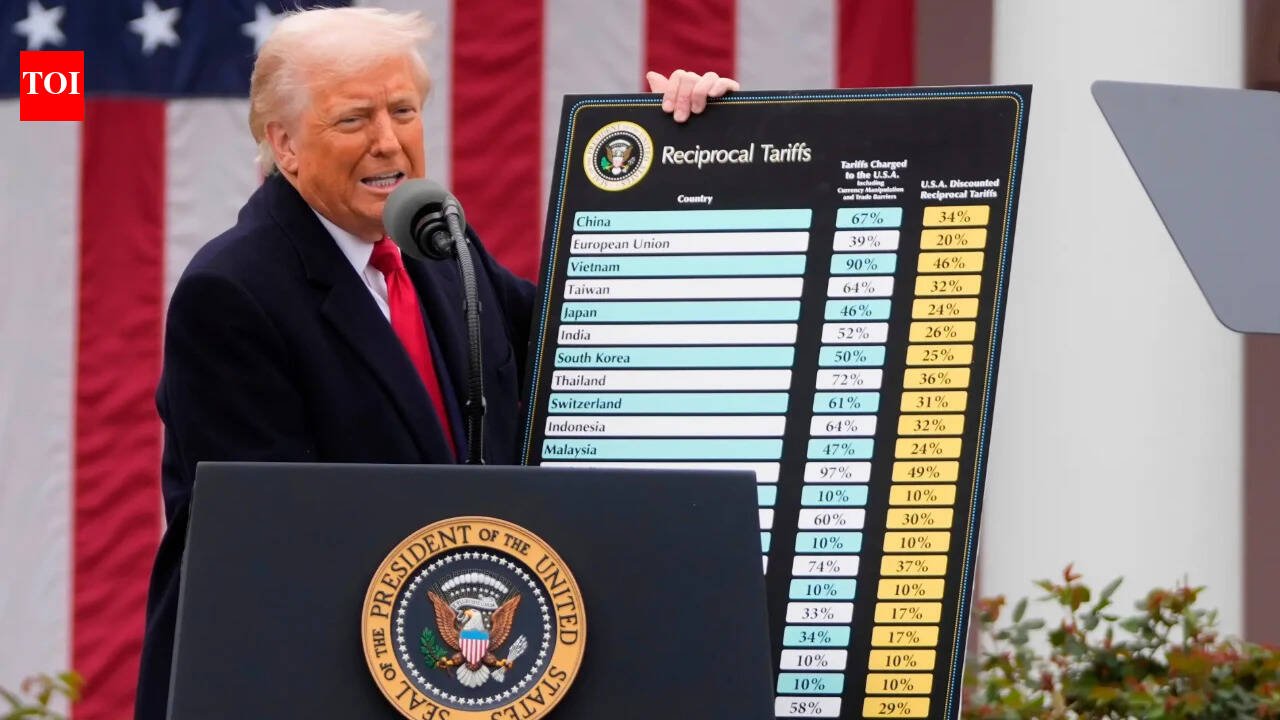
TOI correspondant from Washington: MAGA boss Donald Trump is preparing to unleash yet another wave of tariffs on dozens of countries, including India, within days, doubling down on his favorite economic weapon just as it seemed a deal with New Delhi is within reach.The new tariffs will roll out amid mounting warnings from economists and even some of his own advisers that a fresh trade war could unsettle financial markets, fuel inflation, and hurt American consumers ahead of midterm elections in November.The latest move comes as the temporary blanket 10 percent tariff imposed on imports from virtually every trading partner is due to expire on Friday.According to the Financial Times, the administration has drawn up plans to impose new tariffs of roughly 10 to 12.5 per cent on as many as 60 countries, including India, citing investigations into alleged forced-labour practices and unfair trade policies.The White House is also pursuing separate investigations into excess manufacturing capacity that could eventually justify much steeper duties on imports from countries such as India, China, Japan, South Korea, Vietnam, Mexico and the European Union.The renewed tariff offensive arrives at a fraught time for New Delhi, already struggling to turbocharge its economy. For months, officials in Washington and New Delhi have repeatedly suggested that a bilateral trade deal is close to fruition, with both sides projecting optimism after multiple rounds of negotiations.Yet despite the confident rhetoric, a deal remains deadlocked over long-standing differences on market access, agriculture, digital trade, industrial goods and tariff concessions.Western news agencies have reported that India’s commerce minister Piyush Goyal was pushing back on any deal unless it gives a meaningful advantage to New Delhi over competitors and no new tariffs after the deal is made.But Goyal refuted the reports saying, “I had fantastic meetings with USTR Jamieson Greer when he visited Delhi in June. Both sides reaffirmed their commitment to an agreement that is balanced, commercially meaningful, and delivers tangible benefits for businesses, farmers, workers, and consumers in both countries.”Except, there is no agreement in sight, and the prospect of another round of US tariffs now threatens to complicate negotiations further, potentially forcing India back into the expanding universe of countries facing higher barriers to the American market, even as its economy is getting fried by the energy crisis caused by Trump’s war on Iran.Trump’s latest escalation comes on the heels of another surprise announcement: a proposed 50 percent tariff on most Canadian goods beginning in 30 days unless Ottawa removes what Washington describes as discriminatory barriers against American products.Administration officials insist the move is unrelated to Trump’s weekend complaints that smoke from Canadian wildfires had “poisoned” American air; instead, they argue the tariffs respond to Canada’s retaliation against earlier US trade actions and longstanding disputes involving dairy products, automobiles and alcoholic beverages. The tariffs rely on a little-used provision of the 1930 Trade Act that has never before been invoked for such sweeping action.Trump’s unloading on Canada is the latest chapter in what has become an almost continuous cycle of tariff threats against a host of nations, including India and Brazil.Since returning to office, the MAGA boss has repeatedly argued that the US has been “ripped off” for decades by allies and adversaries alike, portraying tariffs as overdue compensation for unfair trade deficits and foreign protectionism.While there is indeed some basis for parts of that argument and many countries maintain higher tariff walls than the US in selected sectors such as agriculture, automobiles and industrial goods — and non-tariff barriers, subsidies and regulatory restrictions have long been irritants for American exporters — trade economists also argue that bilateral trade deficits alone are poor measures of fairness.Most economists further caution that tariffs operate as taxes paid largely by importers and consumers, often raising domestic prices while inviting retaliation that hurts exporters.Yet the MAGA supremo appears convinced that tariffs remain his ultimate negotiating instrument, something earlier presidents often regarded as a last blunt-force resort. The result is a global trading system that is now increasingly organised around uncertainty.Whether his remarkable faith in tariffs ultimately reshapes global commerce or merely leaves bruised alliances and broken friendships across continents remains one of the defining questions of his second presidency.
