






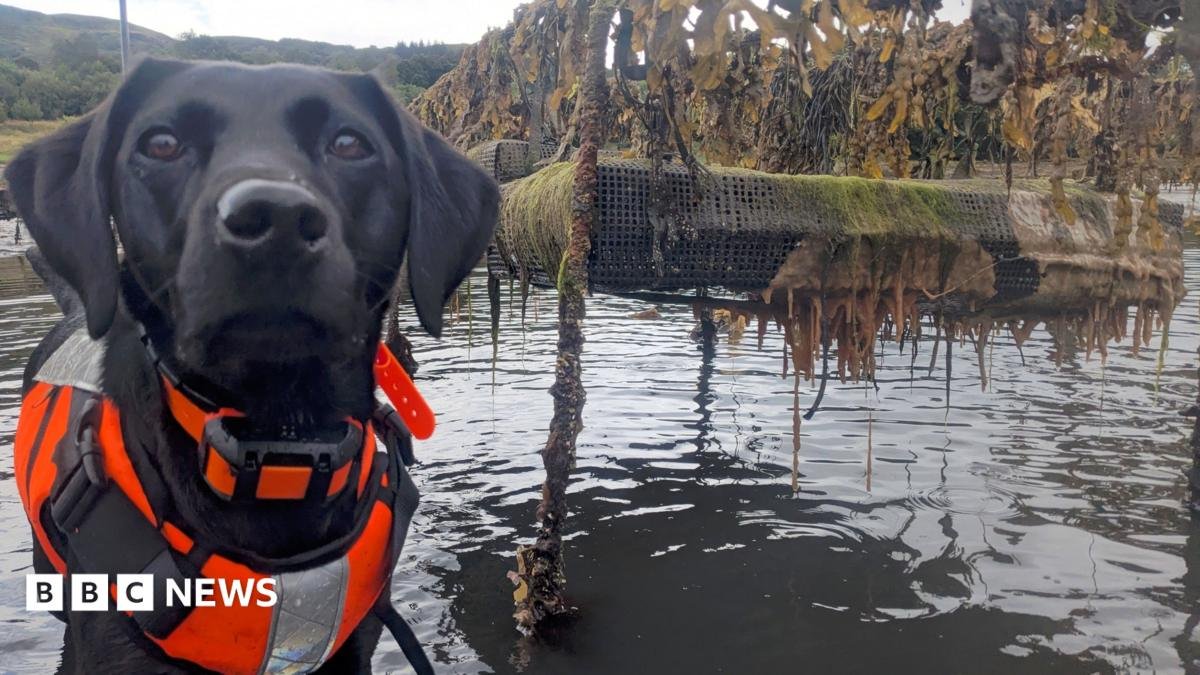
“When I first started this project, I genuinely didn’t know whether it would work,” said Dr Sim.
“No one had really explored whether dogs could help tackle this problem in the marine environment. It began as a proof-of-concept project and has exceeded every expectation I had.”
Dogs’ scent detection skills are often used in conservation work on land, including tracking endangered species and helping investigate environmental crime. At low tide, Sgiath can, as Dr Sim puts it “dive down under the seaweed”.
“She just does a survey with her nose, essentially, she can pinpoint exactly where it is, so it’s much easier,” she said.
Marine experts believe that carpet sea squirt, formally named Didemnum vexillum, came from Japan. It arrived on the shores of the south of England and Wales in 2008.
It can appear in various shades – from orange to cream – and has now spread to several seaside locations across the UK.
It reproduces quickly during the warmer summer months and, with warming seas, there are fears it could spread further.
Dr Martyn Kurr, a marine biologist from Bangor University told BBC News that non-native or “biofouling” species, like the carpet sea squirt, can outcompete native wildlife for valuable nutrients.
“These species also clog up aquaculture pens, marine infrastructure, and machinery such as boat propellors,” he explained.
Efforts to control and clean up these problematic marine invaders costs millions of pounds every year across Europe.


