





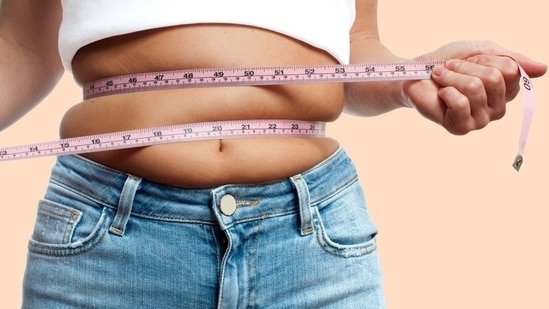
Muscle is the foundation of your strength; therefore, it is important to train it. Most people, when they kickstart their fitness journey, chase the wrong metric. They focus on losing weight rather than on training their bodies, cutting down on fat, and building strength.
Also Read | Should women lift weights? 5 reasons why strength training is non-negotiable
However, according to Dr Thomas Paloschi, MD, a longevity medical doctor specialising in preventative age management and functional medicine, you shouldn’t be chasing weight; rather, chase what your weight is made of. In a February 3 Instagram post, he explains, “Your body weight is not one thing. It’s the sum of bone, fat, muscle, and everything else (organs, water, connective tissue).”
Therefore, according to the doctor, ‘the scale can go down as your muscle mass does, or it can stay the same while your visceral fat drops and your health improves.’ The latter is the better option. “That’s why BMI and weight alone are misleading: They can’t tell the difference between fat loss and lean mass loss,” he added.
‘Stop chasing weight, chase what your weight is made of’
According to Dr Paloschi, “What matters isn’t your weight. It’s your muscle, fat distribution, and metabolic health. If you want real results, track what matters:
- Lean mass (muscle) — protect it, build it
- Fat mass — especially where it’s stored
- Bone density — the underrated longevity marker
Weight is a number. Body composition is the signal. And metabolic health is the goal.”
Explaining why BMI is a misleading measure for judging one’s fitness compared to body fat percentage, Dr Paloschi warned that two people with the same BMI can have very different body types. “BMI can’t tell what your weight is made of. So two people with the same BMI can be totally different: one with more muscle and one with more fat. Body fat percentage is better because it shows the split between fat mass and lean mass (muscle).”
How to measure body fat percentage?
As to how to find your body fat percentage, the doctor shared three accessible methods:
- MRI: gold standard + shows visceral vs subcutaneous clearly (but not practical or time/cost effective)
- DEXA: fast, relatively inexpensive, low radiation, measures lean mass + fat mass + bone density.
- BIA (home scales): not very accurate, very hydration-sensitive… but okay for trends if done consistently.
Types of body fat
Dr Paloschi shared two types of body fat, including:
- Subcutaneous fat: Present between skin and fascia (often what hides your abs).
- Visceral fat: Present beneath the fascia, around organs (liver, kidneys, spleen, and gut).
According to him, visceral fat is strongly associated with metabolic disease. “If you could track only one thing (it should be) how much of your fat is visceral fat,” he explained.
As for the optimal body fat percentage, he emphasised that body fat extremes are not the goal, as mortality risk rises sharply at 35-40 percent body fat. Moreover, he added, “Genetics matter: some people can’t get below 15-18 percent even after doing everything right.” Therefore, your goal should be to stay toward the lower end of your genetic range – not the bare minimum.
Lastly, he highlighted that muscle is the underrated longevity lever, which means the more muscle mass, the better. He highlighted a study that found skeletal muscle mass was an independent predictor of mortality (more muscle = lower risk).
Therefore, for instance, if you have 25-30 per cent of body fat, a smarter strategy is often to build lean muscle, not just lose weight. “And if you do lose weight? Protect the muscle you have. The body you want isn’t a lighter body: It’s a body with more lean muscle, less visceral fat, and lower insulin. The scale can change even if your health improves. Weight is what you see. Metabolic health is what runs the system,” he noted.
Note to readers: This article is for informational purposes only and not a substitute for professional medical advice. Always seek the advice of your doctor with any questions about a medical condition.
This report is based on user-generated content from social media. HT.com has not independently verified the claims and does not endorse them.


