



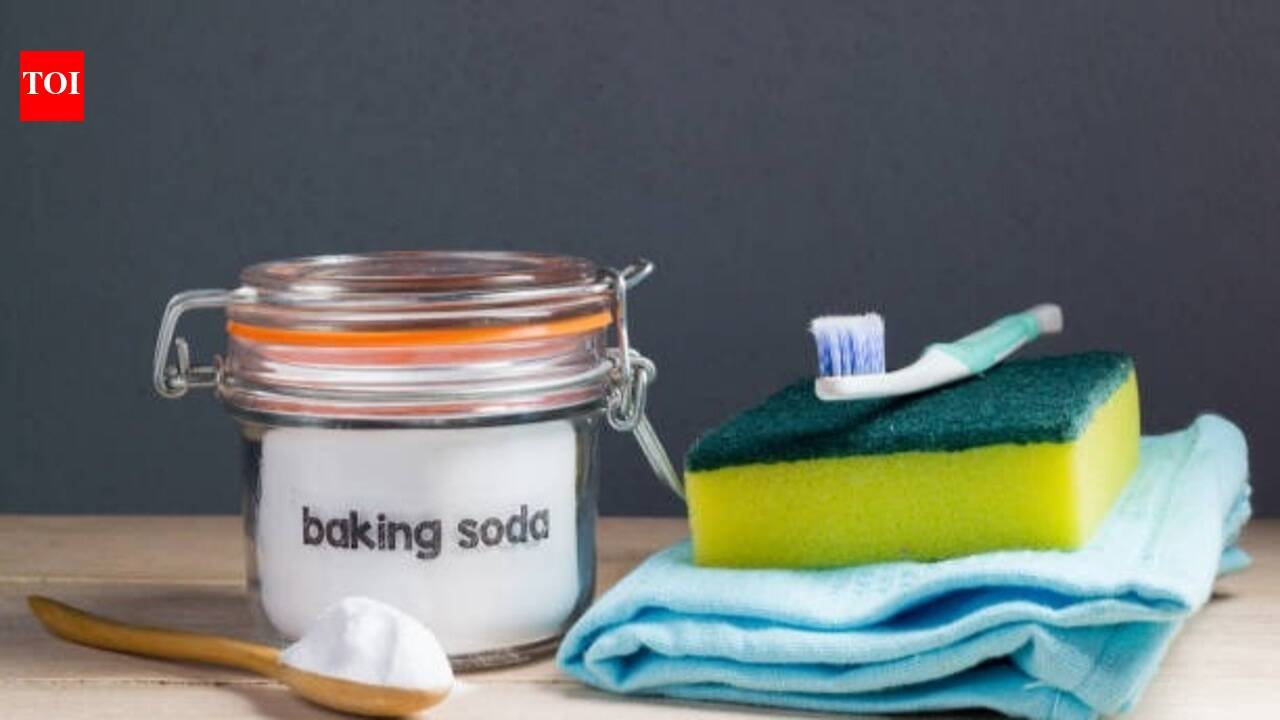
When Diwali cleaning starts, the shopping list for cleaners tends to grow quickly: one for the kitchen, another for the bathroom, a third for the floors. Yet one cheap box of baking soda can handle a surprising number of those jobs. It’s mildly abrasive, so it scrubs without harsh scratching, and it neutralises odours rather than just covering them up. It’s also gentle enough to use around food areas and has none of the sharp fumes of many store-bought cleaners. Here are five common jobs where baking soda earns its place and how to use it for each.
Grease on counters, stovetops and the chimney
Mix about three tablespoons of baking soda with a tablespoon or two of water to make a thick paste, then spread it over greasy patches on the stovetop, kitchen tiles or the outside of the chimney. Leave it for 10 to 15 minutes so it can soften the grime, then scrub gently with a soft sponge or an old toothbrush for corners. Wipe clean with a damp cloth and dry. Skip abrasive scrubbing on polished or painted surfaces, and test on a small hidden spot first.
Steel sinks and slow drains
Sprinkle baking soda over a damp steel sink, scrub along the grain of the metal, then rinse for a clean, bright finish. For a sluggish drain, pour half a cup of baking soda down it, follow with half a cup of white vinegar, and let it fizz for about 15 minutes before flushing with hot water. This freshens drains and helps clear light build-up. It won’t clear a fully blocked pipe, and you should never use it right after a chemical drain cleaner.
Smelly fridges and stale corners
An open box of baking soda is a classic fridge deodoriser, because it absorbs odours instead of masking them. Wipe the shelves and walls first with a cloth dipped in a spoonful of baking soda dissolved in warm water, rinse, and dry. Then place a small open bowl at the back and replace it every month or so. The same trick works in cupboards, shoe racks, drawers and the car, and a sprinkle in the bottom of a dustbin helps too.
Bathroom tiles, grout and taps
Bathrooms collect soap scum, hard water marks and stubborn stains, and baking soda handles them gently. Make a paste with a little water, apply it to tiles, grout lines, sinks and chrome taps, and scrub with a soft brush or old toothbrush. Spray a little vinegar over it for extra fizzing power on tough spots, then rinse well with plenty of water. Avoid it on delicate finishes, gold-plated fittings and polished natural stone, which can be scratched or dulled.
Sofas, carpets and mattresses
For fabric that needs freshening, sprinkle a thin, even layer of baking soda over the carpet, sofa or mattress and leave it for 30 minutes or longer, then vacuum it up thoroughly. It draws out stale smells and light moisture without wetting the fabric. For a fresh scent, mix in a couple of drops of essential oil beforehand. Test on a hidden patch first, since some dyed fabrics can react, and make sure everything is fully dry before use.
Disclaimer:
This article is intended for general informational and household purposes only. Always test baking soda or any homemade cleaning mix on a small, hidden area first, as results can vary with the surface and finish. Avoid using it on aluminium cookware, delicate or polished finishes, and natural stone, and never mix cleaning products with bleach or chemical drain cleaners. Rinse thoroughly and keep all cleaning supplies away from children and pets.
