



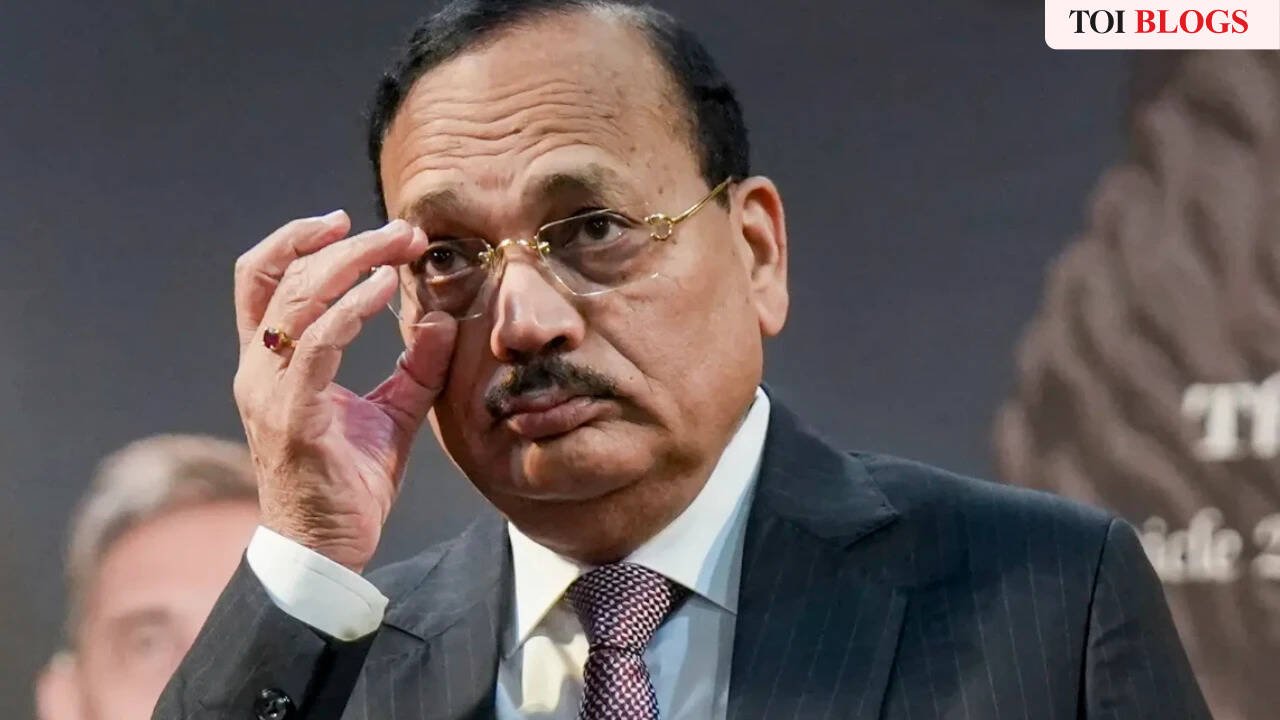
“Dear Surya Kant,If law and order is not your domain, resign now. We will find your replacement who can handle it.”
This is not a letter from an angry citizen. It was (now removed) a post from the verified handle of the Keralam unit of the Indian National Congress, addressed to the Chief Justice of India.Read it twice. The tone is not disagreement. It is command.The provocation is easy to trace. Asked by reporters about the protests in Delhi, the CJI said it was a matter of law and order, not his domain. A day earlier, he had declined a meeting sought by Mallikarjun Kharge and Rahul Gandhi, the Leaders of Opposition in both Houses. The issues were pending before the court, he said, and a meeting would breach the separation of powers and judicial propriety.One may question his choice of words. One may argue that liberty is very much the court’s domain, and that policing and fundamental rights overlap. That is a legitimate debate. It belongs in the courtroom, in Parliament, on the editorial page.But whatever the reason, this language is unacceptable. A grievance is not a licence for contempt.Dropping the title and addressing the Chief Justice by name is not casual. It is deliberate, meant to diminish. “Resign now” is an order no political party has the standing to give. A Supreme Court judge can be removed only through the process in Article 124(4): proved misbehaviour or incapacity, an address passed by both Houses by a special majority, and an order of the President. The Constitution made removal difficult precisely so that judges would not have to fear the displeasure of those in power, or those seeking it.Then comes the most revealing line: “We will find your replacement who can handle it.”Who is “we”? No political party finds, appoints or replaces a Chief Justice. By settled convention, the outgoing CJI recommends the senior-most judge of the Supreme Court, and the President appoints. A party has no role in it.Yet the sentence is written as if appointing Chief Justices were routine party business. Perhaps that is a habit of memory. The seniority convention has been set aside only three times, in 1964, 1973 and 1977, all under Congress governments. The last two, when Justice AN Ray superseded three senior judges and Justice MH Beg superseded Justice HR Khanna, are widely seen as punishment for inconvenient judgments. The party may know the territory, but it should not sound nostalgic about it.None of this places judges above criticism. A democracy needs scrutiny of its courts, and sharp scrutiny at that. Disagree with a remark. Question a judgment. File a petition. Make the argument in public, with facts.What a democracy cannot afford is the habit of mocking an institution every time it does not deliver what one wants. Today’s opposition is tomorrow’s government, and the reverse. The court is the umpire for both. A side that heckles the umpire whenever a decision goes against it is not protecting the game. It is wearing it down, and one day it will need that umpire itself.Those who hold up a copy of the Constitution at every rally should also read what it asks of them. Article 121 bars even Parliament from discussing the conduct of a Supreme Court judge, except on a motion for removal. If the Constitution restrains the sovereign legislature, a party’s social media handle can surely restrain itself.The Constitution is not only a list of rights. It is also a code of conduct. Carrying it is easy. Honouring it is the harder part.Disagree with the judge. Respect the office.
Disclaimer: Views expressed above are the author’s own.
