



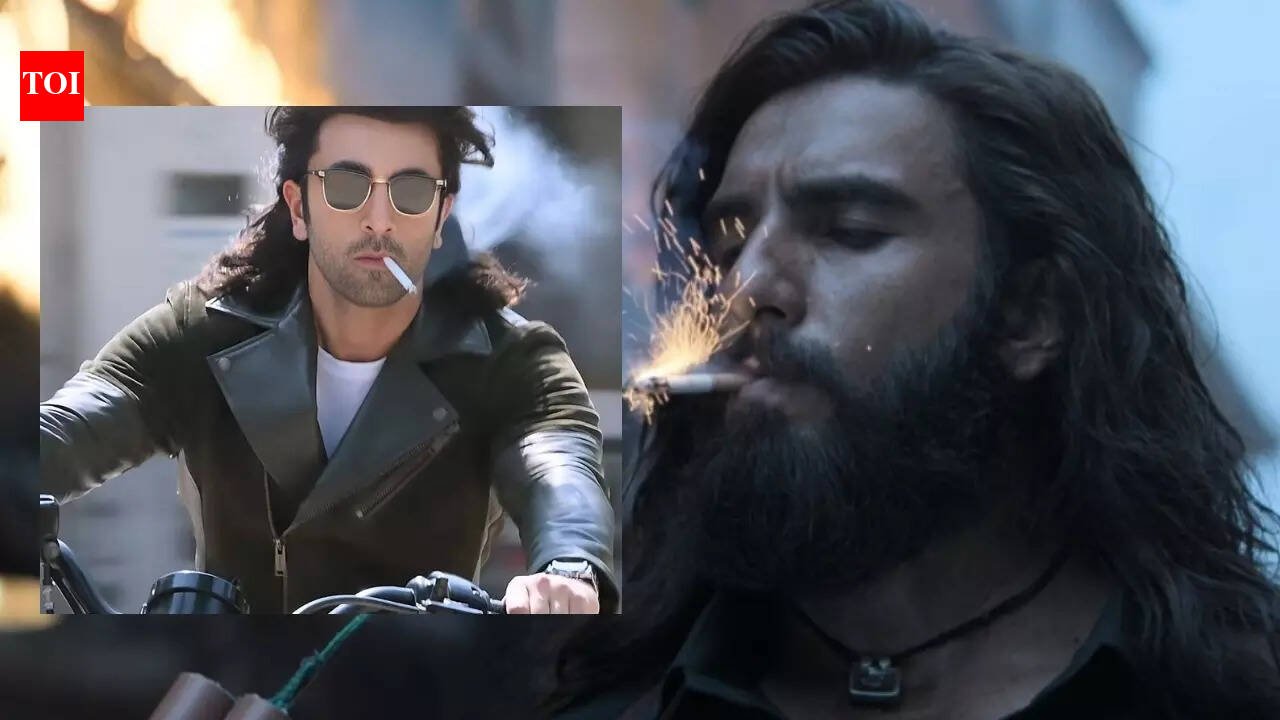
In the recent times, one has seen that while movies like ‘Dhurandhar’ and ‘Animal’ have garnered those big numbers at the box office, they also became a talking point on social media due to the violence in them. In the past few years, one has seen such movies working at the theatres, along with intense love stories like ‘Saiyaara’. In a recent interview, Karan Johar has dissected this and the taste of the audience. He also said that while these movies are criticised for their violent content or are allegedly misogynistic, a huge percentage of the audience has no problem with it. Karan Johar said in an interview with Sarthak Ahuja, “There’s a mass multiplex audience, a tier-two multiplex audience, and a tier-two single-screen audience that reacts to a certain kind of cinema, something that Hindi cinema, largely, has not been catering to. So suddenly, when a Animal comes, or when a Dhurandhar comes, it caters to that audience which has been starved of a certain energy. They react to machismo, violence, heroic dialogues and alpha energy. Whether it’s Kabir Singh, Animal, Dhurandhar, I’m not categorising them as the same kind of film, but there is that front-footed machismo, that front-footed alpha energy. Rightly or wrongly, and let’s not get into that debate, that energy is attractive to a certain audience. And those films have been working consistently when done right.”
Johar was quick to clarify that hyper-masculine storytelling is not the only emotional register drawing crowds. According to him, intense romance continues to have a strong pull, especially beyond metro cities. “Not every love story, like say a rom-com will work, but intense love stories really work. An Aashiqui will work. A Saiyaara will work. Intensity in love works. There’s what’s colloquially called the ‘nas-kata’ audience, people who are ready to die for love. That emotional extremity is something people love. That tier-two audience wants to watch that kind of film. The mass audience, especially the mass male audience, gravitates towards films that play on a larger emotional or heroic scale.”Looking ahead, Johar highlighted one genre he feels Indian cinema has yet to truly master is horror. “If you ask me which is the one big genre that India has not succeeded in, it’s actually pure horror. We haven’t got our The Nun, we haven’t got our The Conjuring. We haven’t cracked that genre yet. Horror can be a huge breakthrough when you get it right, when it’s genuinely scary, not just about jump scares, but when there’s a real sense of atmospheric horror. That’s something we still need to get right. That genre hasn’t been consistently successful for us,” he said. Summing up the current box-office climate, Johar observed, “What’s not working are the family dramas, the rom-coms, the emotional dramas, they’re just not working. So today, if I had to discuss all this and put it in one bracket, the one thing no one is really talking about is pure horror. That’s what I’m betting on next.”During the same discussion, Johar also addressed what he sees as a paradox in audience behaviour, particularly among women. “I think a lot of movies have addressed women’s empowerment and the inequality between genders. Having said that, there is this alpha, misogynistic kind of film that is working. Is that counterproductive to those films? Because films made purely on feminism will almost always do less business than films that are about entitlement and alpha energy.”He went on to explain how audience data often contradicts assumptions. “What really throws me off is the data. There are so many evolved, liberal women who speak out against these misogynistic, alpha-male films. But there are many more women who are watching these films, and loving them. When I research a hundred women, maybe 20 are offended, and 80 perhaps are not, even by films that could be considered offensive to women. Films that I would imagine my mother or my aunt might be offended by, but many women are not.”


