



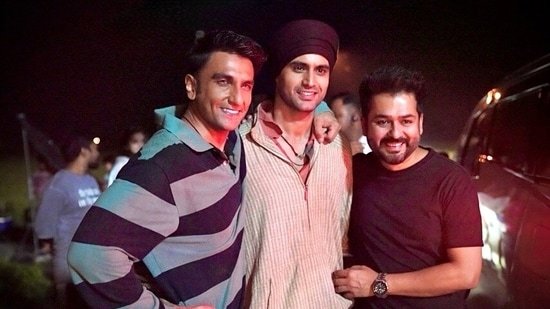
The success of Dhurandhar: The Revenge has brought unexpected attention to many of its performances, one being that of actor Udaybir Sandhu, who played the role of Pinda, Jaskirat aka Ranveer Singh’s character’s closest friend from childhood in the film. What began as a relatively small role on paper became relatively big for him, owing to its emotional impact and viral recall value. He tells us, “I had not anticipated the kind of response the character has received initially. Like any other actor, I was concerned about my screen timing, seeing that I didn’t have a lot of scenes.”


It was only after a conversation with director Aditya Dhar that his perspective shifted. “He told me, ‘You don’t have many scenes, but whatever you have will be impactful.’ Sometimes you just have to believe in the director’s vision. I gave my best, and the rest is history seeing the outcome now.”
That outcome he talks about is the viral memes around his famous dialogue to Hamza (Ranveer), “Jassi tujhe ghar ki yaad nahi aai.” Reflecting on it, the 27-year-old says, “We knew that scene was important, but we didn’t expect this kind of reaction. I’m still processing it. The fact that audiences picked up that particular line—it’s very exciting.”Further elaborating on how he had to work on himself physically, seeing that he had to portray two different phases of Pinda, he says, “We shot the older portion first. I had about 45–50 days to prepare, and I bulked up around 15 kilos. I wanted the audience to feel these were two different people.”
Maintaining that physique for nearly a year during intermittent shoots was only half the challenge. “For the younger portion, I had about 50 days again, and I lost all that weight. I’m glad I committed to that transformation seeing now I can say it has paid off well.”His commitment to the role also meant turning down other opportunities. “I had gained a lot of weight and didn’t look like myself, so I had to miss out on projects. It didn’t bother me a little, but my team told me to look at the canvas, not just the part. Today, it’s not about doing only lead roles. Even smaller parts can leave a big impact. Times have changed; nowadays, the supporting cast is equally important in shaping the story line, and the audiences are appreciating that.”Sharing screen space with actor Ranveer Singh added another dimension to his experience.
“All my scenes were with him, and we had to look like best friends,” he says, adding: “Ranveer bhai is one of the most talented people I’ve seen. He’s warm, like an older brother, and he guided me in every scene.” He recalls a particularly intense fight sequence that took three days to shoot. “After it was done, he (Ranveer) told me, ‘Bhai, tere mein energy bahot hai,’ a compliment like that, coming from him was in itself a huge win.”
With two successful parts of the film, there has been a strong chatter around part 3 of Dhurandhar. Interestingly, the film itself was not initially planned as a two-part project. “We didn’t know it would be split,” he reveals, adding: “Even Aditya sir didn’t know or plan it in various parts. But when he saw the footage, it was over 10 hours, he didn’t want to cut it down into a three-hour film.” Udaybir believes the decision ultimately worked in his favor. “If my part had come in the first half, I might have gotten lost, but seeing it was in part 2, and essential to Hamza’s story, everything I feel has fallen into place for me.” He adds how that’s the philosophy he has followed throughout his career.
“Every actor’s journey is long. You need time to understand yourself, to evolve. If success comes too early and easily, it can feel like luck, and then you stop working as hard. The struggle is important for how your journey turns out to be. I have had moments of doubt myself. There’s always a time when you feel, ‘Why is this happening to me?’ But you have to trust the process. Sometimes the timing isn’t right. You just have to keep working on your craft and wait for your moment. Dhurandhar 2 is my ‘that’ moment.”
With the growing success of the film, comes the question ‘what next?’ for the actor. Sharing his thoughts, he says, “I am not worried or pressurized about what’s next, but I have to be smart. I want roles that have substance, something with meat. It’s not about screen time; it’s about the impact my role brings to the film or project. I want to play lead roles, but I’m also aiming at supporting roles which offer impactful storytelling.” As the film continues to generate both praise and criticism, including debates around its themes, and many calling it propaganda, Udaybir asks the audience to see it as just ‘a film’. “It’s entertainment; you don’t have to take it so seriously. We’ve all put our heart into it,” he says, adding, “There will always be chatter around one or the other film. People should just watch it to enjoy the story.”


