



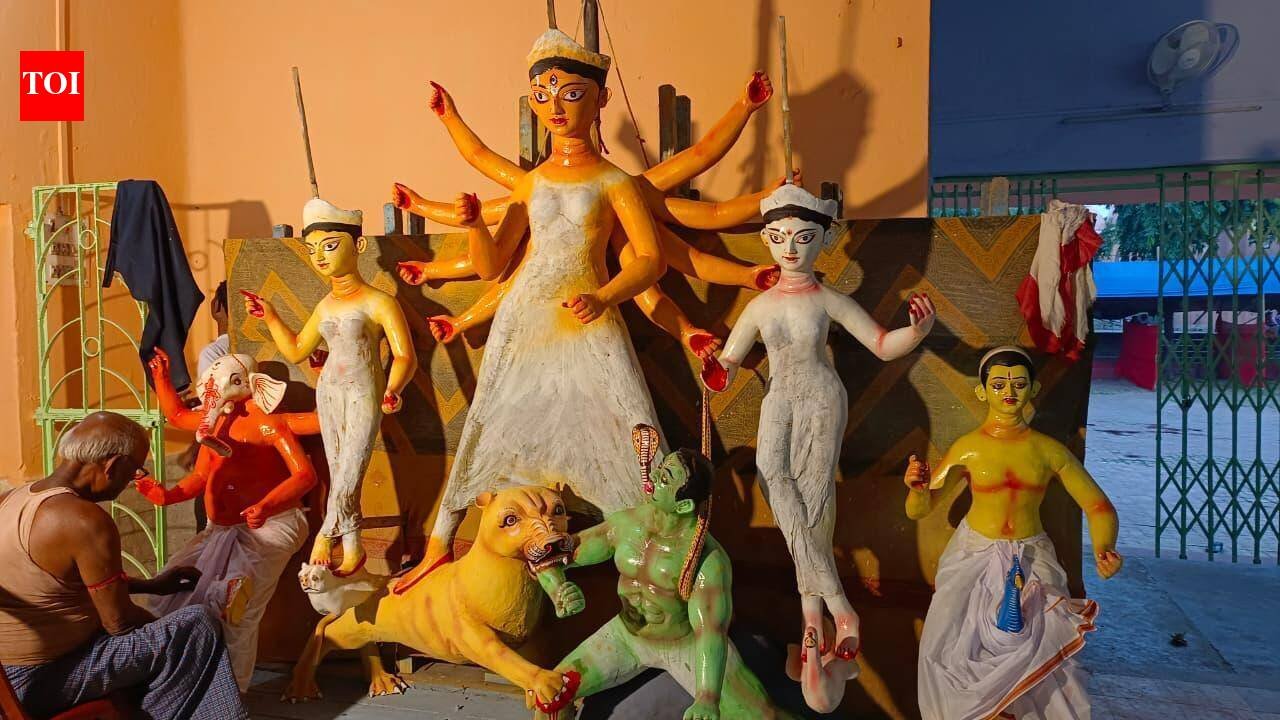
Sharad ChandraDhanbad: With Durga Puja festivities gathering momentum, Hari Mandir in Hirapur is witnessing a growing influx of devotees, drawn by its age-old rituals and rich Bengali cultural heritage. The temple has been celebrating Durga Puja since 1933, preserving traditions that have been passed down through generations.One of the distinctive features of the puja is the worship of the Goddess according to traditional Bengali customs, including the ritual involving Nabapatrika, or nine sacred plants. The idol, known for its striking facial features, is crafted within the temple premises by artisans who have been associated with the puja for three generations. The family of priests conducting the rituals is also continuing the legacy through its second generation.The traditional Sindoor Khela ceremony on the morning of Vijayadashami is another major attraction. Women from different parts of Dhanbad participate in the ritual, and apply vermilion to one another as they bid farewell to the Goddess.Sculptor Shakti Sutradhar, a resident of Nirsa, said his family had been making the idol for three generations. His grandfather and father had also crafted the Goddess at the temple, and other family members now assist him in continuing the tradition.Hari Mandir Puja Committee president Partho Sarathi Sengupta said the celebrations began in 1933, when local residents, including Jyotirmoy Banerjee, Haripada Mukherjee and Panchanan Sengupta, came together to organise the puja.The immersion procession is equally distinctive. Instead of transporting the idol in a vehicle, devotees carry it on their shoulders.
durga puja
