


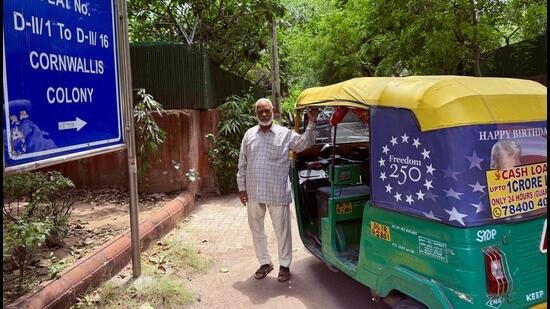
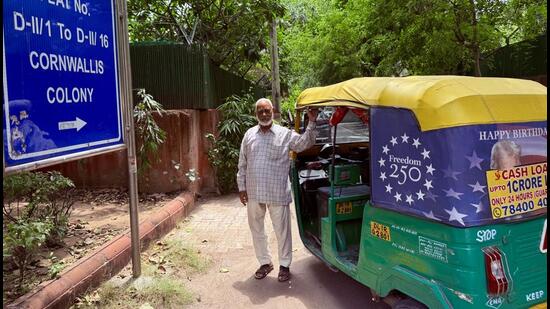
Delhi is littered with scraps of history that seem unrelated until they are placed alongside one another. Then a single narrative thread emerges from the scattered pieces. Over the past few weeks, you may have noticed auto-rickshaws bearing placards (see photo) announcing the forthcoming 250th anniversary of American independence, as part of an initiative by the US Embassy.
Yet the story of American independence is far closer to Delhi than this publicity campaign suggests.
Within walking distance of Khan Market, a sleepy, virtually hidden, locality preserves the name of a man who played a significant role in American independence. He also played an equally significant role in Indian history.
Most of Delhi’s colonial-era road names were changed in the post-colonial era. Clive Road became Thyagaraja Marg. Irwin Road became Baba Kharak Singh Marg. Yet the old name of one neighbourhood survives. The little-known Cornwallis Colony takes its name from Charles Cornwallis, one of the most consequential figures of British colonialism. Americans remember him for his surrender at the battlefield of Yorktown, a decisive moment in their War of Independence against the British.
Defeat in America did not prevent Cornwallis’s rise in the imperial service. He was later sent by the British to India as governor-general. Here, he introduced major administrative reforms. Plus, he helped establish a Sanskrit college in Benares, today known as Sampurnanand Sanskrit Vishwavidyalaya. Cornwallis also helped establish a mint in Calcutta. In fact, his sangmarmar statue stands in that city’s Victoria Memorial Hall.
Cornwallis’s story is also entwined with the fateful kismet of Tipu Sultan. You, dear all-knowing reader, will of course be familiar with the famous painting depicting Cornwallis receiving Tipu’s sons as hostages.
Whatever, walking this afternoon through Cornwallis Colony, it feels surreal to realise that the place commemorates a man remembered both for losing Britain’s American colonies and for helping consolidate British rule in India.
That said, the colony itself feels detached from history’s upheavals. One corner has a shrine to Ganesh ji. The friendly Ram Kishore, who has been running a roadside ironing stall in the colony for 30 years, says it houses the sarkari residences of income tax officers. For the moment, the colony is utterly quiet except for the sound of birds. The brown dog wandering along the lane is silent.
Within months of returning to India for a second term as governor-general, Cornwallis died of what colonisers often died of at the time, a fever. His small makbara stands beside the Ganga in UP’s zila Ghazipur.
PS: Photo shows auto rickshaw driver Muhammedeen
