



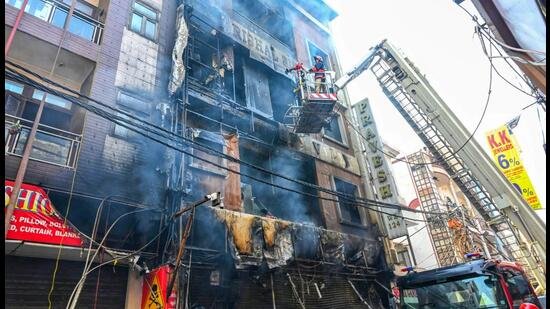
The fire incident at a residential-cum-commerical building in Palam, Delhi, that claimed nine lives on Wednesday, reveals failure at multiple levels. First, the Delhi Fire Services’ preparedness has come under question, with many eyewitnesses claiming that precious time was lost in rescuing people stuck on the balcony because of a faulty ladder. Second, access to the building was restricted by vehicles parked along the lane leading to the building. This points to a larger crisis of urbanisation: Cities such as Delhi are expanding horizontally and vertically in unplanned, haphazard ways. Third, civic agencies were not on the same page regarding the question if the building, located in an area cleared for mixed land use, needed an NOC from the fire department. Clearly, the rulebook needs to be updated, civic officials educated, and fire audits made mandatory for all buildings. Meanwhile, a thorough probe could establish accountability and penalties for lapses.


The Palam tragedy also flags a larger malaise of civic bodies refusing to learn from past fire incidents in the national Capital. There have been at least five major fires in the city — from markets to slums that have led to loss of lives and major financial losses. Two years ago, eight newborns died in a fire at an unlicensed neonatal clinic in Vivek Vihar. It was discovered that the clinic had no emergency exit, mandated by the National Building Code of India, 2016, fire extinguishers, and lacked a fire clearance. In fact, most of these incidents have exposed a callous approach to fire safety and a fire department unprepared for rescue in congested localities.


