



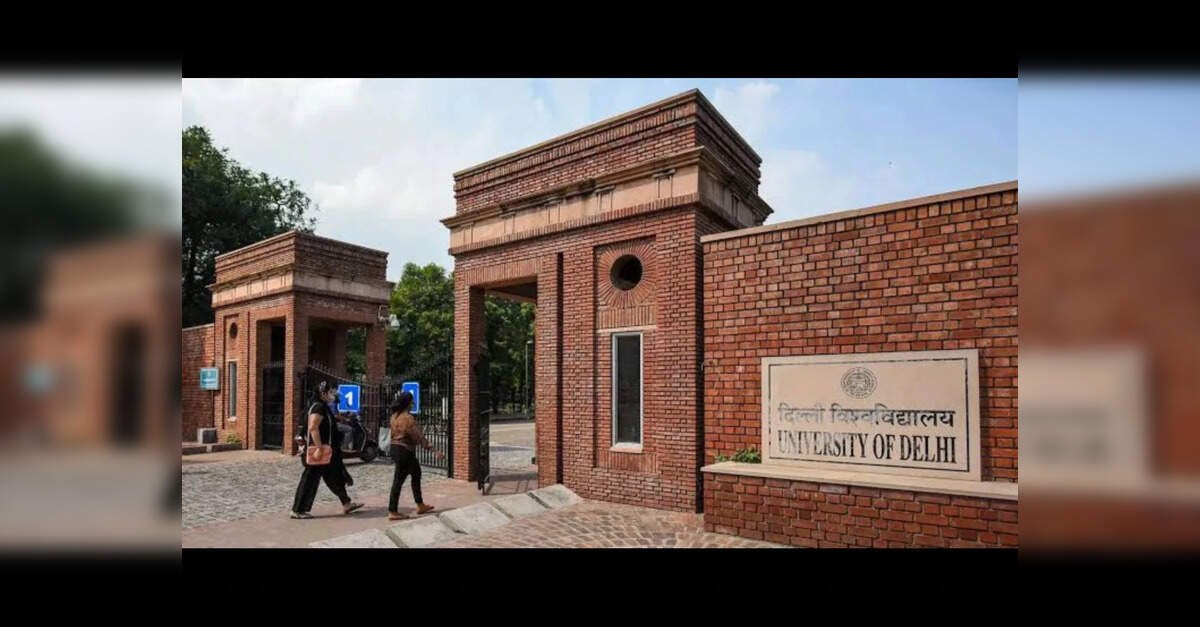
The University of Delhi (DU) is set to consider a hostel expansion and redevelopment proposal worth around Rs 8,000 crore, aimed at providing accommodation to more than 30,000 students. The proposal will be placed before the university’s Executive Council (EC) on October 13, 2026, and includes new hostel buildings at multiple campuses as well as the reconstruction of existing residential facilities.
Of the proposed expenditure, Rs 5,157 crore has been earmarked for new hostel construction, while nearly Rs 3,000 crore is intended for the demolition and reconstruction of existing hostels. The plan seeks to expand residential capacity across the university and address the shortage of student accommodation in Delhi.
DU hostel expansion 2026: New facilities to accommodate over 20,000 students
According to the proposal, new hostels are planned at the Dhaka Complex, Najafgarh and Surajmal Vihar campuses. These projects are expected to provide accommodation to 20,594 students.
The Dhaka Complex accounts for the largest share of the proposed construction. The university has proposed two Y-shaped hostel buildings, one for male students and the other for female students, each with a capacity of 4,836 residents. Both projects are estimated to cost around Rs 1,130 crore each.
The plan also includes dedicated accommodation for working women and women students at the Dhaka Complex. Two facilities, each with a proposed capacity of 1,674 residents, are planned at an estimated cost of Rs 400 crore per project.
Another undergraduate hostel with a capacity of 3,162 students has been proposed at the Dhaka Complex, with an estimated cost of Rs 678 crore.
Outside the Dhaka Complex, the proposed projects include a hostel facility at the East Campus in Surajmal Vihar, which is expected to accommodate 2,340 students at a cost of Rs 725 crore. Hostels at Najafgarh and the West Campus are also planned, with a combined capacity of 2,072 students and an estimated expenditure of Rs 694 crore.
Delhi University hostel redevelopment: Jubilee Hall to be replaced by 32-storey building
Alongside new construction, DU plans to redevelop existing hostel facilities to increase their capacity. The proposed reconstruction projects are expected to provide accommodation to more than 10,000 students.
The iconic Jubilee Hall Hostel is proposed to be demolished and replaced with a 32-storey building that can accommodate around 3,800 students. The project is estimated to cost Rs 1,225.59 crore.
The university has also proposed reconstructing the PG Men’s Hostel as a high-rise building with accommodation for approximately 2,337 students.
The International Student House is another facility identified for redevelopment. The proposed reconstructed building is expected to accommodate around 3,300 students.
These projects form a major part of the university’s broader plan to increase hostel capacity by replacing existing structures with larger residential facilities.
Delhi University hostel expansion: Key projects and estimated costs
The proposed hostel projects include the following facilities:
| Project | Proposed capacity | Estimated cost |
| Dhaka Complex girls’ hostel | 4,836 | Rs 1,130 crore |
| Dhaka Complex boys’ hostel | 4,836 | Rs 1,130 crore |
| Nirbhaya working women’s accommodation | 1,674 | Rs 400 crore |
| Women Accommodation II | 1,674 | Rs 400 crore |
| Dhaka Complex undergraduate hostel | 3,162 | Rs 678 crore |
| East Campus, Surajmal Vihar | 2,340 | Rs 725 crore |
| Najafgarh/West Campus hostels | 2,072 | Rs 694 crore |
The redevelopment plan separately includes the proposed reconstruction of Jubilee Hall, the PG Men’s Hostel and the International Student House.
Why Delhi University is planning a major hostel expansion
The proposed expansion comes amid concerns over the limited availability of affordable and safe accommodation for Delhi University students. The university has more than 2.5 lakh students, while its existing hostel facilities can house only a small proportion of the total student population.
As a result, many students, particularly those arriving in Delhi from other states, depend on private paying guest accommodation, rented rooms and shared flats. Housing costs, availability and safety remain important considerations for students seeking admission to colleges across the university.
The issue has drawn renewed attention following the September 6 collapse of a paying guest accommodation building in Satya Niketan, Delhi. The incident brought concerns over the safety of private residential facilities used by students into focus.
Expanding university-run hostels could offer more students access to accommodation within an institutional framework. However, the proposed projects would need to progress through the university’s decision-making process before construction and redevelopment can move forward.
What happens next?
The Executive Council’s consideration of the proposal on October 13 will be an important step in determining the way forward for the planned hostel expansion. The proposal covers new residential buildings, dedicated accommodation for women and the redevelopment of existing hostels.
If approved and implemented, the projects could significantly increase the number of students who can live in university-managed accommodation. The scale of the proposed investment also makes implementation, funding and construction timelines important factors in determining when students may benefit from the additional capacity.
