





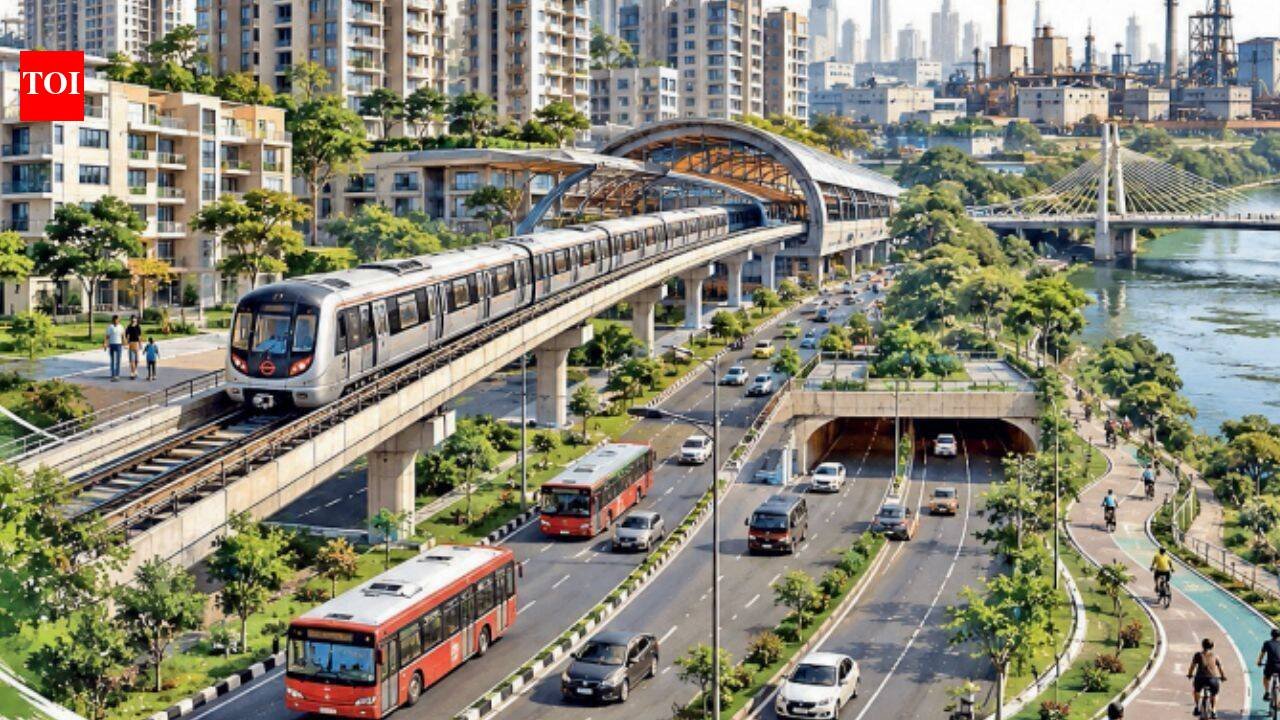
NEW DELHI: The Master Plan for Delhi 2047 was notified Thursday, laying out a wide-ranging blueprint for the city’s future across housing, transport, redevelopment, environment and Yamuna protection, as Delhi prepares for a projected 33% population rise to 3.2 crore by 2047.While housing remains the key focus, the plan marks a shift from earlier approaches by placing emphasis on private participation in the city’s development. Union housing and urban affairs minister Manohar Lal said the plan targets development of 30-40 lakh homes by 2047. DDA has proposed relaxing development norms, including height curbs, minimum plot sizes and floor area ratio, along with incentives under to attract developers.
What MPD 2047 needs to deal with
Key proposals
Housing
Target:40 lakh additional houses to accommodate80 lakh additional population by 2047Redevelopment of existing areas• Minimum area requirement for group/govt housing reduced from 40,000sqm to 3,000sqm• Potential for 7 lakh additional dwelling units• Higher housing density proposed through in-situ development and redevelopment of old societiesAffordable housing along metro corridors: 18 lakh units in TOD zonesDignified homes for JJ clusters: To benefit over 17 lakh JJ dwellersWorkers’ housing: Additional 15% FAR permitted on industrial plots of 5,000sqm and above
Vertical growth
Height restrictions removed in most areas, other than bungalow, low-density, plotted and airport zonesLand poolingSector threshold reduced from 100 acres to 50 acresRoad networkDDA to prepare road-network plans within three months before permitting plotted development in redevelopment areas and low-/high-density corridors
Transport & infrastructure
Delhi Metro Network proposed to expand from 416km to 695kmPublic transport Expansion to be supported by buses and six new RRTS corridorsNew economic hubs Regulatory flexibility for data centres, co-working spaces, cloud kitchens
Revitalising economic spaces
• 24×7 economic zones identified in areas with strong transport and connectivity• Commercial centre redevelopment permitted on plots with a minimum area of 1,000sqm
Environment & sustainability
Yamuna floodplain Protection, conservation and ecological restoration of nearly 1,700 hectares through 13 major restoration projectsRiver restoration Framework proposed for treating major urban drains and increasing green buffersCycling & green connectivity 52km riverfront cycling track and 150km Yamuna Park connector network proposed
Promotion of industry
• Modern industrial parks with flexible zoning• Big-box retail, e-commerce and warehousing permitted in industrial areas• Co-working spaces and data centres to support innovation and startups• Negative-activity list reduced, allowing greater flexibility in industrial areas
Major challenges
Mixed land use
Commercial activity remains largely restricted to ground/upper-ground floors on roads with a minimum width of 30 metres, despite widespread commercial activity beyond these limits
Land pooling
Amendments required to make land pooling mandatory
Mixed-use roads
No significant increase in the number of streets/roads eligible for mixed land use
Low-density areas
Road-width restrictions to build farmhouses 18-30 metresCommercial activity not permittedJJ rehabilitationOnly two in situ projects have been finalised and one is in progress, compared with approximately 675 JJ clusters across Delhi


