






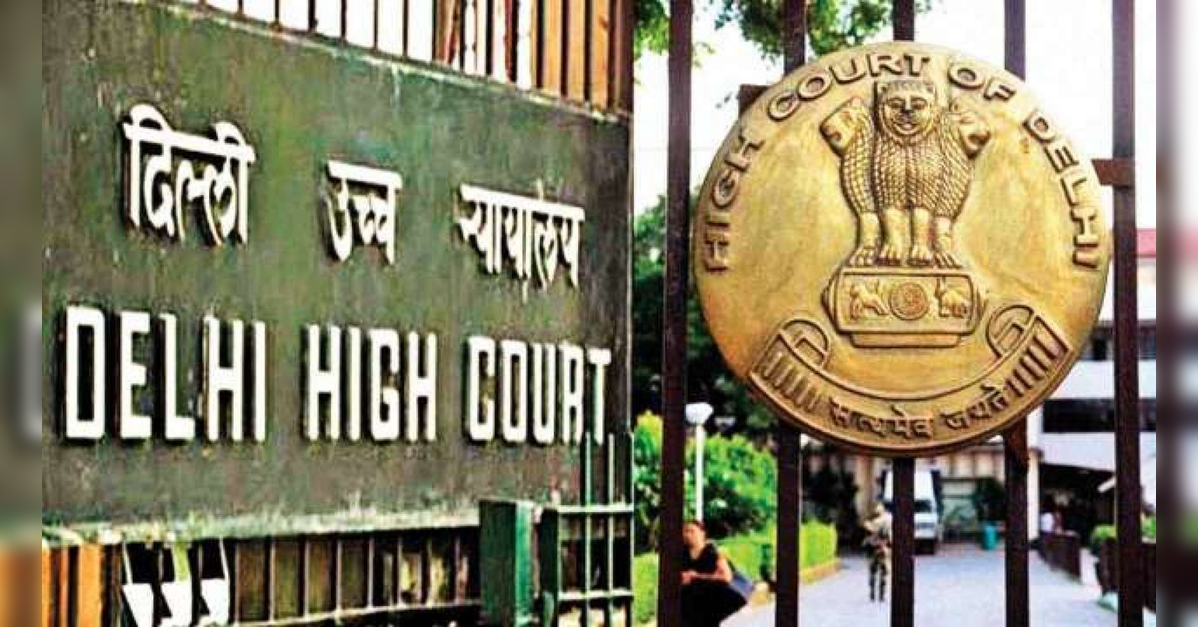
The Delhi High Court has refused to intervene in a Public Interest Litigation (PIL) challenging alleged irregularities and technical failures in the Central Board of Secondary Education’s (CBSE) On-Screen Marking (OSM) system used for Class 12 board examinations. The court disposed of the plea without issuing any directions, holding that the issue had already come under the Supreme Court’s consideration.
A Division Bench comprising Chief Justice Devendra Kumar Upadhyaya and Justice Tejas Karia made it clear that grievances concerning the evaluation or revaluation of an individual answer sheet constitute a personal cause of action. Students who believe their marks were affected by errors in scanning, evaluation, or verification can pursue remedies before CBSE or approach the court individually under the prescribed mechanism.
Delhi High Court refuses to reopen CBSE evaluation dispute
The PIL was filed by National Students’ Union of India (NSUI) president Vinod Jhakhar, who alleged widespread deficiencies in the OSM system and its grievance-redressal mechanism.
The Bench took note of the Supreme Court’s recent rejection of a similar plea concerning CBSE’s evaluation process. Against that backdrop, the High Court questioned whether it could grant relief after the apex court had already dealt with the issue, stressing the principle of judicial discipline.
The court’s position effectively shuts the door on using a broad PIL to seek a wholesale reopening of the Class 12 evaluation process.
NSUI alleges blurred scans, missing pages and wrong evaluation
NSUI had alleged that several students, parents, and teachers had reported serious problems with digitally scanned answer sheets. These included blurred copies, missing pages, incomplete uploads, mismatched answer books and unexpectedly low marks after the declaration of Class 12 results.
The organisation sought compensatory marks for students allegedly affected by such failures and demanded an independent inquiry into the functioning of the OSM system.
It also sought manual rechecking and physical verification of answer sheets wherever students disputed the authenticity or correctness of scanned copies and evaluation. Another demand was to keep CBSE’s verification and re-evaluation portal open for an additional month so that affected candidates could pursue their grievances.
CBSE pushes back as academic session moves ahead
Solicitor General Tushar Mehta, appearing for CBSE, referred to the Supreme Court’s recent ruling and argued that the re-evaluation process had already been completed. He also pointed out that classes had commenced and counselling for several courses was already at an advanced stage.
Mehta questioned NSUI’s locus in the matter, describing it as a political organisation. Appearing for NSUI, advocate Apar Gupta argued that the organisation represented students and that several candidates continued to seek revaluation of their answer sheets.
Individual students left to pursue remedies
The High Court ultimately declined to intervene, with the Supreme Court’s earlier decision proving decisive. The Bench questioned whether it could grant relief when the apex court had already refused similar intervention at this stage.
The ruling does not prevent individual students from challenging specific evaluation grievances. But it draws a firm line against reopening the entire CBSE assessment exercise through a PIL, leaving students with individual remedies under the existing framework.


