


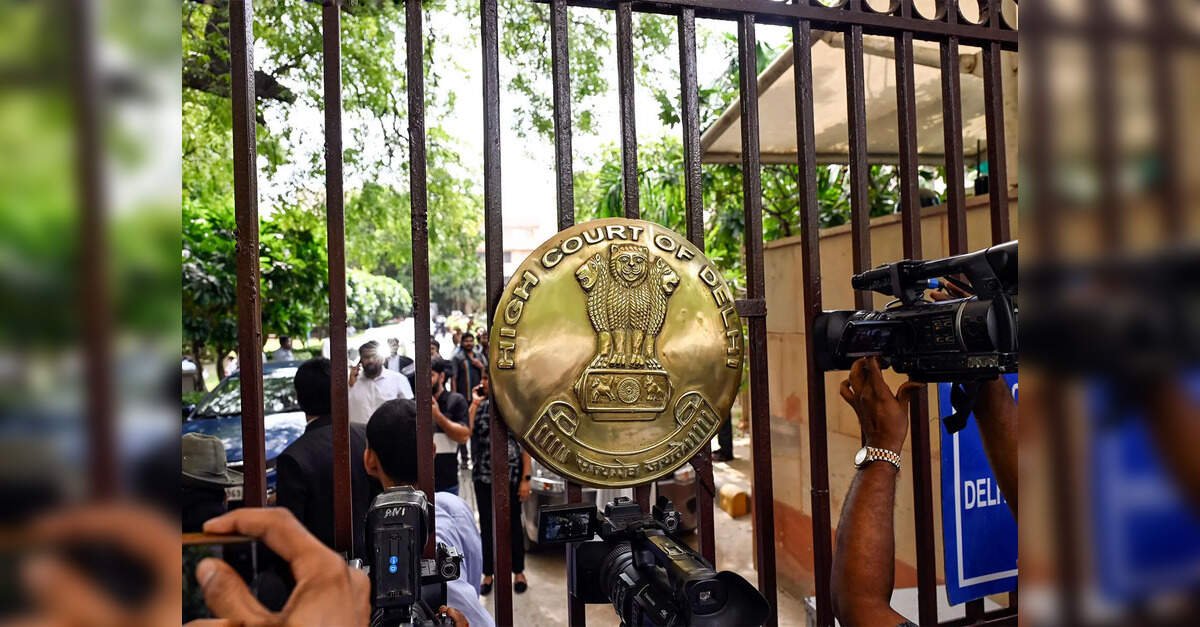
New Delhi, The Delhi High Court on Thursday listed for hearing on July 27 Vedanta’s appeal against an order upholding the Centre’s decision to not extend a production-sharing contract for an offshore oil block in Gujarat, as it refused to interfere with the ONGC’s takeover of the operations at this stage.
A bench of justices Dinesh Mehta and Rajneesh Kumar Gupta took note of Attorney General R Venkataramani’s statement that Oil and Natural Gas Corporation Ltd (ONGC) has already taken control over the operations of the oil block pursuant to the single judge’s decision of July 22.
Senior advocates Mukul Rohatgi and Jayant Mehta, appearing for the appellant company, contended that Vedanta was “not a fly by night operator” and had been operating the offshore oil block continuously since 1998.
The senior counsel urged the court to pass a direction allowing Vedanta to continue operating the oil block.
“Mr Rohatgi, had ONGC not been a party (to the contract), I would have protected your interest. But since ONGC is already part of the consortium (in the production-sharing contract or PSC), it is having some stake. We will post it on Monday. I will hear all of you,” the bench, however, said.
“Now putting the clock back… This (statement) is coming from the Attorney with an affidavit of ONGC. It is not a third party. If needed we will put the clock back. We will put you in possession but after hearing you,” it assured Vedanta.
Attorney General Venkataramani opposed any interim relief to Vedanta at this stage and said, “ONGC has taken over the operations. There is no question of giving it back to them.”
In a statement released after the hearing, a Vedanta spokesperson said, “Operations of the block have not been taken over by any party. It is status quo as the matter remains sub judice.”
Earlier in the day, Vedanta’s appeal came up for hearing before a bench of Chief Justice D K Upadhyaya and Justice Tejas Karia.
It was sent to the bench headed by Justice Mehta after Justice Karia recused himself from hearing the appeal.
In its appeal, Vedanta said the single-judge bench erroneously dismissed its petition challenging the non-extension of the PSC, claiming that it “completely overlooks” the Centre’s own extension policy.
“The impugned judgement fails to consider that respondent No. 1 has, unfairly and arbitrarily singled out of the appellant’s case and rejected its application for extension on criteria other than those set out in the 2017 policy, in violation of Article 14 of the Constitution,” the appeal contended.
“The impugned judgement fails to consider that the appellant had the legitimate expectation that the PSC would be extended not only on the basis that the appellant met the criteria under the 2017 policy for favourable consideration of the application but also the conduct and past practice of respondent Nos.1 & 2 in complete adherence to the GOI’s policies for extension, including the 2017 policy,” it added.
The single-judge bench had on Wednesday upheld the Centre’s decision to not extend its production-sharing contract with Vedanta Ltd for the offshore oil block in Gujarat and hand over the operations to ONGC.
It had dismissed a petition by Vedanta seeking to set aside the Ministry of Petroleum and Natural Gas’s direction passed on September 19, 2025, which rejected its 2021 application to extend the PSC dated June 20, 1998, for the Suvali oil block.
The petition had also sought setting aside of the direction to ONGC to immediately take over the assets and operations of the petitioner over the PSC contract area.
The original term of the PSC — reached among the Centre, the petitioner, ONGC and Invenire Petrodyne Ltd — was for 25 years, i.e. from June 30, 1998 till June 29, 2023, and was extendable for a specified period under certain circumstances.
The petitioner was the designated operator under the PSC.
After five interim extensions, the last interim extension expired on September 29, 2024.
Vedanta, in June 2021, had sought an extension of 10 years, i.e. till June 29, 2033.
In the judgement, the single-judge stated that the petitioner’s act of “unilaterally deducting” the government’s share to either “neutralize its liability under the Excise Duty” or to “maintain its economic benefits” was a valid ground to refuse relief under the extension policy.
Vedanta had contended that although it did not have an indefeasible right to an extension, the 2025 order was passed in violation of the extension policy, based on irrelevant considerations and without due application of mind.
The Centre had argued that its decision was in public interest and in furtherance of its obligations under the ‘Public Trust Doctrine’.
In January, the high court had passed an interim order on Vedanta’s petition and asked the parties to maintain status quo.
