


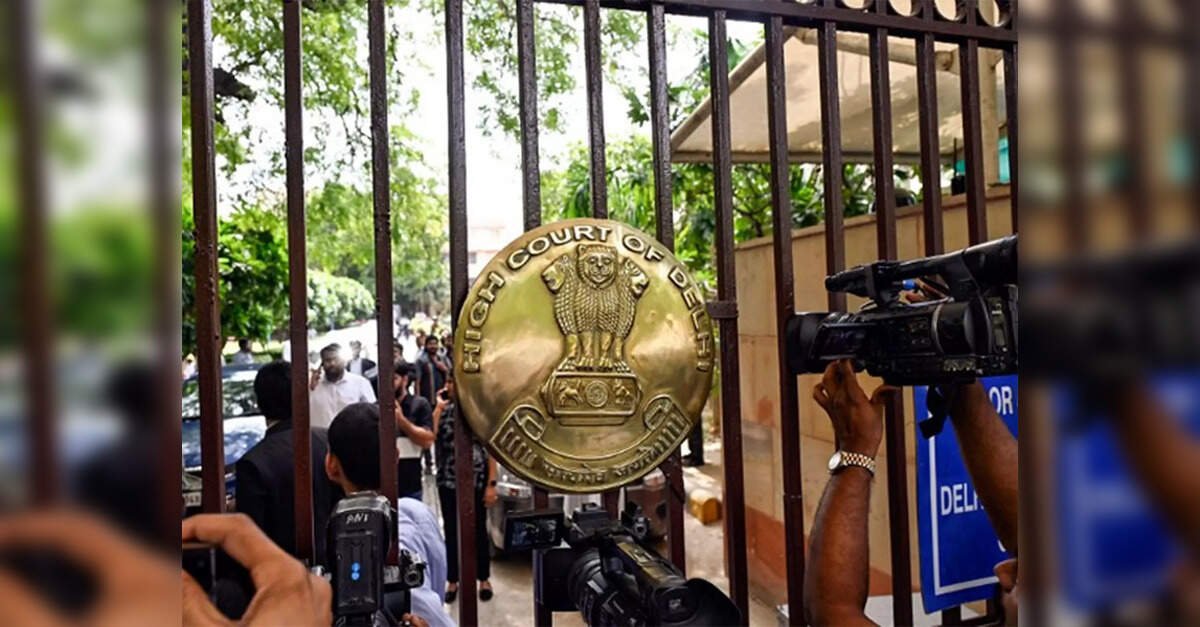
New Delhi [India], February 23 (ANI): The Delhi High Court on Monday dismissed a Public Interest Litigation (PIL) challenging a notification issued by the Delhi Waqf Board 46 years ago, in 1980. The notification listed properties declared as waqf by the Board.
The petition, filed by Save India Foundation (Trust), challenged the ownership of three waqf properties located in the Jahangirpuri area of Delhi.
The challenge to the said list pertains to Sunni waqf properties, namely Jama Masjid, Jahangirpuri; Moti Masjid; and Masjid Jahangirpuri, all located in Delhi.
While rejecting the plea, the High Court stated that the petition was not filed in the public interest.
A Division Bench headed by Chief Justice Devendra Kumar Upadhyay dismissed the petition and said, “If we carefully examine the facts and circumstances pleaded in the instant case, and the challenge made to the notification after 46 years, we find that the instant petition has not been filed with a bona fide motive or in the public interest.”
Save India Foundation, through its trustee Preet Singh, had challenged the notification dated March 24, 1980, issued by the Delhi Wakf Board, which was published in the Official Gazette of Delhi on April 10, 1980.
The Division Bench dismissed the petition not only on the ground that it was time-barred but also on the merits.
Chief Justice Upadhyay said, “Even on merit, we may observe that the notification was issued after an inquiry conducted by the Commissioner of Wakfs, which is a statutory authority, under Section 4(3) of the Muslim Waqf Act, 1954 and the list of Waqf properties was published under the notification only on examination of the said report received from the State Government which was based on the inquiry conducted by the Commissioner of Waqfs.”
The High Court stated that any challenge to a property list must be filed within one year of its publication.
The court further mentioned that, as per the provisions of Section 6(1) of the Act, 1954, any list of wakf properties is subject to the outcome of a suit which could be instituted in a Civil Court for the decision of the question as to whether the property was rightly included in the list of wakf properties.
“However, the provision in Section 6(1) of the Act, 1954, clearly bars the institution of any suit before the Civil Court after expiry of one year from the date of publication of the list of wakf under Section 5(2) of the Act, 1954,” the bench said.
The high court pointed out that if a legal remedy is barred in the Waqf Act, it can not be permissible in a writ petition.
“Thus, if an ordinary civil remedy is barred by proviso in Section 6(1) of the Act, 1954, entertaining a writ petition seeking a declaration that certain properties enlisted in the notification are not Wakf properties, that too after 46 years, in our opinion would legally be impermissible,” Chief Justice Upadhyay held.
Advocate Umesh Chand Sharma, counsel for the petitioner, argued that the land comprised in the subject properties listed in the notification was acquired by the Delhi government under the relevant provisions of the Land Acquisition Act, 1894, on March 26, 1977 and possession thereof was also taken.
It was also stated that in respect of the said land, compensation was also paid to the land owners by Award No. 33/78-79 passed by the Land Acquisition Collector (North), Delhi. (ANI)


