



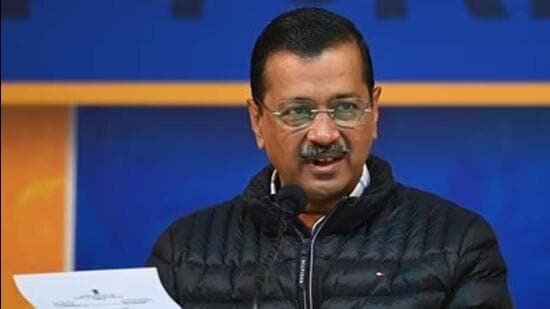
Delhi high court chief Justice DK Upadhyaya has denied former Delhi chief minister Arvind Kejriwal and others, previously accused in an excise policy case, their request to transfer the Central Bureau of Investigation (CBI)’s appeal against their discharge by a trial court to a different bench, keeping it with the currently assigned bench of Justice Swarana Kanta Sharma.


The request was denied through a communication issued by the high court’s registrar general Arun Bhardwaj on March 13, according to people aware of the development.
“The petition is assigned to the Hon’ble judge as per the current roster. Any call of refusal has to be taken by the Hon’ble judge. I do not find any reason to transfer the petition by passing an order on the administrative side,” the communication said.
The CBI’s appeal, as per the cause list, is listed before a bench of Justice Swarana Kanta Sharma on Monday. Justice Sharma currently holds the roster dealing with cases involving MPs and MLAs.
Kejriwal, along with others, had on Wednesday written to Upadhyaya seeking the transfer of the case, claiming he had a “grave, bona fide and reasonable apprehension” that the hearing in the matter would not be impartial or neutral. The representation said that during the first hearing on March 9, 2026, the high court issued notice and recorded a prima facie view that the trial court’s detailed order was erroneous without hearing the discharged accused.
The trial court discharged Kejriwal, Sisodia and 21 others on February 27, concluding that it had no hesitation in holding that the CBI’s material did not even disclose a prima facie case, let alone a grave suspicion. In his 601-page order, Special Judge Jitendra Singh of Rouse Avenue Courts also directed a departmental inquiry against the “erring investigating officer” who framed charges against the accused in the absence of material evidence, holding that the IO abused his official position to conduct an unfair investigation.
The agency had then approached the high court assailing this order on the ground that the verdict was passed by “ignoring” the evidence gathered by the agency, that the findings were “inherently wrong”, and that the agency had collected several documents, examined witnesses, and gathered emails and WhatsApp chats, and its evidence was not “in the air”.
Justice Sharma, on March 9, while issuing notice in the CBI’s appeal, had observed that the trial court’s observations were “prima facie erroneous”. She had also stayed, till March 16, the trial court’s February 27 order directing departmental action against the CBI’s investigating officer and observations against him, noting that the remarks were “prima facie foundationally misconceived especially when made at the stage of charge itself.”
The judge had also requested the trial court to defer the Enforcement Directorate’s money laundering case that had stemmed from the CBI case, and await the outcome of the CBI’s appeal against the February 27 verdict.


