



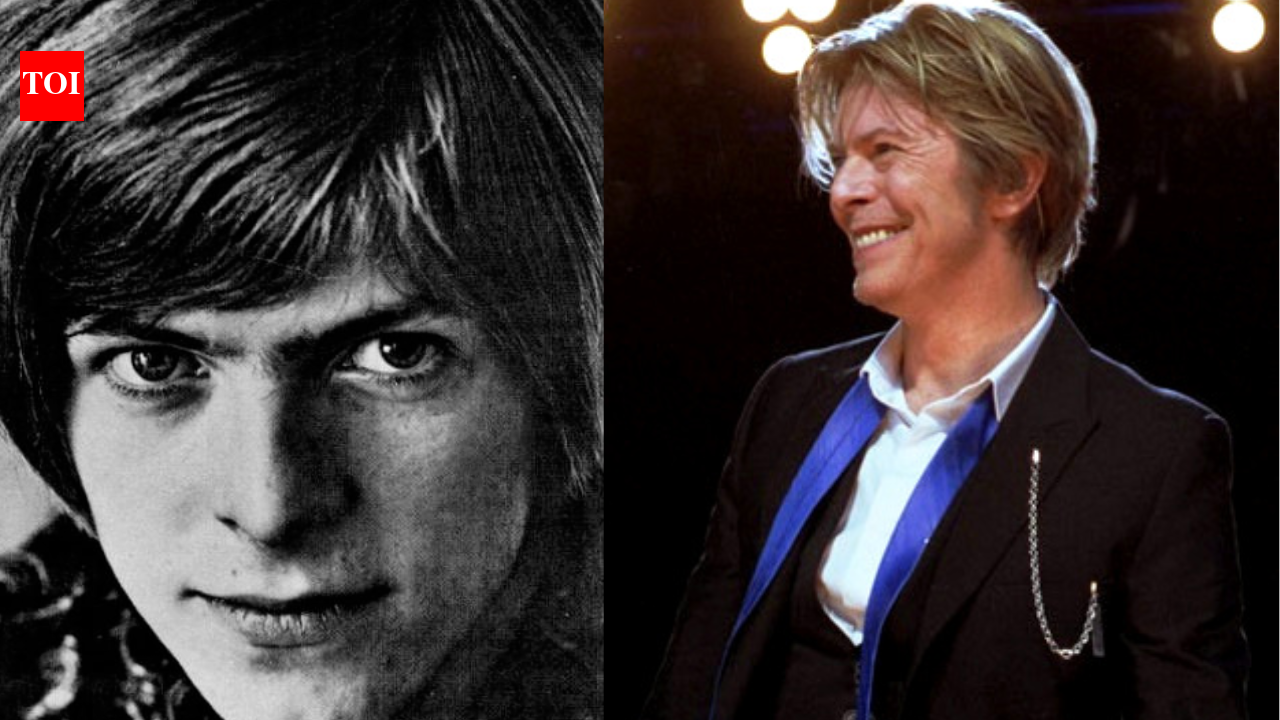
David Bowie’s childhood home at 4 Plaistow Grove in Bromley, south London, will open to the public for the first time in late 2027 after a restoration that returns it to its 1963 appearance. The Heritage of London Trust has acquired the modest two-up, two-down terrace where David Jones lived from age eight to 20 and wrote his formative songs. Visitors can stand in the bedroom where his ambitions took shape, surrounded by archive material never displayed before, while the building also serves as a creative and skills hub for teenagers today.
Inside the nine-by-ten-foot bedroom where an ordinary schoolboy built his ambition to be a star
The room measures about nine feet by ten feet. Geoffrey Marsh, who co-curated the Victoria and Albert Museum’s 2013 exhibition David Bowie Is and is now curating the restoration, told The Guardian that standing in it makes him ask what created the driving ambition of a boy with no big advantages, from an ordinary family and an ordinary school. Bowie recalled in 1990 that the room was “my entire world”, holding his books, music and record player, and that reaching the street meant crossing the living room. Marsh believes that solitude fed his drive, because school friends often invited him out and he preferred to stay home and think and work. His father, Haywood, was supportive, having run a club in Soho in the 1930s, while the relationship with his mother, Margaret, was harder.
From a Little Richard photograph to exam results in old books, the treasures coming home
Among the items going on show are Bowie’s copies of the Observer’s books on music and architecture. In one of them he wrote his exam results at the back and signed himself David Jones Jr., a sign of his teenage devotion to Americana, according to the Guardian. A photograph of his hero Little Richard, cut out when he was about 10 or 11 and shown at the earlier exhibition, will return to its original spot on the bedroom wall. Bowie kept it on the wall of his flat until he died. Elvis Presley singles, some brought home by his father, who worked for Barnardo’s, will also feature, and the interior will be recreated as it was when his mother worked as a waitress.
Bowie’s home (Image: Heritage of London Trust)
Wallpaper detectives and planning applications: how the house will be returned to its 1960s state
The conservation architects Julian Harrap, whose previous work includes Sir John Soane’s Museum and Pitzhanger Manor and Gallery in Ealing, will work with Marsh and the trust. Before any stripping out begins, an investigation will search for original wallpaper and paint colours that may lie beneath modern decoration. A public consultation and detailed planning applications for change of use must come first. Later alterations will be reversed, the two upstairs bedrooms were knocked into one after Bowie’s older brother Terry was kicked out, a 1970s extension will come down, and the internal lavatory and bathroom, which a 1960s house would not have had, will be removed. Marsh hopes for strong local support, noting that Bromley already has the famous house of Charles Darwin. Anyone holding matching wallpaper, or items that Margaret Mary Jones gave away or sold when she left in 1970, is asked to come forward.
How the 1969 Beckenham Arts Lab inspired workshops that build confidence in young people
David Bowie’s official website says the workshops will be run through the trust’s Proud Places and Proud Prospects programmes. They draw on Bowie’s 1969 Beckenham Arts Lab, which offered opportunities to everybody, and will teach confidence and communication skills in the arts. Chris Kelly, president of the Jones Day Foundation, said in a statement published by the website that Proud Places has involved more than 10,000 young Londoners in local heritage and that his foundation has backed it for five years. Marsh says the music business can be baffling for teenagers, so young people will be shown the drivers that helped Bowie succeed, making the house a platform for the future as well as a memorial.
Friends, fans and heritage leaders explain why a modest Bromley terrace matters to Bowie’s story
George Underwood, an artist, musician and lifelong friend of Bowie, said in the statements published by the website that they spent huge amounts of time listening to and playing music, and called it amazing that so much began in such a small house. Underwood is also the schoolfriend who punched Bowie and left him with his mismatched irises, while the actor Dana Gillespie, another friend sharing memories, recalls being served tuna sandwiches, a shock after her posh upbringing. The journalist and author Caitlin Moran described a hero’s teenage bedroom as “the cocoon where they built themselves”. Nicola Stacey, director of Heritage of London Trust, called Bowie a proud Londoner who never forgot the community that supported him, and Greg Harris, president of the Rock and Roll Hall of Fame and Museum, noted that 2026 marks 30 years since his induction. The house stands near the Edwardian Bowie bandstand, where he performed in 1969, restored in 2024 by Bromley Council and the trust.
£500,000 grant, a public appeal and a staircase too steep: how the house reached the trust
The Jones Day Foundation, a charitable foundation funded by attorneys and staff at the law firm Jones Day, has provided a £500,000 grant that anchors the restoration, and a public fundraising campaign began in January 2026, and the project is planned to open at the end of 2027. Marsh said the previous owners, who had lived there since 1970, found the incredibly steep staircase no longer workable and offered the house directly to the trust.
