



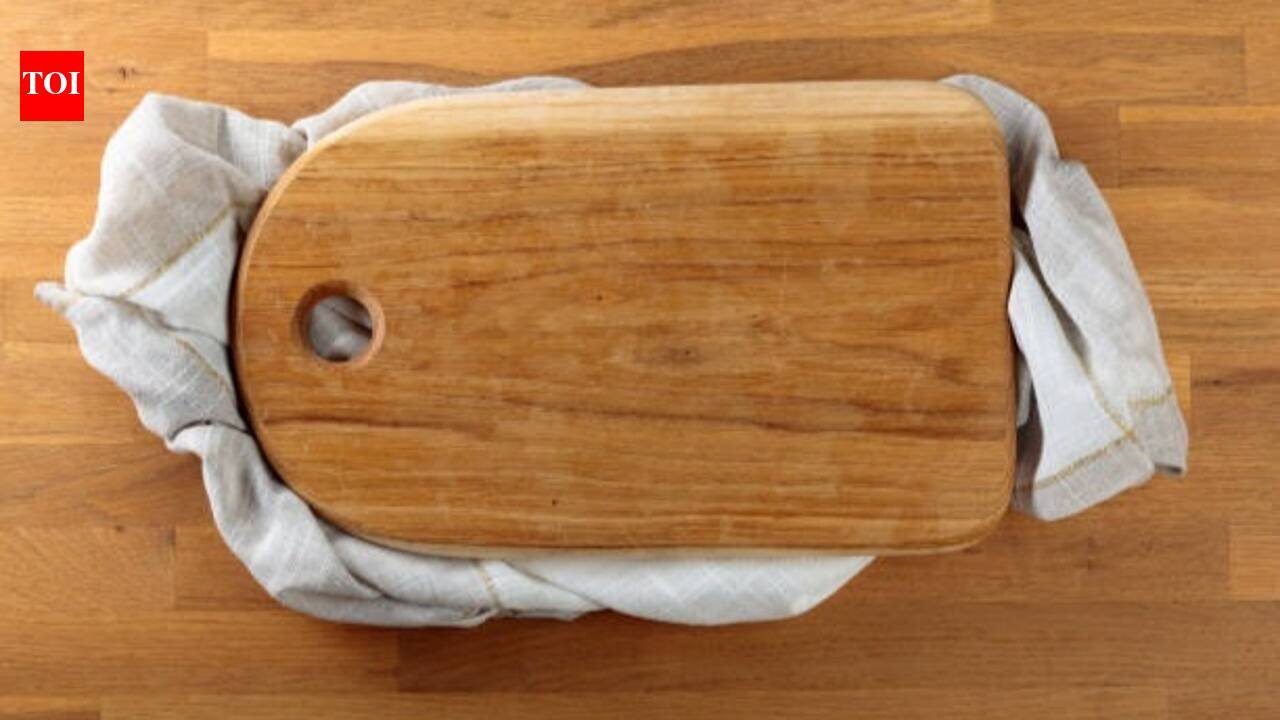
There’s a particular kind of frustration that comes with dicing an onion, getting into a good rhythm, and suddenly feeling the whole cutting board slide a few inches across the counter mid-chop. It’s more than just annoying, a board that shifts unexpectedly while a sharp knife is coming down is a genuine, if often overlooked, kitchen safety hazard. The fix professional chefs are taught in culinary school costs nothing and takes about ten seconds to set up: a simple, damp kitchen towel placed under the board. Here’s why it works, and how to actually do it right.
Why a cutting board slides in the first place
Most kitchen counters, whether granite, laminate, quartz, or tile, are relatively smooth surfaces, and so is the underside of most cutting boards, whether wood, bamboo, or plastic. Two smooth, dry surfaces resting against each other simply don’t generate much friction, which means any sideways force, the rocking motion of a knife, the pressure of pushing through a dense vegetable, is enough to send the board skating across the counter. Freshly washed boards are especially prone to this, since any lingering moisture on the board itself, paired with a smooth countertop, reduces grip even further.
The towel fix, done properly
The technique itself is genuinely simple, but a couple of small details make the difference between it working well and barely working at all. Wet a thin cotton kitchen towel or a few sheets of paper towel, then wring it out thoroughly so it’s damp rather than dripping, too much water can actually make things messier without adding much extra grip. Lay it flat on the counter with no major folds or wrinkles, then set the cutting board directly on top. It’s worth specifically reaching for a thin towel rather than a thick, fluffy one, since a bulkier towel tends to compress unevenly and can actually cause the board to rock slightly as you cut, rather than sitting flat and stable.
Why this actually makes chopping safer
The safety logic here is straightforward once you think it through. When a board shifts even slightly under a knife mid-cut, it throws off your control at exactly the moment precision matters most, often resulting in the knife landing somewhere other than where you intended. A board anchored firmly in place lets you focus entirely on the cut itself rather than unconsciously compensating for a surface that might move underneath you. It’s a small adjustment, but one that culinary schools teach specifically because it removes a genuine, avoidable source of kitchen injuries.
A few alternatives worth knowing
If a spare towel isn’t handy, a damp paper towel works just as well in a pinch, using the same wet-and-wring approach. For a more permanent fix, a thin non-slip mat, the kind sold for lining drawers or shelves, can be cut down to the exact size of your cutting board and kept stored alongside it, ready whenever you need it without any dampening required. Stretching a couple of thick rubber bands around the board, positioned near the edges, is another quick option that works particularly well for smaller or lighter boards prone to sliding.
One more related safety tip
While a stable board handles one major cause of kitchen slips, it’s worth remembering that a dull knife is its own separate hazard. A blade that isn’t sharp enough tends to require more downward pressure and is more prone to sliding off whatever you’re cutting rather than slicing cleanly through it, which can be just as dangerous as an unstable board. Keeping both a properly gripped board and a genuinely sharp knife in your routine covers the two most common, avoidable causes of kitchen cuts.
A tiny habit with a real safety payoff
None of this requires buying anything new or changing how you actually chop, just a spare towel and a few extra seconds before you start. It’s the kind of small, almost invisible habit that professional kitchens rely on precisely because it works, turning a wobbly, unpredictable cutting surface into a stable one without any real effort at all.
Disclaimer
This article is intended for general informational purposes only. Always use sharp, well-maintained knives and exercise caution when chopping, regardless of additional safety measures taken.


