



Last Updated:
The elections revealed the limits of the Opposition’s coordination at the state level, where local rivalries and political calculations often override national alliance commitments
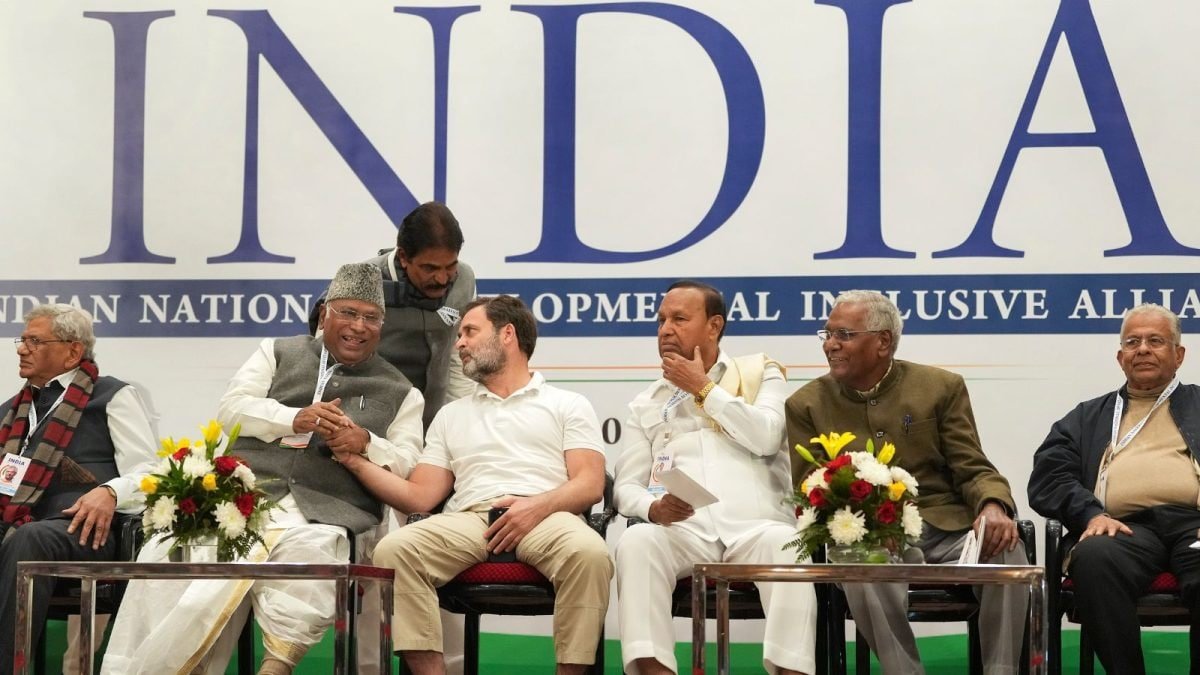
Unlike the NDA, which works as a well-oiled machinery, especially during polls, the INDIA bloc has continued to be a disorganised alliance that is often unable to keep its own implosion at bay. (PTI)
The 2026 Rajya Sabha elections have become an uncomfortable reality check for India’s opposition. Cross-voting, missing legislators and internal rivalries across states such as Bihar and Odisha not only helped the National Democratic Alliance (NDA) expand its numbers in the Upper House, but also exposed the fault lines within the INDIA bloc.
How Cross-Voting, Absenteeism Tilted The Balance
In the state of Bihar, the NDA managed a clean sweep by taking all five Rajya Sabha seats, a result that surprised the opposition leaders as they had expected at least one seat from the opposition alliance.
News18 had reported on Monday that the fifth candidate of the NDA needed at least three cross votes from the opposition side for a clean sweep. The election results were also affected by the absence of a few opposition legislators, including Congress and Rashtriya Janata Dal (RJD), which gave the advantage to the ruling party.
Similarly, in Odisha, the Bharatiya Janata Party (BJP) managed an additional seat with the help of cross-votes from the opposition legislators, reflecting the inability of the opposition parties to remain united during a closely contested election.
It was only in Haryana that the Opposition was able to fend off pressure and the Congress wrested one seat as its candidate Karamvir Singh Boudh emerged victorious despite five Congress votes going to the BJP-backed Independent candidate.
Litmus Test For Opposition
The elections in the three states were perceived as a “loyalty test” for the opposition lawmakers. There were efforts by the party leaders to avoid defections and cross-voting. In some cases, the opposition lawmakers were shifted to safe locations ahead of the election. For example, in the case of Karnataka, the Deputy Chief Minister DK Shivakumar was given the task of keeping a hawk’s eye on the Odisha MLAs to avoid cross-voting.
However, the opposition parties were not able to achieve the much-needed cohesion. Analysts quoted by NDTV say the Rajya Sabha elections revealed the limits of the Opposition’s coordination at the state level, where local rivalries and political calculations often override national alliance commitments.
Blame Game Erupts
The repercussions of the results have already sparked a war of words within the ranks of the opposition coalition. The leaders of the RJD have accused the Congress of bad coordination in the state of Bihar, while others have accused individual lawmakers of betraying the coalition.
This is a symptom of a larger problem facing the coalition. Although the parties have united to fight the BJP at the national level, their interests clash in states where Rajya Sabha elections are conducted.
No Future Of INDIA Bloc?
Unlike the NDA, which works as a well-oiled machinery, especially during polls, the INDIA bloc has continued to be a disorganised alliance that is often unable to keep its own implosion at bay.
Some of the key challenges facing the alliance include:
• Disagreements over sharing of seats in polls: Before any election, whether national or state, there is usually a disagreement over the number of seats that need to be shared in the polls. This is especially the case between the Congress and regional parties in West Bengal and Kerala and is a major challenge facing the alliance.
• Different interests in their respective regions: The parties making up the INDIA bloc are regional powerhouses. All they care about is beating their opponents in their respective regions. For instance, the Trinamool Congress is interested in dominating politics in West Bengal, the Samajwadi Party has Uttar Pradesh in mind, and the Aam Aadmi Party is keen on Delhi and Punjab.
• Coordination in Parliament: The bloc often struggles to maintain a consistent parliamentary strategy on issues such as protest tactics, legislative votes, and messaging against the government. Without tight coordination, the alliance risks appearing fragmented.
Advantage NDA
For the ruling alliance, the outcome confirms their increasing dominance in the Upper House. According to The Economic Times, the NDA victories in Bihar and gains in Odisha reflect the power of disciplined voting and candidate selection to turn even small leads into winning mandates.
Many Rajya Sabha seats have already been secured unopposed in several states in previous rounds of this election cycle. The latest outcome further solidifies the ruling coalition’s hand in Parliament.
March 17, 2026, 10:26 IST
Read More


