


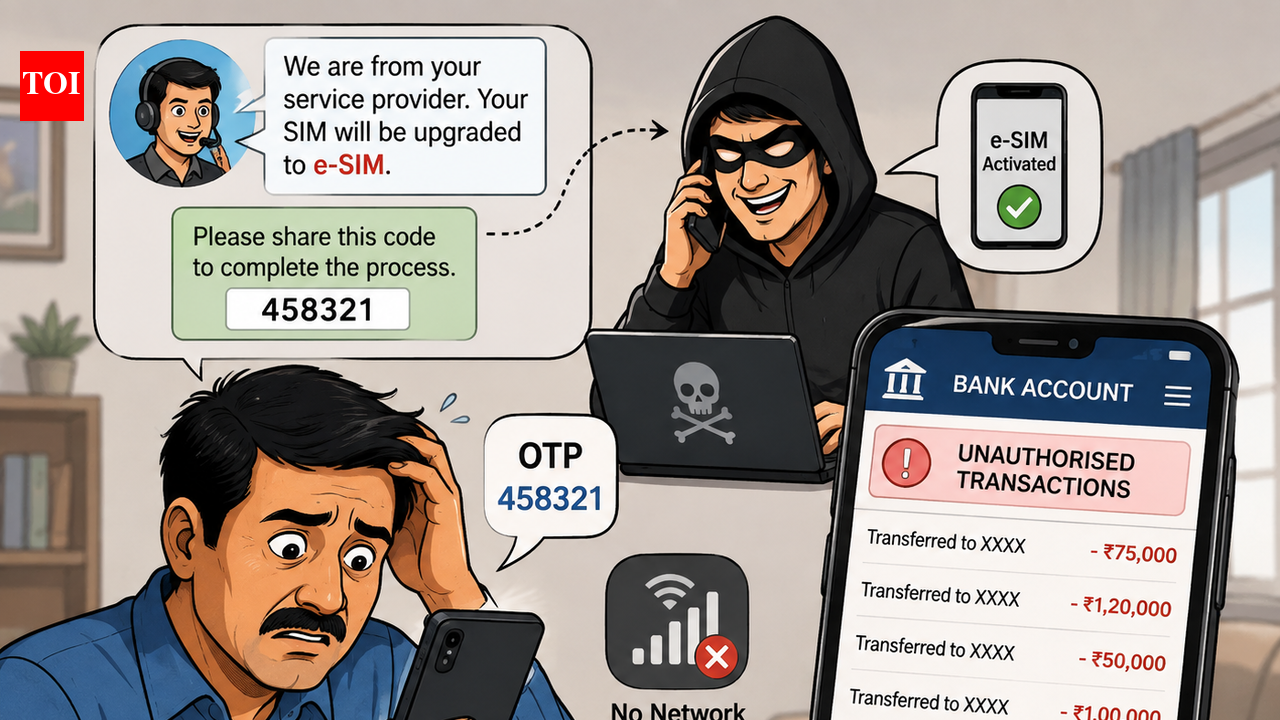
Bengaluru: Sim upgrade — it’s the new name of the old game. As they continue to hoodwink cops, cybercrooks are fleecing customers with an offer of e-sim upgrade through remote activation. In the process, they take control of phones and drain linked bank accounts.A 51-year-old man was left poorer by Rs 6.2 lakh after he followed a few instructions and shared an OTP with the victim calling himself a representative of a leading telecom service provider. Once Sagar (name changed) accepted the offer to upgrade from sim to e-sim, his mobile network stopped working. When the connection was restored, he discovered unauthorised transactions amounting to Rs 6.2 lakh.No telecom provider calls customers to promote e-sim conversion, police said.According to a complaint from Sagar, from Marasandra near Doddaballapur Main Road, a telecom company representative contacted him WhatsApp around 10am on July 31. The caller sent an end-of-day (EOD) number, asking him to copy and paste it as instructed.Sagar duly entered the OTP. His mobile network stopped working and remained inactive for nearly a day. Police said the fraudsters had carried out a sim swap after gaining access through a deceptive e-sim activation process. The complainant lost money from multiple accounts and credit cards held with three banks.In a similar case, 40-year-old Shoaib (name changed), from Chikkabanavara, lost Rs 2.8 lakh to crooks who tricked him into sharing a sign-in code and other credentials. A WhatsApp call from a crook said his sim card would be deactivated and a new e-SIM card issued.The fraudsters reportedly told him they needed to transfer all his contact numbers to the new sim. During the conversation, the accused persuaded the complainant to share a Google sign-in code, which the victim provided without suspecting foul play, and his network stopped functioning. The fraud came to light on Aug 8 when Shoaib checked his bank account.What is e-sime-sim is an embedded subscriber identity module built into smartphones.Inset -1How scam unfolds (Mugshot of DCP Raja Kasim to be taken)Fraudsters make phone calls or send messages, claiming sim needs upgrade into an e-sim. The fraudsters’ instructions include links and OTPs. They claim the process is chargeable and collect banking details. They collect the OTPs and siphon off money, said deputy commissioner of police (crime 2) Raja Imam Kasim P.Fraudsters initiate e-sim activation on a device controlled by them. The physical sim card gets deactivated. The fraudsters have control over the calls, SMS and OTPs. They easily reset the passwords or log in to the banking applications and drain the accounts, Kasim said.No company representative makes WhatsApp calls to initiate upgrades. The e-sim conversion option is available on official apps, Kasim added. Fraudsters send links and QR codes. “We suggest people not to click on unverified links or scan QR codes.”Inset – 2How to stay safeNever share OTPs, Google sign-in codes, PINs, passwords or banking credentials with anyone over a call or WhatsAppTelecom companies do not require customers to share OTPs or verification codes to activate e-simBe wary of callers claiming your sim will be deactivated-Do not click on links or QR Codes or follow instructions sent by unknown callers for e-sim activationE-sim should be activated only through official app, website or authorised outlet of your telecom operatorIf your mobile network suddenly stops working without explanation, contact your telecom operator immediatelyIn suspicious circumstances, inform your bank immediately and block accounts and credit cardsReport to cyber helpline 1930 without delay
