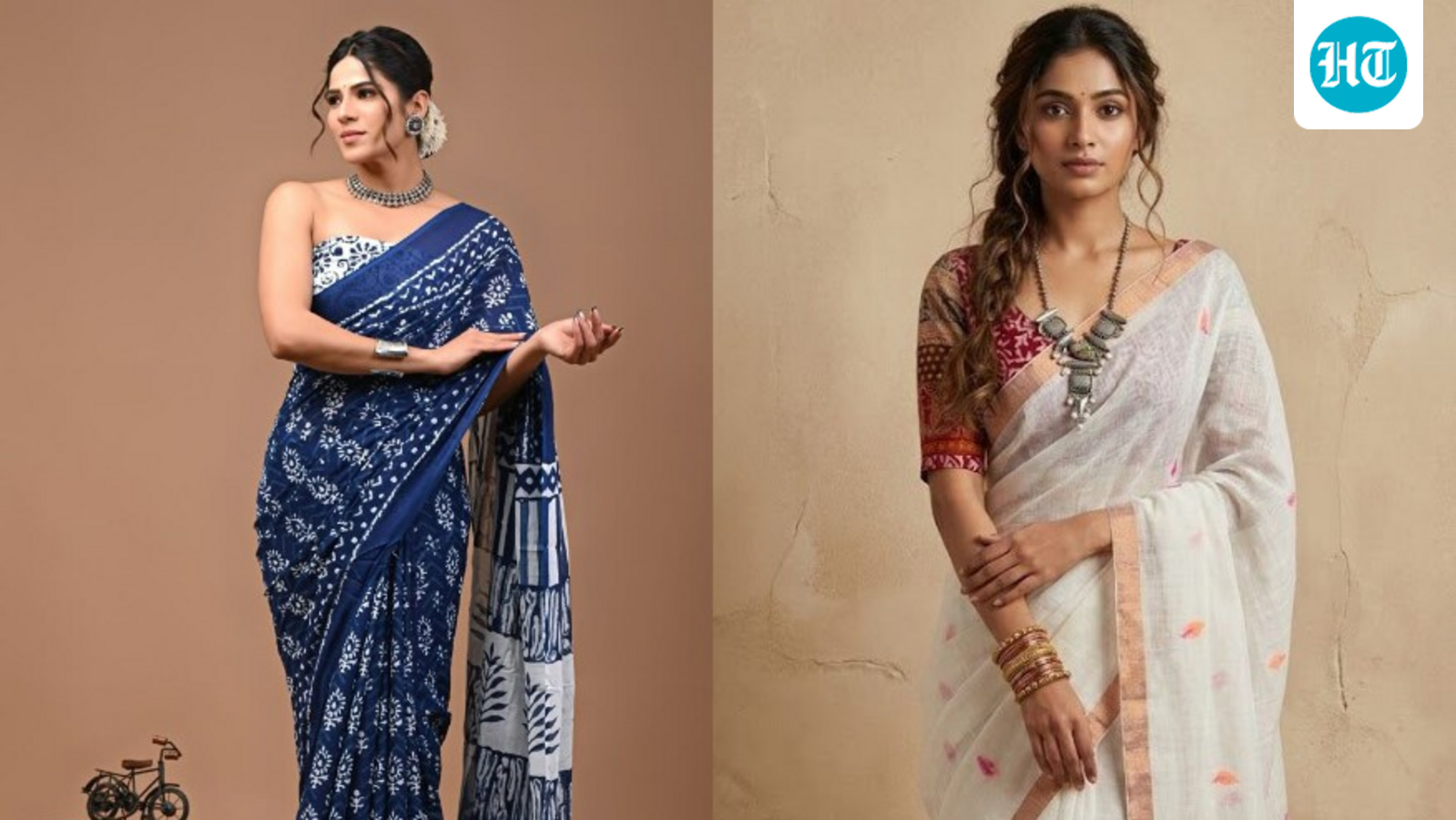



Monsoon dressing can be tricky, especially if you’re someone who loves wearing sarees. You want a fabric that’s breathable enough for humid weather, light enough to dry quickly if you get caught in a drizzle, and comfortable enough to wear through long workdays or festive gatherings. That’s where the classic cotton vs linen debate comes in.
Both fabrics have loyal fans, but they serve slightly different purposes. Cotton sarees are soft, breathable and ideal for everyday wear, while linen sarees offer a more structured drape with an understated luxury that feels polished without trying too hard.
So, which one deserves a place in your wardrobe this monsoon? The answer depends on how and where you plan to wear it.
Cotton Sarees: Comfortable, Breathable and Easy to Wear
Cotton remains one of the most practical fabrics for Indian weather. It’s lightweight, absorbs sweat well and feels soft against the skin, making it ideal for humid days. Cotton sarees are also easier to wear for long hours, especially if you’re heading to work or running errands.
Ajrakh prints instantly add an artisanal charm to everyday dressing. This hand block printed cotton saree combines traditional craftsmanship with breathable comfort, making it perfect for office wear or daytime outings during the rainy season.
Best for: Everyday office wear and cultural events.
Mulmul cotton is among the lightest fabrics you can wear during humid weather. Soft, airy and incredibly comfortable, this saree drapes effortlessly without feeling heavy, even after hours of wear.
Best for: Daily wear, travel and casual lunches.
If you prefer traditional elegance, this handloom cotton saree delivers exactly that. The thread-work border adds subtle sophistication while the breathable fabric ensures comfort even during long celebrations.
Best for: Office events and family functions.
Linen Sarees: Crisp, Elegant and Effortlessly Premium
Linen has become increasingly popular because it naturally looks refined. The slightly textured finish gives sarees a premium appearance, while the fabric remains breathable despite its structured feel. Linen wrinkles more easily than cotton, but many fashion enthusiasts consider those natural creases part of its charm.
Featuring digital floral prints and decorative latkan detailing, this linen saree balances elegance with everyday practicality. The wax finish helps maintain its crisp appearance, making it an excellent choice for work meetings or daytime celebrations.
Best for: Office parties and brunches.
Jacquard weaving adds depth without requiring heavy embellishments. This linen saree feels sophisticated, making it suitable for women who prefer understated luxury over flashy festive wear.
Best for: Formal occasions and elegant evening gatherings.
Combining linen with traditional gota weaving creates a beautiful balance between contemporary and festive dressing. It feels lighter than heavily embroidered sarees while still looking occasion-ready.
Best for: Festive dinners and intimate celebrations.
So, Which One Should You Choose This Monsoon?
If comfort is your biggest priority, cotton wins. It’s softer, easier to maintain and feels more breathable during sticky, humid weather. It’s also quicker to wash and ideal for daily wear.
If you’re dressing for meetings, festive occasions or events where you want a more polished appearance, linen is the better choice. It offers a naturally luxurious texture that elevates even the simplest blouse.
Personally, I’d keep both in rotation. Cotton sarees become everyday heroes throughout the monsoon, while linen sarees are perfect for those occasions when you want to look effortlessly elegant without wearing heavily embellished outfits.
At the end of the day, the best rainy-season wardrobe isn’t about choosing one fabric over another, it’s about choosing the right fabric for the occasion.
Similar stories for you:
Balloon Pants: Fashion risk or the coolest trouser trend right now? 8 picks to rock this style
Classic yet trendy: Shop chain handbags you’ll carry for years
Tried and Tested: I wore these 3 W for Women sets and here’s my honest review
Disclaimer: At Hindustan Times, we help you stay up-to-date with the latest trends and products. Hindustan Times has an affiliate partnership, so we may get a part of the revenue when you make a purchase. We shall not be liable for any claim under applicable laws, including but not limited to the Consumer Protection Act, 2019, with respect to the products. The products listed in this article are in no particular order of priority.