



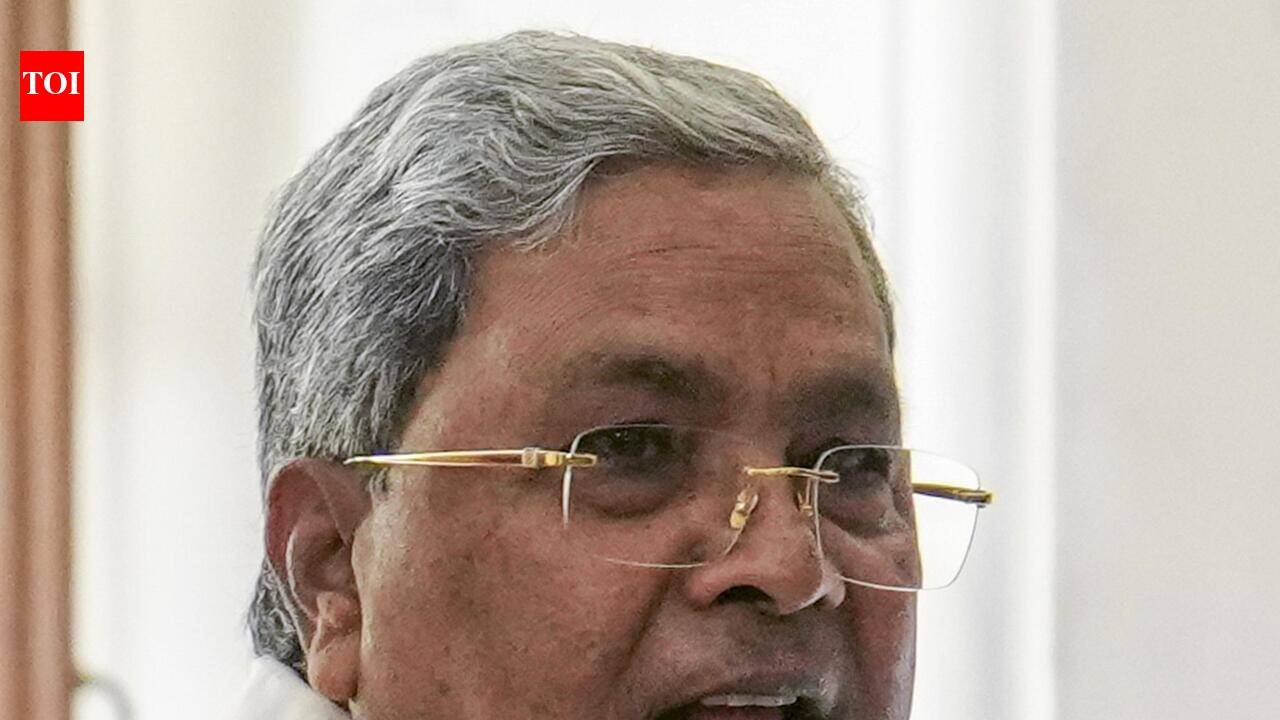
My recent comments that I will not contest elections has sparked considerable debate in political circles and the media. Some have questioned whether it is appropriate to speak about corruption in politics after spending decades in public life. I respect those views, but I believe I have expressed what many politicians privately acknowledge.Can anyone honestly deny that money, caste, religion and muscle power influence elections, or that electoral laws are routinely violated? It may not be openly discussed, but it is a reality recognised across parties.This is not the first time I have raised these concerns. While serving as CM in 2013, I said politicians, including myself, face their greatest test of integrity during elections. Campaigns require enormous financial resources, and those who fund them often expect favours once govts are formed. This cycle erodes ethical governance.Money has always influenced elections, but today its role has become excessive. Although the Election Commission prescribes expenditure limits, actual campaign spending often far exceeds them. This discourages many honest, educated and socially committed citizens from entering public life, weakening the quality of representation in Parliament and state legislatures.I believe many of the challenges confronting Indian democracy stem from flaws in the electoral system itself. Without meaningful electoral reforms, no amount of governance reform or new laws can strengthen our democracy.Successive govts have acknowledged this need. The Dinesh Goswami Committee examined the influence of money in elections, the Vohra Committee studied the criminalisation of politics, the Indrajit Gupta Committee explored state funding of elections, and the Law Commission made several important recommendations. While some reforms have been implemented, many are pending.India has undoubtedly strengthened its electoral framework through measures such as the anti-defection law, lowering voting age to 18, electronic voting machines, mandatory disclosure of candidates’ assets, criminal records and educational qualifications, the NOTA option, and disqualification of convicted legislators. Yet experience has shown that political actors often circumvent the spirit of these reforms. The misuse of the anti-defection law is a striking example.The challenge extends beyond money and criminalisation to the design of our electoral system itself. In the 2018 Karnataka assembly election, Congress secured a higher vote share than BJP but won significantly fewer seats. Similarly, in the most recent Lok Sabha election, BJP won 240 seats with about 37% of the national vote, while parties collectively receiving nearly 63% of the vote shared the remaining 303 seats. Such outcomes raise legitimate questions about whether the first-past-the-post system truly reflects the popular mandate.It is worth recalling that Dr BR Ambedkar himself was not fully convinced about the existing system. In a memorandum submitted to the Constituent Assembly in 1947, he argued that proportional representation deserved serious consideration. Regardless of whether India ultimately adopts such a model, a national debate on electoral reform is overdue.It is imperative for political parties to rise above ideological differences and strengthen the foundations of Indian democracy. We should revisit the recommendations of every committee on electoral reforms and implement measures that make elections more transparent, fair and accountable. Modern technology can also help improve the integrity of the electoral process.With this objective, I intend to write to Prime Minister Narendra Modi, opposition leader Rahul Gandhi and the chief ministers of all states, urging them to join a national effort for comprehensive electoral reforms. If we fail to act now, future generations may judge us harshly — not because democracy failed us, but because we failed to reform the electoral system that sustains it.(The writer is a Congress Working Committee member and former chief minister of Karnataka)


