



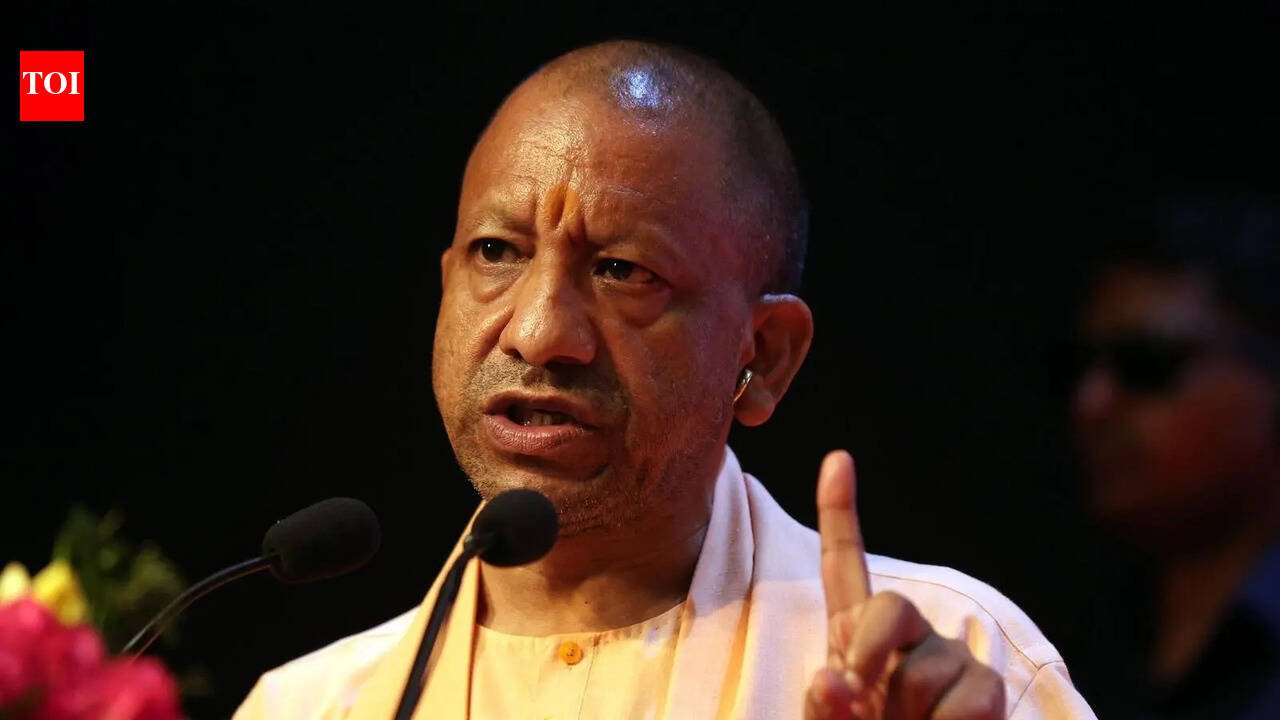
Lucknow: Chief minister Yogi Adityanath on Saturday directed officials to make UP’s weather warning system more accurate, faster and people-centric, stressing that timely dissemination of information during natural disasters could save numerous lives.Chairing a review meeting of the relief department, Yogi said weather forecasting and warning mechanisms should not remain confined to technical systems alone but must effectively reach the “last person” in vulnerable areas. He instructed officials to strengthen last-mile connectivity in villages and disaster-prone regions through extensive use of IVRS, panchayat-level loudspeakers, local FM radio, mobile alerts and social media platforms.During the meeting, officials presented a review of the severe storm and thunderstorm that struck the state on May 13. It was discussed that the IMD’s Multi-Hazard Early Warning System (MHEWS) was tracking the weather event seven days in advance. Initially, a yellow warning was issued, which was later upgraded to orange and subsequently to red alerts in several districts as the threat intensified.Officials said warnings predicted severe thunderstorms, lightning, hailstorms and winds exceeding 60 kmph. In several locations, wind speeds between 80 kmph and 130 kmph were recorded during the storm.SMS-based warning messages were also sent to active mobile phones in affected regions, while continuous alerts were disseminated through local television channels, FM radio, WhatsApp groups, gram pradhans, lekhpals, Asha workers and anganwadi workers. The CM sought detailed reports from DMs regarding preventive and relief measures taken following the advance warnings.Yogi directed officials to launch extensive awareness campaigns in schools, panchayats and rural areas to educate people about safe behaviour during extreme weather events. He also ordered local-level assessments of vulnerable trees, electricity poles, hoardings and weak temporary structures and asked departments to prepare standard operating procedures (SOPs) accordingly.The state currently has 450 automatic weather stations and 2,000 automatic rain gauge stations. Doppler weather radars are being installed in Aligarh, Jhansi, Lucknow, Varanasi and Azamgarh, while additional radars are proposed in Bareilly, Deoria and Prayagraj. Work is also underway to install wind profiler radars in Lucknow and Prayagraj.The meeting further noted that with support from the United Nations Development Programme (UNDP), disaster management plans are being prepared for 15 departments, all 75 districts and 20 major cities of the state.——–


