






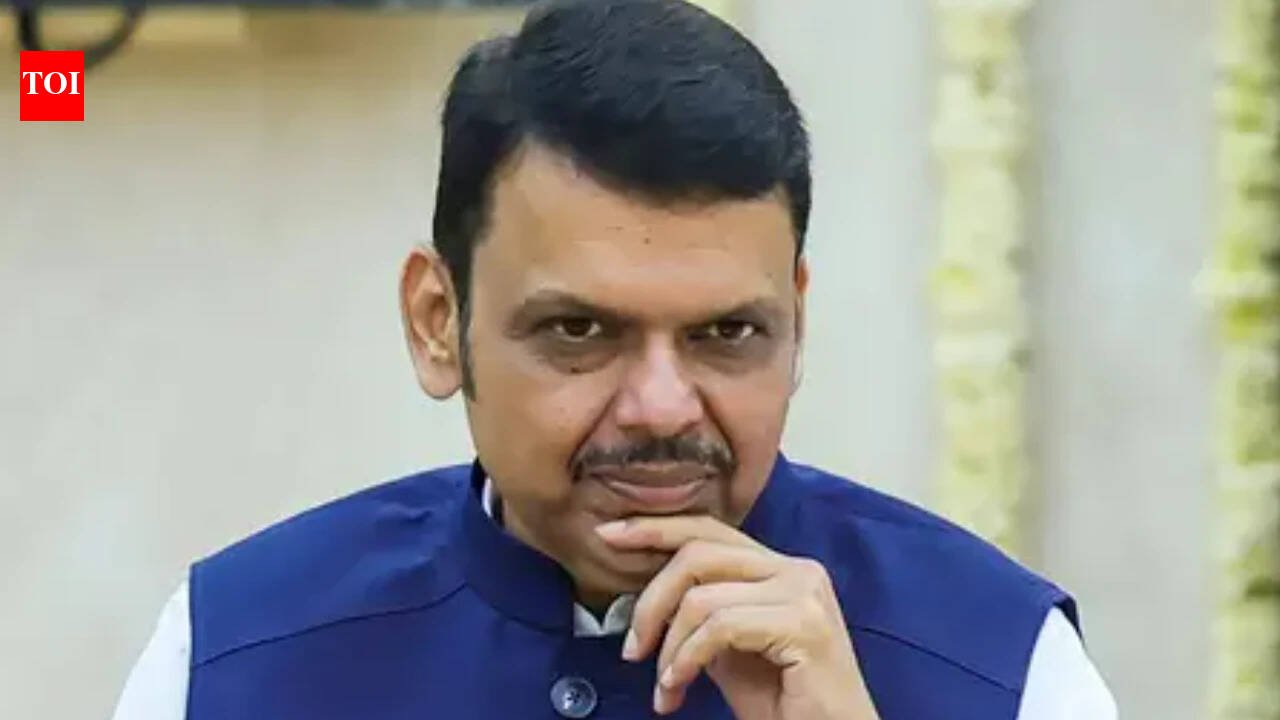
MUMBAI: Chief minister Devendra Fadnavis will now have the authority to override a minister’s decision in the larger public interest, according to a notification issued by the state govt on Friday.The notification, ‘Maharashtra Government Rules of Business, 2026,’ said, “Notwithstanding anything contained in these rules, the Chief Minister may, in the public interest, override the decision taken by any Minister in any cases, except in quasi-judicial cases, by recording reasons therefore, in writing.”The notification said the minister in charge of a department will be primarily responsible for disposal of business pertaining to that department or part of the department.The state chief secretary, Rajesh Aggarwal, through the general administration department, issued the notification. It explained the procedures and authority for the chief minister, ministers, chief secretary and other secretaries while performing administrative work.In 2023, the Bombay high court (Nagpur bench), in Chandrapur District Central Co-operative Bank vs State of Maharashtra, said that “the Chief Minister has no independent power assigned under the Rules of Business and Instructions issued thereunder to review or modify the decision taken by the concerned in charge Minister.”The court made the observation in a 2022 case in which the then chief minister Eknath Shinde had stayed an order passed by the then cooperation minister from the BJP.The Maharashtra Govt Rules of Business, 2026 said that when the chief minister wanted to see the paper relating to any case in any department, he could ask for it, and the minister in charge of the respective department and the secretary of the department complied.The chief secretary too could ask papers in a similar manner from any department secretary.The notification stated, “No department shall, without the previous concurrence of the finance department, issue any order which may involve any abandonment of revenue or involve any expenditure for which no provision has been made, involves any grant of land or assignment of revenue or concession grant, lease or license of mineral or forest right.”It stated that “for enactment of a new act, amendment in an act, and issue of statutory rules, the draft shall be referred to the Law and Judiciary Department for opinion and vetting or revision. If any doubt arises while interpreting any rule, it should be referred to the Chief Minister whose decision will be final.”Plus, “If any matter (is) likely to bring the state govt into controversy with the govt of India, or any other state, (it) was to be brought to the notice of the Chief Minister and the Governor as soon as the possibility of such controversy was noticed by the Minister-in charge or the secretary of the department.”It further stated, “The government may constitute the empowered committee headed by the chief secretary, or additional chief secretary or principal secretary, consisting of other members to take decisions on the subject assigned to them.”


