



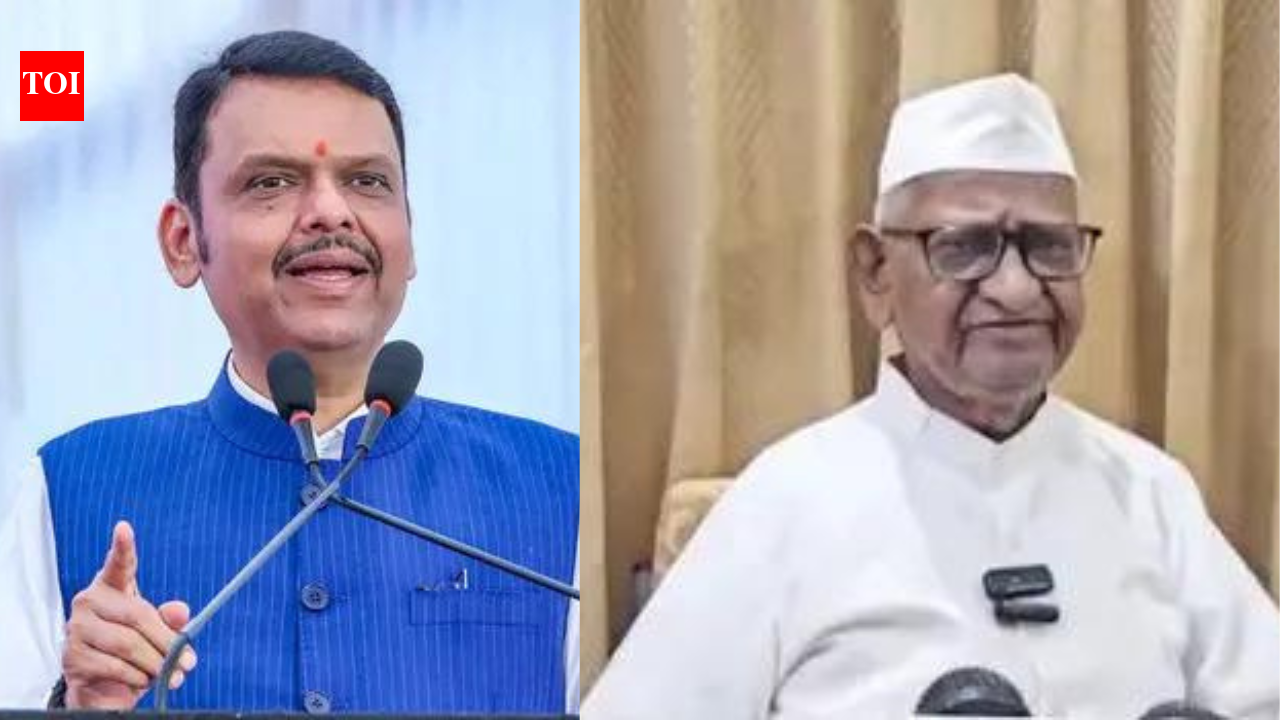
MUMBAI: The Maharashtra government on Wednesday put a complete hold on the controversial changes to the state’s Right to Information (RTI) Rules, with the state chief information commissioner suspending all the amended provisions after chief minister Devendra Fadnavis urged that no changes be implemented until detailed consultations are held with veteran social activist Anna Hazare.The move marks a complete rollback of the revised rules notified on June 12, weeks after the government had first issued the amendments and, following widespread criticism, had partially withdrawn some provisions within days. The latest decision suspends the entire set of amended rules until further discussions are held.In a letter to the state information commission, Fadnavis said any decision on changes to the RTI framework would not be appropriate without detailed discussions with Hazare.Acting on the chief minister’s communication, the chief information commissioner stayed all amendments published through the June 12 gazette notification.“Today we met Respected Anna Hazare and held extensive Discussion on effective implementation of RTI in State. The focus of our discussion was on making RTI regime more people-friendly with more vigorous steps on maximum suo-motu voluntary disclosure under section 4(1) of the RTI Act. My senior colleagues and SIC Pune bench Makrand Ranade and SIC Nashik Bench Prakash Indalkar also participated in the discussion and informed him about disposal and filing statistics. The recently notified RTI rules were also discussed and Respected Anna underlined importance of suo-motu disclosure and demanded to put on hold implementation of RTI rules. We are satisfied with our discussions With Anna,” said a statement issued by Rahul Pande, state CIC over the development.The decision comes after Hazare threatened an indefinite hunger strike, alleging that the revised rules would dilute citizens’ right to seek information and make the RTI process more expensive and restrictive. RTI activists and civil society organisations had also opposed the amendments, arguing that they would discourage ordinary citizens from using the transparency law.The June 12 notification had introduced 12 major changes to the Maharashtra RTI Rules. Among the most significant were tripling the RTI application fee from Rs 10 to Rs 30, increasing photocopy charges from Rs 2 to Rs 5 per page, imposing a Rs 50 fee for first appeals and Rs 100 for second appeals, restricting applications to a single subject and 150 words, and making photo identity proof mandatory.Other provisions allowed authorities to direct applicants to information already available on government websites, reject repetitive RTI applications, require applicants seeking personal information to establish larger public interest, recognise online and UPI payments, and permit dismissal of appeals if applicants repeatedly remained absent during hearings.Hazare had maintained that while misuse of the RTI Act by a few individuals could justify reasonable safeguards, the law was enacted to empower citizens and not to create financial or procedural hurdles. He had demanded restoration of the earlier rules, warning of an agitation if the amendments were not withdrawn.The latest stay means the pre-existing RTI Rules will continue to operate until the government takes a fresh decision after consultations. It may be recalled that a group of RTI activists led by former central information commissioner Shailesh Gandhi, along with journalist Vijay Kumbhar, senior journalist Vinita Deshmukh, Sajag Nagrik Manch members Vivek Velankar and Jugal Rathi, transparency campaigner Mohammed Afzal and others, had served a legal notice on the Maharashtra government seeking withdrawal of the Maharashtra RTI Rules, 2026.The notice had warned that if the rules are not rolled back within 15 days, the activists will challenge them before the Bombay high court.The activists had objected to several provisions they say dilute citizens’ statutory right to information, including mandatory submission of photo identity proof with RTI applications, the one-subject and 150-word limit on applications, higher application and appeal fees, charges for digital copies, curbs on fee exemptions for below-poverty-line applicants, shifting the burden of proving larger public interest onto applicants, and procedural rules allowing appeals to be dismissed for non-prosecution or to lapse on the appellant’s death.They contend these restrictions exceed the state’s rule-making powers under the RTI Act, 2005 and make access to information more difficult and expensive.


