


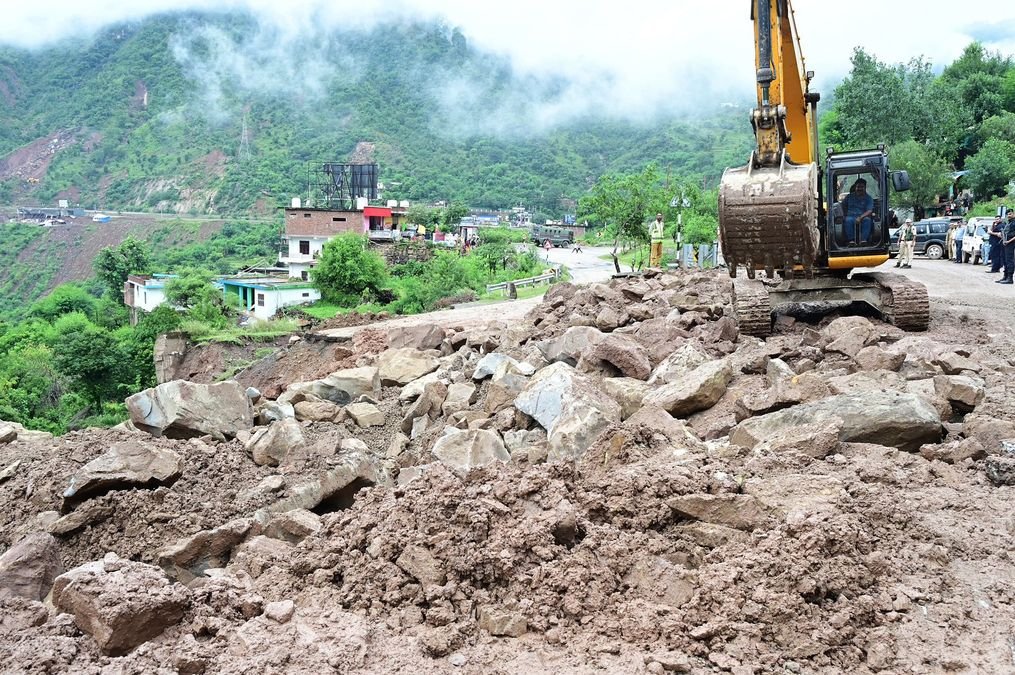
J&K records 9 incidents in June alone
July-August most vulnerable: Experts
Srinagar, Jun 24: Dark clouds gathering over the mountains of Jammu and Kashmir are no longer seen merely as signs of rain but a nightmare wrapped in cloudbursts. While Jammu region has logged five cloudburst incidents in June, Kashmir has recorded four such incidents. Experts say July and August are also vulnerable months for cloudbursts due to the rise in temperatures.
In the last few years alone, Jammu and Kashmir has witnessed repeated cloudbursts and extreme rainfall events, particularly in vulnerable districts such as Ramban, Kishtwar, Doda, Reasi, Kathua and parts of north and south Kashmir. Roads have been swept away, villages buried under debris and families displaced overnight as sudden floods ripped through mountain settlements.
As per the official data, in Jammu region, five cloudburst incidents were reported in the ensuing month, while Kashmir also recorded three similar happenings, especially in the north and south Kashmir parts. According to weather experts and disaster management officials, the frequency of extreme weather incidents in the Himalayan belt has shown a worrying rise, especially during the peak monsoon months of July and August.
Data from disaster management agencies and weather records show that several cloudburst-linked incidents have struck Jammu and Kashmir in recent years, causing extensive damage to infrastructure and loss of lives. Last year alone, multiple cloudbursts and flash floods triggered widespread destruction in Ramban and adjoining districts, damaging highways, bridges and residential structures.
Meteorologists say the geography of Jammu and Kashmir makes it particularly vulnerable. Steep mountains, unstable slopes, rapid urbanisation, shrinking forest cover and increasing temperature trends are amplifying the impact of intense rainfall events.
Director Meteorological Centre Ladakh, Sonam Lotus, said the Himalayan region is witnessing a visible increase in severe weather events linked to changing climate behaviour.
“The current monsoon period — July, August and mid-September — remains highly vulnerable to cloudbursts and flash floods,” Lotus said during previous weather advisories. “When prolonged rainfall combines with intense localised showers, the mountains become extremely fragile, leading to landslides, flash floods and slope failures.”
Lotus has repeatedly stressed that warming trends in the Himalayas are altering traditional weather cycles and increasing atmospheric instability. “There is a noticeable rise in severe weather conditions over the years. Climate change is influencing rainfall behaviour in mountain regions,” he said.
The India Meteorological Department (IMD) has also issued repeated warnings over the growing threat of extreme weather events in Jammu and Kashmir, cautioning that heavy rainfall spells can trigger cloudbursts, flash floods and mudslides in vulnerable areas.
Meteorologists explain that a cloudburst occurs when more than 100 millimetres of rain falls within an hour over a small geographical area, overwhelming mountain drainage systems and triggering sudden floods. Such events are highly localised and difficult to predict with precision, making them particularly dangerous in hilly terrain.
In J&K, experts say changing monsoon patterns are now bringing intense bursts of rain to areas that historically witnessed moderate precipitation.
The impact has been severe. In August last year, cloudbursts and heavy rainfall caused major devastation in Ramban district, disrupting the Jammu-Srinagar National Highway and damaging dozens of houses. Similar incidents have repeatedly struck Chenab Valley districts, where fragile slopes and riverbank settlements remain highly exposed to flash floods.
Kishtwar, Doda, and Reasi districts have also witnessed repeated landslides and flood incidents over recent monsoon seasons, with several villages temporarily cut off after roads collapsed under heavy rain. Environmental experts believe unplanned construction along riverbanks, road cutting through mountains and deforestation are worsening the intensity of disasters.
“Nature’s carrying capacity in the Himalayas is under stress,” said an official associated with disaster management efforts in Jammu and Kashmir. “When intense rainfall hits already weakened mountain slopes, destruction becomes inevitable.”
The IMD has expanded weather monitoring infrastructure across Jammu and Kashmir and Ladakh in recent years, including Doppler Weather Radars and improved forecasting systems aimed at strengthening early warning mechanisms.
Authorities are also increasingly relying on satellite-based monitoring and district-level disaster preparedness plans as extreme weather events become more common.
Yet despite technological improvements, people living in remote mountain villages remain deeply vulnerable. For residents of Chenab Valley and upper mountainous belts, every spell of heavy rain now brings anxiety.
Farmers, shepherds and roadside communities say weather patterns have changed drastically over the last decade. Summers have become hotter, rainfall more erratic, and cloudbursts increasingly destructive.
Experts warn that unless environmental safeguards, scientific planning and climate-resilient infrastructure are prioritised, Jammu and Kashmir could witness even more severe weather disasters in the coming years. And as another monsoon season approaches the Himalayas, the mountains of Jammu and Kashmir stand once again on edge — watching the skies with growing fear.
