



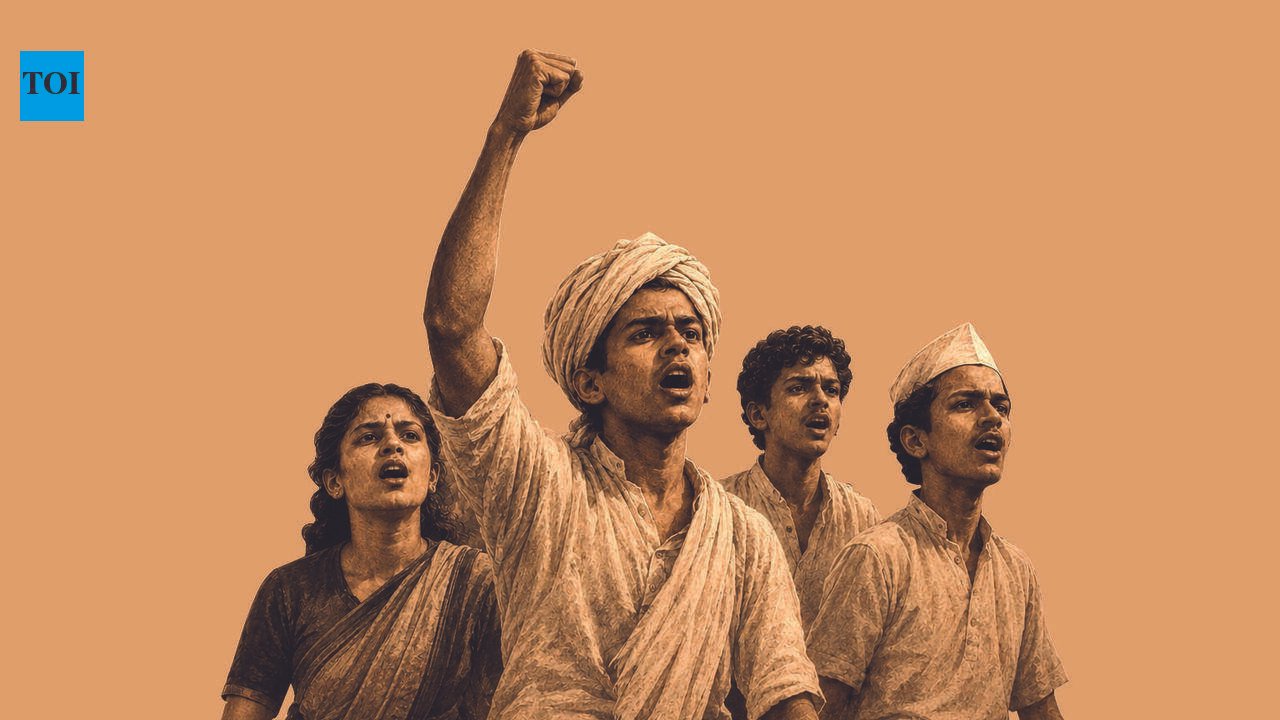
C K Raja Raja Varma | Kochu Kuttan fighter (Age 15)Abolition of untouchability. Protests against toddy shops. C K Raja Raja Varma (Kochu Kuttan) was 15 when he began taking on the establishment. He was driven out of Travancore and sent to Madras in 1922. But the exile did not kill his spirit. He joined C Rajagopalachari’s march from Trichy to Vedaranyam and participated in the 1930 Salt Satyagraha with Sardar Vedarathnam Pillai. He was arrested and spent 325 days in various jails. That didn’t stop him either. In 1931, he led anti-prohibition protests in Madurai, then a Swadeshi campaign in 1932. Prison terms followed. After Independence, he became a Hindi pandit in Pudukottai.Hanumantha Rao | Scarred strong (Age 17)At 17, Hanumantha Rao was in jail. Born in Namakkal in 1911 to lawyer S R Raghavendra Rao, the teenager joined the freedom movement and was arrested in 1927 for participating in the Neill Statue satyagraha, the campaign to remove the statue of British officer Colonel James Neill from Madras. He was sent to Berhampur Jail in Odisha. Rao took part in the Quit India Movement in 1942, where a lathi blow to the head left him severely injured. The scars on his face and body remained for life. He served as a member of the Namakkal Congress Committee from 1932 to 1945.Anjalai Ammal | Jhansi Rani of South India (Age 21)Born into a family of weavers in Cuddalore in 1890, at the age of 18, Anjalai confronted police officer W George when he seized a fisherman’s catch at a market. A crowd joined her and tied the officer to a tree. The confrontation went ‘viral’, even bringing poet Subramania Bharathi to her home. Inspired by Gandhi’s calls for women’s emancipation, Anjalai became one of the earliest women from South India to join the freedom movement. Impressed by her courage, Gandhi called her the “Jhansi Rani of South India”. Anjalai withdrew from politics after Gandhi’s assassination in 1948 and refused the pension offered to freedom fighters, while continuing to work on issues affecting women.C P Subbaiah | Karachi thatha of Madras (Age 22)He was 22 when Gandhi’s ideas drew him into the freedom struggle. From then on, the youngster used his greatest weapon against the British — his voice. A powerful speaker, Subbaiah earned the nickname ‘Karachi Thatha’ after delivering a speech with Jawaharlal Nehru in Karachi. Born in Coimbatore in 1895, Subbaiah joined the Congress after World War I and was arrested by the British several times. During one stint in jail, he was imprisoned with V O Chidambaram. In 1937, he contested the general election and was elected to the Madras Legislative Assembly.WHAT FREEDOM MEANS TO ME TODAYFreedom is the right to question. As a student, I should be able to question policies that affect me and protest against them without fear or intimidation. When police entered our college campus during a protest against NEET and dragged us out of classrooms, I felt they had violated the space we should have as students to question and dissent. Freedom also means equal access. That is why I see NEET as a barrier to educational freedom. If a student’s chance of studying medicine depends on how much they can afford to spend on coaching, that is not equal access to education. Agalya Kathiravel, student (20)Freedom of speech. That’s freedom for me. To be able to engage with art without restrictions, whether I’m performing, writing jokes or watching another comedian. I recently completed an all-India tour and found that performing political or religious jokes outside Tamil Nadu requires more caution. In one BJP-governed state, I noticed that the audience laughed at my jokes about feminism and women’s rights, but the hall fell silent when I cracked a joke about Hinduism. I suddenly became conscious of what I was saying and feared for my safety, especially because I was travelling alone. To me, freedom is to be able to perform without fear. Saga, standup comic (28)Living free of other people’s expectations, opinions and control. That’s what freedom means to me. I married at 19 and wrote my first poem, ‘Oppandham’, at 22, as an outlet for my frustration. I was forced to write in secret. My husband would destroy my work if he found it. My mother smuggled my poems out and helped get them published in a Tamil weekly. Seeing my thoughts in print made me feel free for the first time in years. Even today, as a woman or politician, there are attempts to restrict my freedom of speech and expression, my movement, what I wear and what I write. Freedom from those restrictions is true freedom. Rajathi Samsudeen (Salma) writer, politician (57)Freedom, to me, means living in a country where no one is in need. I am the son of a freedom fighter from Ranipet. I grew up hearing about the freedom struggle and learning what it meant to serve people. My father gave away his life’s earnings in service of the country, and my siblings and I have tried to carry that service forward through an NGO. I want the people of this country to remember the sacrifices of our forefathers and remember that living free and with dignity is the greatest freedom. K K Rajaraman, philanthropist (77)


