



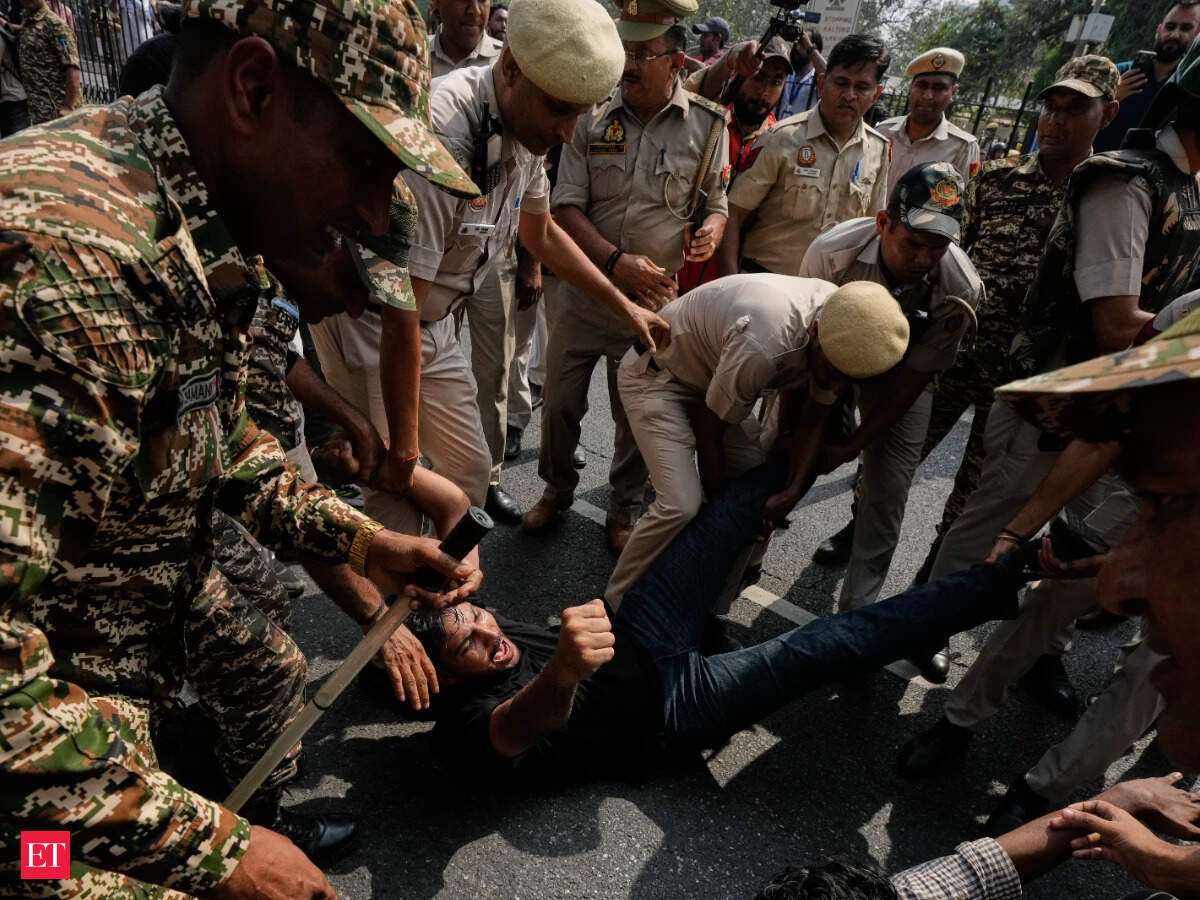
The provision has come into focus in Delhi and Gautam Buddha Nagar, which includes Noida, amid heightened security arrangements surrounding a proposed protest by the Cockroach Janata Party (CJP) at Delhi’s Jantar Mantar on October 10.
What does Section 163 allow authorities to do?
Under Section 163, a District Magistrate, Sub-Divisional Magistrate or another Executive Magistrate specifically empowered by the state government can issue a written order directing a person to refrain from a particular act or take specific measures concerning property under their possession or management.
Also read: ‘This government will fall’: Rahul Gandhi alleges ‘millions’ added to, deleted from voter rolls
The order must state the material facts of the case and be based on the authority’s assessment that preventive action is necessary. In emergencies, or when there is insufficient time to serve notice, the magistrate can issue an order ex parte, without first hearing the affected person.
The order can apply to an individual, people residing in a particular locality or the public visiting a specified area. Its precise restrictions depend on the terms of the order issued by the competent authority.How long can an order remain in force?
Under Section, an order ordinarily cannot remain in force for more than two months from the date it is made. The state government can extend it for a further period of up to six months if it considers this necessary to prevent danger to human life, health or safety, or to prevent a riot or affray, through a notification.
Why has Section 163 been imposed in Delhi?
Delhi Police has said that Section 163 is in force in the New Delhi district ahead of the proposed October 10 CJP protest at Jantar Mantar. The demonstration is linked to demands for Chief Election Commissioner Gyanesh Kumar’s resignation and opposition to the Special Intensive Revision (SIR) of electoral rolls.
Also read: Mahatma Gandhi’s great-grandson Tushar Gandhi detained ahead of Mumbai protest backing CJP
The police have cited public safety, law and order, traffic regulation and concerns over previous instances of non-compliance with directions during protests while denying permission for the proposed demonstration. Restrictions under Section 163 form part of the preventive measures in place in the area.
What are the restrictions in Gautam Buddha Nagar?
The Gautam Buddha Nagar Police Commissionerate has imposed Section 163 restrictions across the district from October 10 to October 20, 2026. According to the reported order, the restrictions have been introduced to maintain law and order during the upcoming festive period and amid concerns surrounding proposed demonstrations.
The district-wide order covers a broader geographical area than the restrictions reported for New Delhi. Residents should refer to the local order for the specific prohibitions and any applicable exceptions.
What happens if someone violates an order?
Disobedience of a duly promulgated order can invite legal action under the applicable law. Section 163 itself establishes the power to issue the preventive order; the consequences of disobedience arise under the relevant penal provisions, depending on the circumstances.
In practical terms, the provision allows authorities to impose targeted restrictions before a situation escalates, rather than waiting for a breach of public order to occur. The scope of those restrictions, however, is determined by the specific order in force in each area.
