




Over the past month, a string of crimes against women has jolted the national capital and reestablished concerns about the safety of women and girls in public spaces, especially after a minor school student was gang-raped inside south Delhi’s Aastha Kunj.
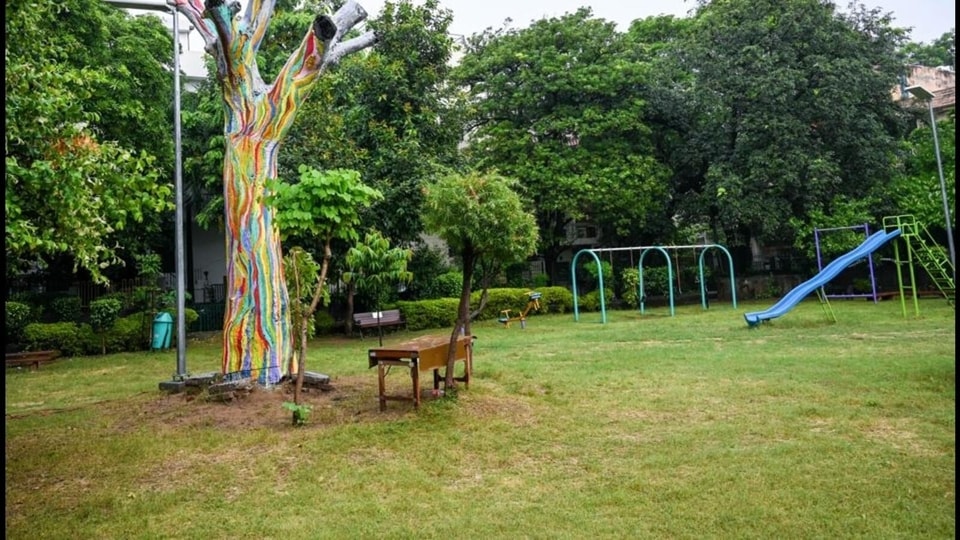
Now, the Municipal Corporation of Delhi (MCD) is set to designate dedicated women-only parks in each of the city’s 250 wards, following a decision made by the body’s standing committee during a departmental review on Wednesday.
How will the authorities let only women and children enter? Women guards at all entrances and exits, and CCTV cameras to boot.
“Only women and children will be allowed to enter these parks. Each of these parks will have open gym exercise units and separate washrooms and changing rooms. Our goal is for women to feel safe in parks. No one should feel hesitant to use public facilities. Multiple steps are being taken to ramp up security of the parks,” said committee chairperson Satya Sharma.
“The directive was issued to provide women with safe public spaces, in the aftermath of the Aastha Kunj Park gangrape incident,” she added.
Also read: Delhi plans 100K smart streetlights to boost women’s safety
MCD to survey sites across all zones
The committee has directed officials to conduct surveys across all zones to identify parks and other suitable locations where the women’s parks can be developed. A timeline, however, has not been fixed.
To be sure, the gangrape had also underscored the widespread absence of security mechanisms –– malfunctioning CCTVs, dark spots, unpatrolled streets and parks –– in popular public places in the city. Most of them remain unaddressed.
To be sure, previous attempts to set up “pink parks” as safe women-friendly public spaces across Delhi failed to materialise due to resource crunch. MCD maintains 15,369 parks spread across 5172.07 acres, with 90% of them categorised as “housing area parks” that cater to residential neighbourhoods. The horticulture wing – which will carry out this gender segregation plan –– faces a shortage of guards, cameras and gardeners to secure spaces.
Also read: Yogi says UP has moved from women’s safety to empowerment
Earlier ‘pink park’ initiative failed to sustain
In March 2022, a pilot pink park was developed near Mata Sundari road near Ramlila Ground with net expenditure on the work around ₹25 lakh. Over the years, it has fallen into disrepair, and its use has decreased.
Residents’ associations raised concerns about the feasibility of such a move.
BS Vohra, who heads the East Delhi RWA Joint Front, said the idea of women-only parks do not seem feasible in the current day and age. “The authorities must focus on making all neighbourhood parks safe. Earmarking one park in a ward is just an admission that we have failed to provide a safe environment. This is not the era of exclusionary parks; those were for much older times,” he said.
Vohra said each ward covered a large area, making it impractical for women to travel to a designated park for walks. “In Krishna Nagar ward, the area starts from road number 57 and goes up to Pushta Road. The authorities should focus on adding lights, security guards and secure spaces in all parks,” he added.
Spot check finds multiple safety shortcomings
Unsafe public spaces are a chronic problem in Delhi. During a spot check in the aftermath of the incident at 12 larger parks managed by different agencies, HT found a slew of issues, such as dark spots, non-functional lights, shortage of guards, broken boundary walls, open gates and the lack of CCTV cameras.
The concept of parks only for women dates back to the 19th-century Parda Bagh –– known then as Zanana Park –– located on the Netaji Subhash Marg in Daryaganj. In 2019, the Shahjahanabad Redevelopment Corporation (SRDC) decided to revive the Zanana Park as a part of the Jama Masjid precinct redevelopment plan, but the project was never implemented.
Kalpana Viswanath, social entrepreneur and co-founder and CEO of Safetipin, a social enterprise that focuses on the safe movement of women in urban spaces, said there was no need for women-only parks, women-only autos, pink booths and similar initiatives.
Also read: Women’s safety is a national security issue
“It is 2026. It is the government’s responsibility to ensure all parks are safe spaces. Are we saying that women should only visit these designated parks? What happens if they visit other parks? Is it not the police’s responsibility to ensure all parks are safe? And what if women want to visit parks with their husbands, friends and partners? Such ideas will not work. They are only tokenistic in nature,” she said. Viswanath added that making parks safer was not difficult. “Improve illumination, ensure security and have some form of regular patrolling. The authorities should focus on making all parks safer,” she said.
