



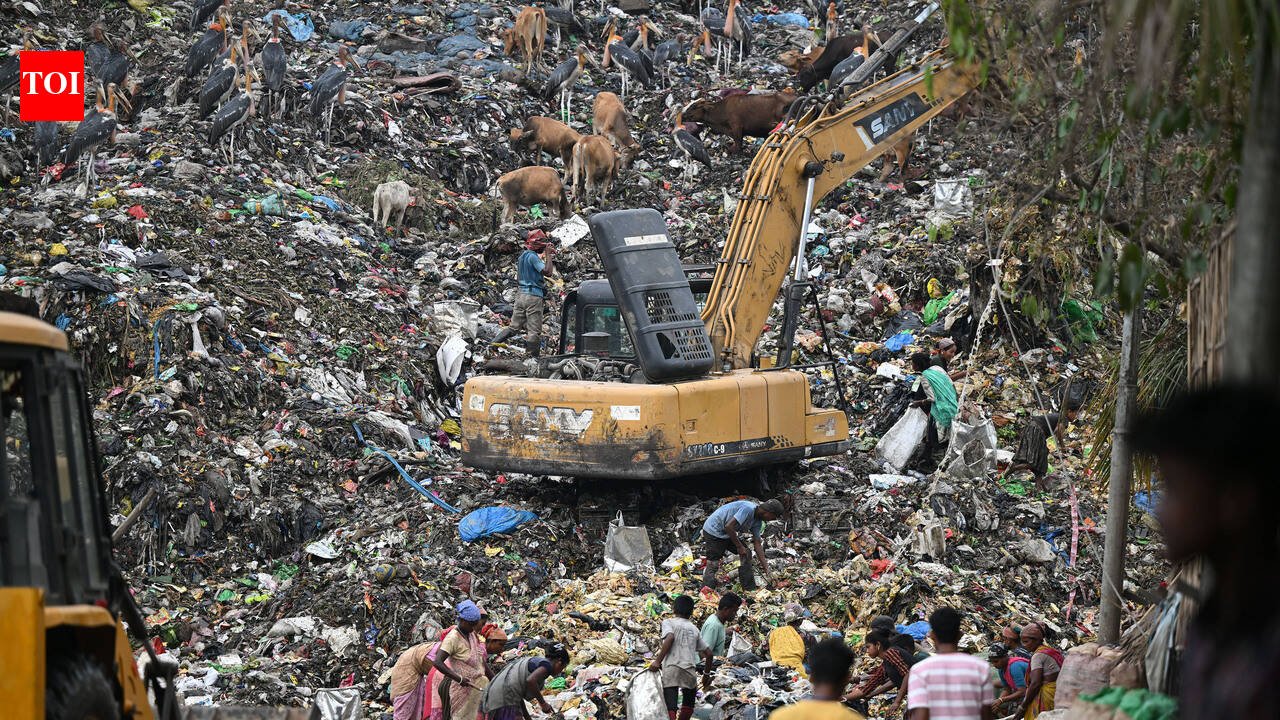
Guwahati: A community-led cleanliness competition in Guwahati has raised awareness about waste segregation and encouraged residents to adopt better waste-management practices.As Guwahati Municipal Corporation’s competition nears its conclusion, mayor Mrigen Sarania said around 95% of the community participated, indicating strong public involvement in the civic cleanliness drive. He said participation must translate into sustained waste segregation practices beyond the competition.“Conducting this competition has benefited us greatly, as it has helped raise public awareness. However, there are still other gaps that need to be addressed. We noticed that only 50% of households are segregating their waste. Composting also needs to be encouraged so that we can reduce the amount of waste being generated,” Sarania added.Segregation at the source is essential to ensure that recyclable, biodegradable and other waste is handled separately. Mixing waste makes processing difficult and reduces the scope for recycling and recovery.Sarania also proposed introducing yellow and red bins alongside the existing blue and green bins to improve source segregation.“While blue and green bins are commonly used for dry recyclable and wet organic waste, respectively, yellow and red bins are often designated for sanitary, biomedical, contaminated, or hazardous waste, helping ensure that different types of waste are handled safely and responsibly,” the mayor said.Source segregation remains a major gap in Guwahati’s waste-management system. Waste accumulation in Boragaon has been attributed to rising waste generation, limited processing capacity, long-term dependence on dumping and the disposal of mixed waste.The civic body is seeking to strengthen waste-processing infrastructure and improve waste segregation and recovery. Directions issued by National Green Tribunal have also stressed the need to address legacy waste at Boragaon and reduce the environmental risks associated with its accumulation.
