



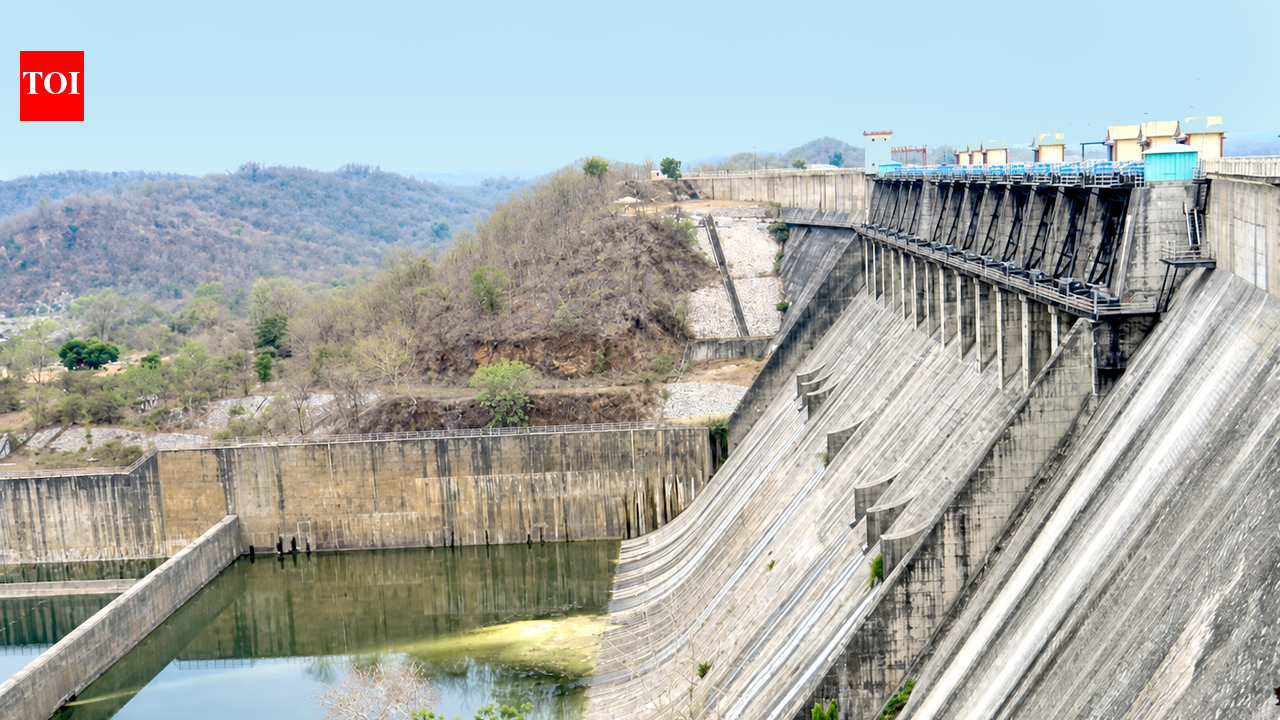
Nagpur: Sedimentation is steadily reducing Totladoh dam’s live storage capacity, with two independent assessments documenting substantial losses over the decades.The Maharashtra Engineering Research Institute (MERI) recorded a loss of 74.07 million cubic metres (MCM) of live storage between 1986 and 2010, while a satellite-based study by researchers from Visvesvaraya National Institute of Technology (VNIT), Nagpur, estimated that the reservoir had lost 17.63% of its original live storage capacity by 2020.The findings assume significance as Totladoh supplies around 520 million litres per day (MLD) of Nagpur’s total treated water requirement of 740 MLD, accounting for nearly 70% of the city’s supply. On Oct 11, 2026, the reservoir held 480.2 MCM of water, equivalent to 47.22% of its currently listed designed live storage capacity. On the corresponding date last year, it held 99.76%, according to Water Resources Department (WRD) data.MERI’s 2024 report, Capacity Assessment of Reservoirs in Maharashtra (1974-2024), recorded a decline in Totladoh’s live storage capacity from 1,091 MCM when the dam was impounded in 1986 to 1,016.93 MCM in a 2010 survey. The loss of 74.07 MCM represented 6.79% of the original capacity, at an average annual rate of 0.283%. The survey also recorded an annual siltation rate of 7.22 hectare-metres per 100 sq km of catchment area.Across the Maharashtra reservoirs studied, MERI found annual storage-capacity losses ranging from 0.164% to 1.135%, against a cited national average of 0.4%. Totladoh is estimated to accumulate around 2.66 MCM of sediment annually, equivalent to about 0.25% of its original live storage capacity of 1,091 MCM.A separate study, Footprints of Sedimentation on Loss of Reservoir Life Using Satellite Remote Sensing Technique, published in 2022 by VNIT researchers Tulshidas M Jibhakate and Yashwant B Katpatal, used Landsat 8 satellite imagery to assess sedimentation between 1982 and 2020. It estimated Totladoh’s live storage capacity at 889.88 MCM in 2020, against a reference capacity of 1,080.32 MCM, indicating a loss of 17.63%. The study put the sedimentation rate at 1,173 cubic metres per sq km annually.The two assessments use different reference capacities, while WRD continues to list 1,016.93 MCM as Totladoh’s designed live storage capacity. An updated official survey is needed to reconcile the estimates and establish the extent of the loss since 2010.Nagpur draws the remaining 220 MLD of its treated water supply from Kanhan river. As sedimentation reduces the reservoir’s capacity to capture monsoon inflows and retain water for lean periods, the long-term decline in storage poses an additional challenge to securing the city’s supply, particularly in years of deficient rainfall.TOTLADOH DAM AT A GLANCERiver: PenchDistrict/Basin: Nagpur / GodavariYear of impounding: 1986Catchment area: 4,273 sq kmFull reservoir level: 490 metresMinimum drawdown level: 464 metresOriginal live storage capacity: 1,091 MCMLive storage in 2010: 1,016.93 MCMMERI’s recorded loss: 74.07 MCM (6.79%) between 1986 and 2010Annual capacity-loss rate: 0.283% (MERI survey)Estimated annual sediment accumulation: 2.66 MCMVNIT satellite study: Estimated 17.63% live-storage loss by 2020Current live storage: 480.20 MCM (47.22% of listed designed capacity on Oct 11, 2026)Water supplied to Nagpur: 520 MLD, nearly 70% of the city’s 740 MLD supplyReport Sources: MERI’s Capacity Assessment of Reservoirs in Maharashtra (1974-2024), published in 2024; VNIT researchers’ satellite-based study published in 2022; Water Resources Department storage data dated Oct 11, 2026.
