


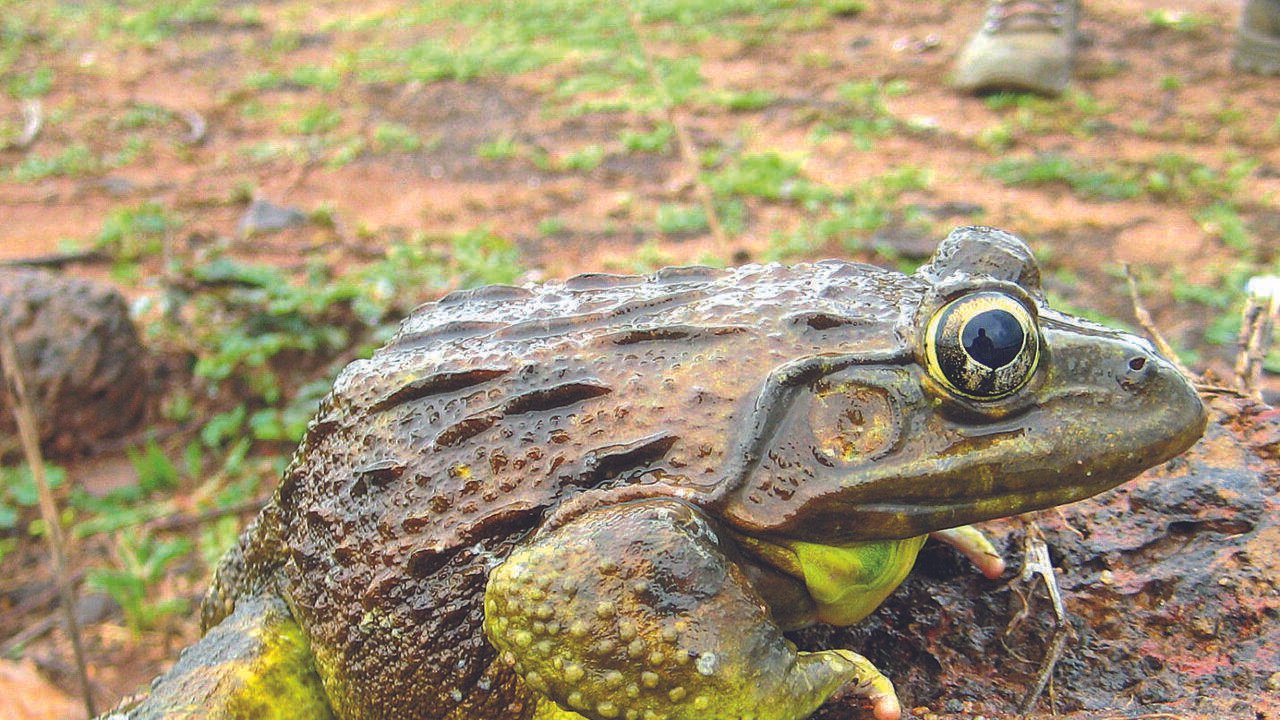
Margao: There was a time when Goa’s first monsoon showers announced themselves with the deep, rhythmic croaks of the Indian bullfrog echoing across paddy fields and puddles. The sound, immortalised in Konkani nursery rhymes and wedding ballads, is now fading, and environmentalists warn it is a sign of a deeper ecological crisis.Once regarded in Goan folklore as a harbinger of prosperity and abundant rainfall, the Indian bullfrog has become increasingly scarce. Residents who recall entire fields “singing” through July and August say the chorus has dwindled dramatically.“Frogs are at greater peril now than at any point in recent history,” said Manoj Borkar, former associate professor of zoology, who has studied Goa’s amphibian populations for years. He attributed the decline to shrinking wetlands and agricultural fields, rapid urbanisation of plateau habitats, indiscriminate use of agrochemicals, and climate change.“Frogs have permeable skin, which makes them extremely vulnerable to toxins that build up in their habitat,” he said. “Add to that erratic rainfall patterns and prolonged dry spells brought on by climate change, which leave these amphibian species struggling simply to complete their breeding cycle.”Environmentalists said poaching has worsened the crisis. Despite the Indian bullfrog being protected under the Wildlife Protection Act, 1972, frog meat, euphemistically sold as “jumping chicken”, continues to be served at some eateries along the coastal belt during the monsoon, when the amphibians emerge to breed.Range forest officer in charge of the mobile squad in Margao, Mahanand Paryekar, said patrolling teams will remain on alert throughout the monsoon to curb poaching. Catching, killing or selling frogs, or serving frog meat, is punishable with a fine of up to Rs 1 lakh, imprisonment of up to three months, or both.“The indiscriminate killing of frogs for their meat has led to a drastic decline in their population across the state,” he said. “The ecological impact extends beyond frogs, forcing snakes into human settlements in search of prey and allowing disease-carrying insects to multiply.”Roland Martins, convenor of the Goa Consumer Action Network (GOACAN), urged people to stop consuming frog meat. “Indiscriminate use of fertilisers has affected the lives of frogs. Frogs feed on mosquitoes responsible for malaria and other vector-borne diseases. The indiscriminate killing of frogs for their meat is an ecological crime against the food chain,” he said.Researchers said the absence of systematic surveys makes it difficult to quantify the decline. Goa has never conducted a comprehensive enumeration of its frog population, leaving most evidence anecdotal.Ecologists describe frogs as a “sentinel” species whose health reflects the condition of the wider ecosystem. Their decline can trigger an increase in pest populations, greater reliance on chemical pesticides, and disruption of the food chain, ultimately affecting agriculture and human life.Environmentalists said restoring degraded habitats, protecting wetlands and backing conservation efforts with sustained funding are essential to ensure the Indian bullfrog continues to be part of Goa’s monsoon landscape.
