





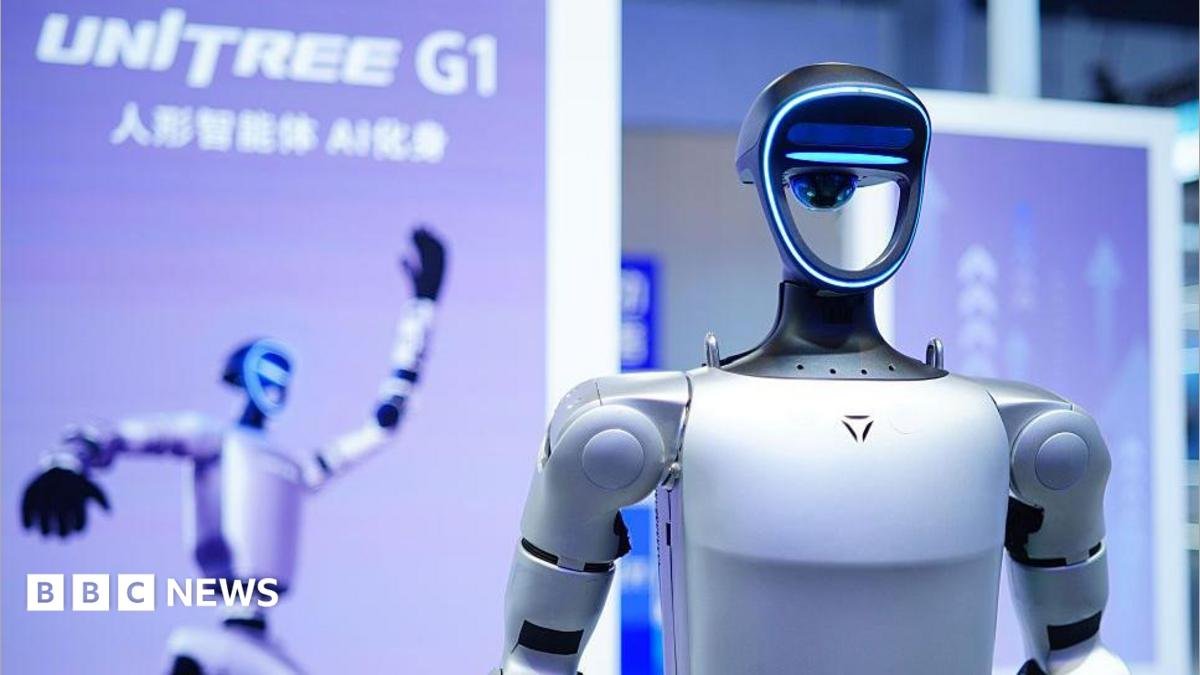
Founded in 2016, Unitree has become a robotics industry leader, selling a wide range of devices from sensors and automated arms to four-legged and human-like machines.
It shipped more than 5,500 humanoid robots last year as demand for the technology grows.
Unitree is one of the few companies in the sector to make money, delivering a net profit of 278 million yuan in 2025.
For several years, it has been a fierce rival to developers in the US as it rolled out robots with similar features but at lower prices.
The company – which plays a key role in Beijing’s ambitions to be a global leader in cutting-edge technologies – is based in Hangzhou, in eastern China.
The region is home to a so-called golden cluster zone of robotics firms, which have been boosted by huge government investments.
That support helped drive a more than threefold increase in the number of Chinese robotics firms between 2020 and 2024, according to state-run China Daily.
Robots are also seen as a potential solution to issues posed by China’s ageing population, which is expected to lead to a shortage of workers in the country, according to Fei Qin, an associate professor at the University of Bath.
Beijing considers the robotics sector a “strategic priority” in its pursuit of leadership in advanced technology, she said.
“Robots are where AI leaves the screen and enters the economy” in factories, hospitals and, potentially, the home, Qin added.


