



People find themselves in situations that are too big, too hard, or too powerful to control. These challenges can be technological, competitive, personal, work-related or societal in nature. In these situations, people react differently. Some avoid them altogether, while others try to fight them head-on. But neither approach is guaranteed to work.The Chinese have a traditional way of explaining complicated ideas through symbols and imagery. In Chinese culture, dragons symbolise strength, power, unpredictability and transformation. Often, rather than a totally evil creature, the dragon is a symbol of a force to be understood and wisely used.The saying is, if you ignore the dragon, the dragon will eat you. Try to confront the dragon, and you will be no match for it. A practical lesson in dealing with powerful situations is to “ride the dragon and take advantage of its might and power.” It means that people might benefit more from understanding and learning how to work with some forces rather than avoiding or confronting them directly.
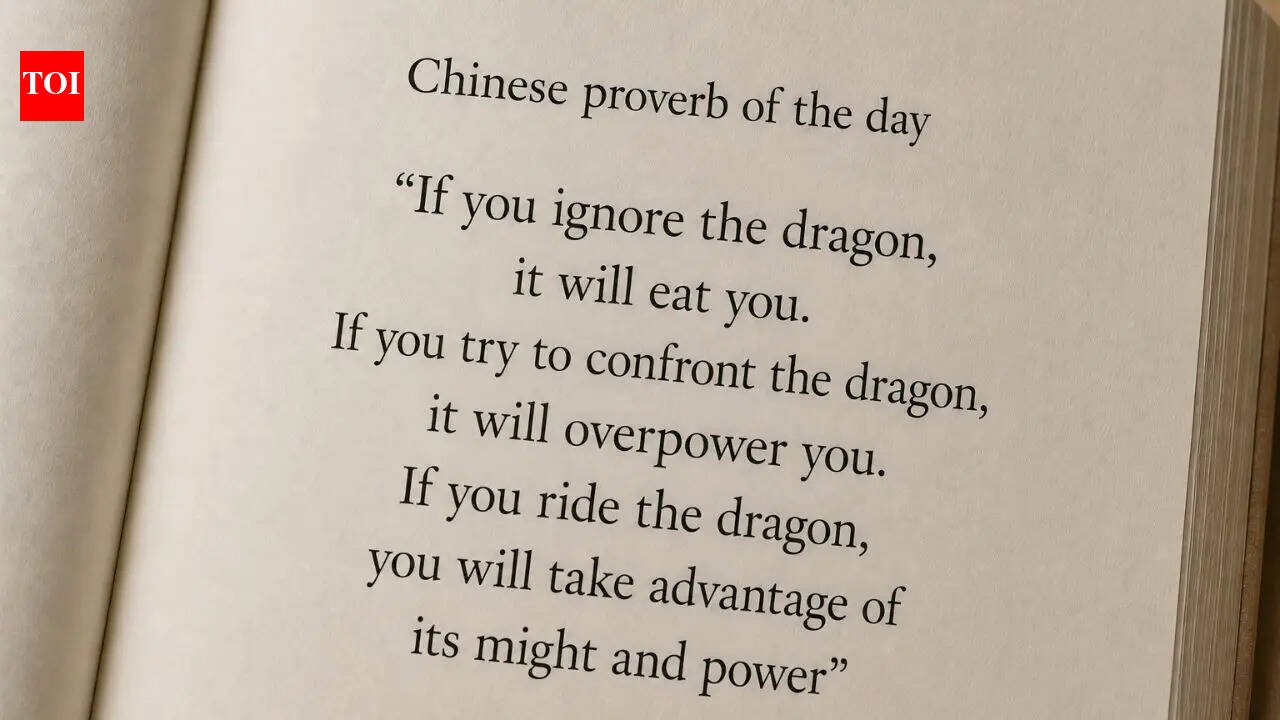
Chinese proverb of the day
“If you ignore the dragon, it will eat you. If you try to confront the dragon, it will overpower you. If you ride the dragon, you will take advantage of its might and power”
Understanding the meaning behind the Chinese proverb
The proverb speaks of three different reactions to power or challenge.The first part, “If you ignore the dragon, it will eat you,” is about avoiding problems or pretending they aren’t there. Some issues will get stronger the longer they are ignored.The second is, “If you try to confront the dragon, it will overpower you,” about the danger of challenging powerful forces without a strategy or understanding. But sometimes direct resistance fails.The final section provides an alternative: “Ride the dragon, and you will benefit from its might and power.” It is to adapt to the situation and make good use of its strength, not oppose it blindly.
Why ignoring problems can create bigger difficulties
Most people avoid hard things because they feel uncomfortable or overwhelmed. But problems don’t tend to disappear when you don’t look at them.They may get more serious over time, for example, avoiding financial problems, health issues or conflicts at work. As the proverb goes, “A problem that is not taken care of will become more difficult to handle.”The sooner you can identify the challenges, the more opportunities you have to address them effectively.
The risks of direct confrontation
The proverb also advises not to react aggressively without understanding the situation.There are forces in life that are too big or too complicated to be overcome by simple resistance. If you don’t keep pace with the rapid technological changes, economic changes or realities you cannot control, you are likely to become frustrated and fail.That’s not to say people should stop trying. Rather, it shows the importance of strategy and flexibility.
What it means to “ride the dragon”
The most important part of the proverb is the concept of riding the dragon. This is what it means to learn how to work with powerful forces, not against them.Practically, this can mean being able to adapt to change, learning new skills or turning challenges into opportunities.For example, instead of resisting technological advances, people can learn how to adapt to them. They don’t fear change; they adapt and take advantage of it.This saying is an encouragement for intelligence, adaptability and balance.
Relevance of this proverb in modern life
This proverb is still very much applicable in today’s world. We are often uncertain as technology, communication, careers and global systems change quickly.If you don’t pay attention to these changes at all, it could be hard to manage. But at the same time, resisting every new development can also be stressful and limiting.Thoughtful adaptation often means being better placed to take advantage of new opportunities.The proverb suggests how important flexibility is in a fast-changing environment.
How adaptability creates strength
Flexibility allows people to handle difficult situations well. Adaptable people don’t get stuck in fear or resistance; they change their thinking and behaviour.This leads to resilience and improved decision-making. It also helps people turn challenges into growth areas.The proverb indicates that strength is not always a matter of force. Sometimes it is simply a matter of understanding and adjusting.
Why this proverb still matters today
The saying is old, but it speaks to a contemporary situation. Life still means uncertainty, competition and fast change.The concept of ‘riding the dragon’ applies to one’s career, education, technology, relationships, and personal growth. It encourages people to be alert, flexible and strategic.Its message remains relevant because it is about practical wisdom, not simply optimism or fear.
How to apply this proverb in daily life
- Do not ignore problems; confront them early
- Don’t get emotional in powerful situations
- Embrace change, don’t fight it
- Learn new skills as situations change
- View challenges as opportunities for growth
- The emphasis on strategy rather than brute force
- Be flexible in uncertain circumstances
- Learn about the system before you try to change it
- Turn tough situations into learning experiences
- Work with reality, not against it
- Stay cool when faced with big challenges
- Use knowledge and ability to move forward
A simple takeaway from this proverb
The meaning of this proverb is clear. Ignore the problems, and they will gain strength. Fight blindly, and you will be defeated. Situations are powerful, and knowing and adapting to them produces better results.Chinese proverb: “Neglect the dragon and it will eat you. If you challenge the dragon, you will be defeated. “The moral is a good one: If you ride the dragon, you will have its strength and power. Riding the dragon is a clever lesson in confronting challenges and change.The proverb is about being aware, flexible and intelligently adapting, not avoidance or unnecessary conflict. This is a very relevant approach in a world of constant change that we live in today.It’s a simple but powerful idea. Success is not the control of all the forces, but the knowledge of how to ride them well.


