






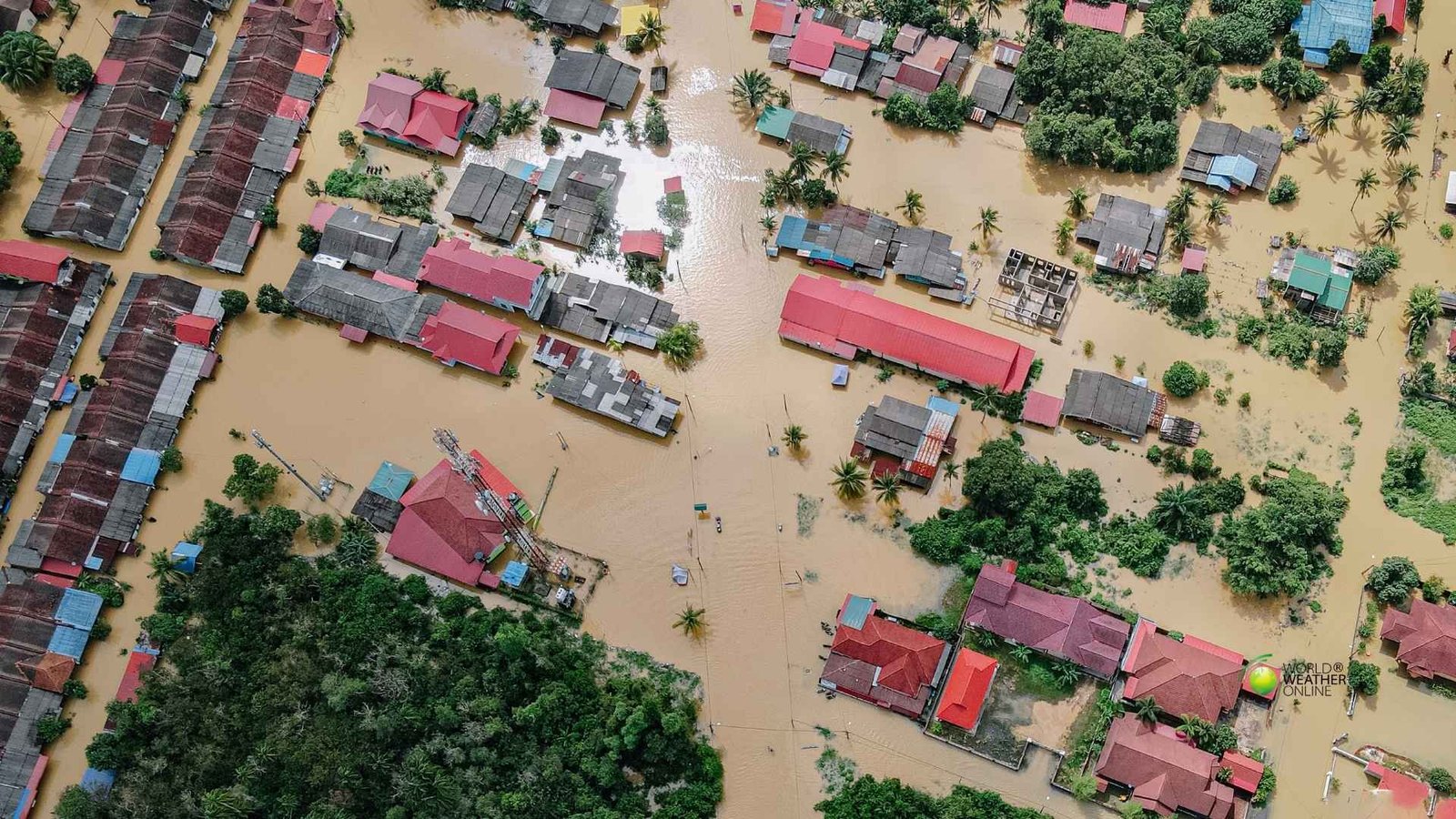
In certain parts of southern and central China, rain did not fall like a passing storm. It arrived as a slow-moving wall of water, turning roads into rivers. These floods have killed at least 25 people across several provinces, with schools, businesses, roads, power supplies, and transport systems disrupted by days of torrential rain.
What makes this event especially unique and dangerous is not only the rainfall total, but also the size of the system. It is a huge rain belt stretching more than 1,000 km across China, drawing massive amounts of moisture from the Bay of Bengal, the South China Sea, and the Pacific Ocean. With weak winds allowing the system to move slowly, communities were exposed to repeated downpours rather than a single brief burst of rainfall.
A 1,000 km Rain Belt Across China
The phenomenon behind flood disasters often begins when rainfall overwhelms the land faster than rivers, drains, and slopes can respond. This is exactly what happened across parts of China this week.
This widespread rain band stretched across the southern and central regions, increasing the flood risk. This rain band system moved gradually and was fed by extreme moisture from several directions. In just 24 hours, some areas recorded heavy totals, including 75 mm in Hunan, 85 mm in Anhui, and 95 mm on Hainan Island, with increased landslides and waterlogging.
Shimen County: 339 mm in 24 Hours
The most alarming rainfall figure came from Shimen County in Hunan Province of China, where 339 mm of rainfall was recorded within just 24 hours. This downpour caused severe flooding, leaving several people missing and forcing the relocation of more than 19,000 residents.
To comprehend the scale, 339 mm is more than some places receive in an entire month. When that much rain falls in a single day, the ground cannot absorb it quickly enough. Resultantly, rivers rise suddenly, streets fill, slopes weaken, and rescue teams can be cut off from the people who need them the most.
Where the Floods Hit Hardest
Although the flooding affected a large stretch of China, some areas saw especially serious impacts:
- Hunan: record rainfall was recorded in Shimen County, with deaths, missing people, and mass relocations
- Hubei: Streets turned into rivers, homes collapsed, and rescue boats were deployed to counter the situation
- Guizhou: There were numerous deaths, evacuations, and damage to homes, communications, and infrastructure.
- Guangxi: During extreme flooding, a pickup truck swept into a river, killing farm workers
- Hainan: Heavy rain raised landslide and road-closure risks.
During these conditions, emergency personnel used boats and even swam into flooded buildings to rescue stranded residents. In one case, rescue teams worked for an hour to reach a man trapped behind a door in chest-high water.
Why Streets Turn into Rivers
Some people misinterpret urban flooding as just rivers overflowing. During extreme rainfall, the city itself can become a flood basin. This happens when:
- Rain falls faster than drains can carry it away
- Concrete and asphalt prevent water from soaking into the ground
- Low-lying roads collect runoff from nearby affected areas
- Rivers and streams rise into neighborhoods
- Blocked drains make waterlogging worse
- Underground spaces, basements, and underpasses fill rapidly
Even in some regions, inflatable boats were used to move stranded residents to safety. That is why flood warnings should never be treated casually. Even shallow-looking water can hide open drains, damaged roads, and electrical hazards. Moreover, driving through floodwater is especially dangerous because vehicles can be lifted or stalled far more easily than people expect.
Landslides: The Hidden Danger After Heavy Rain
When heavy rain soaks hillsides, soil becomes heavier and enfeebled, rocks loosen, and mud can move suddenly. Roads built along slopes become extremely dangerous, while households near steep terrain face increased risk.
This is why Chinese authorities issued warnings not only for flooding but also for geological disasters like landslides and mudslides. The danger continues even after the rain stops because saturated hillsides may fail hours later.
However, the rescue efforts were incredible. Thousands of residents were moved from high-risk areas, while rescue crews worked tirelessly through flooded streets and damaged communities.
Behind these destructive floods lies a huge financial cost. According to an estimate, authorities allocated 150 million yuan, around $22 million, for disaster relief after the floods.
Is Climate Change Making Heavy Rain More Dangerous?
No single flood should be explained by climate change alone. Weather systems around the world still depend on regional patterns, winds, pressure systems, and seasonal moisture. However, the broader science is clear:
“A warmer atmosphere can hold more water vapor, which can make heavy rainfall events more intense when conditions align.”
For countries like China, that truly matters because many flood-prone areas combine dense cities, river networks, mountainous terrain, and fast development. Resultantly, when extreme rain falls over such regions, damage can multiply quickly.
What Residents and Travelers Should Watch For?
During heavy rain and flood warnings, even simple choices can save precious lives:
- Never drive through flooded roads
- Move to higher ground during flash-flood alerts
- Stay away from landslide-prone slopes and areas
- Avoid floodwater because it could be contaminated or electrically dangerous
- Follow official evacuation orders as early as possible
- Keep phones charged, medicines ready, along with emergency supplies
These basic precautionary measures can save you and your loved ones from any hazardous event.
In a nutshell, there is a strong lesson behind these floods: heavy rain is no longer an inconvenience in a warming and heavily urbanized world. It can become a fast-moving emergency that turns streets into rovers, hillsides into hazards, and ordinary journeys into life-threatening situations within hours.


