



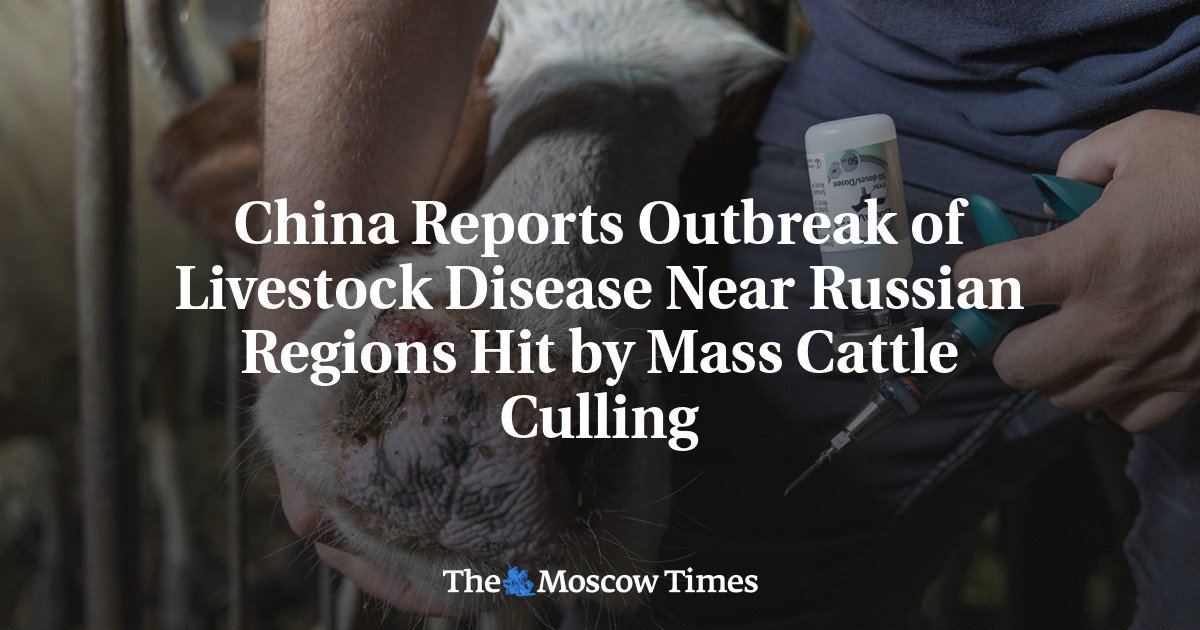
China is tightening border controls and culling livestock in its northwestern Xinjiang region after detecting a small outbreak of foot-and-mouth disease, Reuters reported Friday, measures that come amid growing concern about possible cross-border spread following months of mass cattle culls in Russia.
Chinese officials reportedly said the highly contagious strain, which is immune to vaccines that are currently available domestically, likely entered “from abroad.” Xinjiang borders Russia, Mongolia and Kazakhstan, including a narrow frontier with the Siberian republic of Altai, adjacent to the Altai region, where most of Russia’s recent cattle culling has taken place.
China’s agriculture ministry said last week that 219 cattle across two herds of 6,229 tested positive for a variant of foot-and-mouth disease. Officials have since ordered culling and disinfection measures in Xinjiang and the neighboring Gansu province, as well as stepped up patrols to prevent the disease from entering through smuggling or the illegal transportation of livestock.
The outbreak follows the culling of roughly 90,000 head of cattle across nine Russian regions since February, with analysts estimating that around 80% were in the Altai region. Russian authorities have attributed the losses to rabies, pasteurellosis and other unspecified illnesses.
The scale of the culling in Altai and other regions has raised suspicions that Russia may be concealing a more serious disease outbreak.
The U.S. Department of Agriculture’s foreign service said the culling and Kazakhstan’s recent ban on imports of Russian animals and meat could point to an unconfirmed outbreak of foot-and-mouth disease in Russia.
Russia’s agriculture watchdog dismissed the allegations in the USDA report.
The World Organization for Animal Health last May recognized Russia as free of foot-and-mouth disease, a status that, if lost, could cost the country international exports of its livestock and meat products.
On Monday, Russian President Vladimir Putin signed a decree overhauling the production of animal vaccines, which merged several state-owned enterprises into the Russian Biological Industry Company.
The official explanation for the move was technological independence and investment in veterinary medicine.
A Message from The Moscow Times:
Dear readers,
We are facing unprecedented challenges. Russia’s Prosecutor General’s Office has designated The Moscow Times as an “undesirable” organization, criminalizing our work and putting our staff at risk of prosecution. This follows our earlier unjust labeling as a “foreign agent.”
These actions are direct attempts to silence independent journalism in Russia. The authorities claim our work “discredits the decisions of the Russian leadership.” We see things differently: we strive to provide accurate, unbiased reporting on Russia.
We, the journalists of The Moscow Times, refuse to be silenced. But to continue our work, we need your help.
Your support, no matter how small, makes a world of difference. If you can, please support us monthly starting from just $2. It’s quick to set up, and every contribution makes a significant impact.
By supporting The Moscow Times, you’re defending open, independent journalism in the face of repression. Thank you for standing with us.
Continue
Not ready to support today?
Remind me later.
×
Remind me next month
Thank you! Your reminder is set.


